
United Arab Emirates Red Meat Market: Why Is Demand for Premium Meat Rising Across the Emirates?
Growing tourism, rising disposable incomes, expanding foodservice industries, and evolving consumer preferences are driving the growth of the UAE red meat market through 2034.

The United Arab Emirates has established itself as one of the Middle East’s most dynamic consumer markets. With a rapidly growing population, strong tourism industry, rising household incomes, and world-class hospitality infrastructure, food consumption patterns continue to evolve across the country. Among the categories benefiting from these developments is the red meat sector, which remains an important component of the UAE's culinary culture and foodservice economy.
Red meat products such as beef, lamb, goat, and specialty premium cuts play a significant role in traditional Emirati cuisine, international dining experiences, and modern retail offerings. The country's multicultural population further contributes to diverse consumption preferences, creating strong demand for a wide range of imported and locally distributed red meat products.
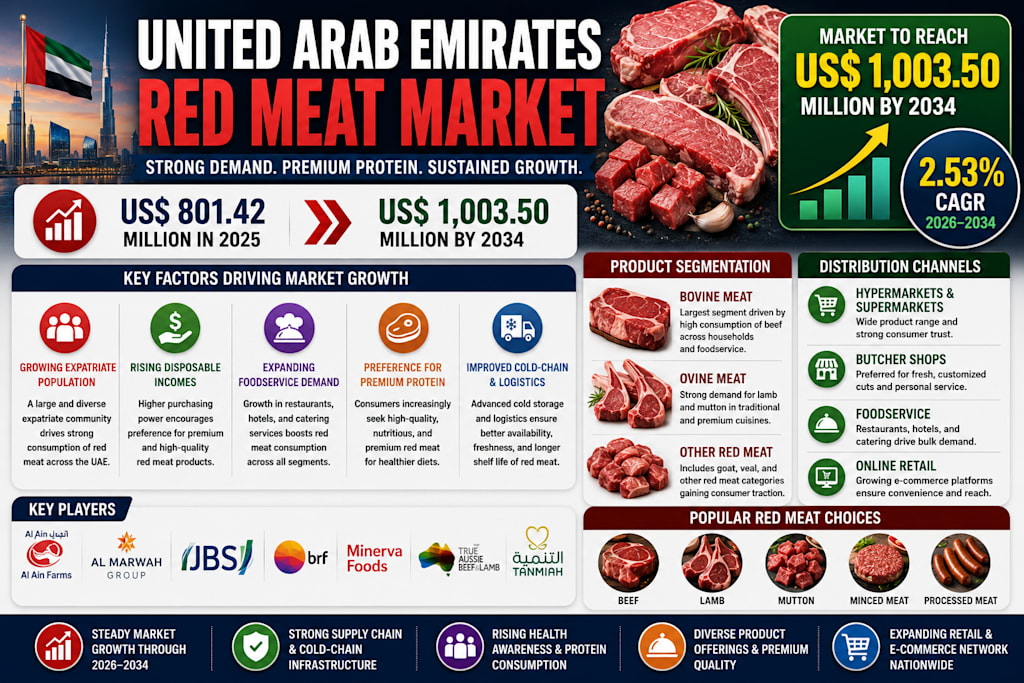
According to Renub Research, the United Arab Emirates Red Meat Market is projected to grow from US$ 801.42 million in 2025 to US$ 1,003.50 million by 2034, registering a CAGR of 2.53% between 2026 and 2034. Rising foodservice demand, increasing tourism activity, expanding modern retail infrastructure, and growing consumer preference for premium protein sources are expected to support market growth throughout the forecast period.
Understanding the UAE Red Meat Industry
Red meat refers to meat obtained from mammals such as cattle, sheep, goats, pigs, and calves. The darker color of red meat compared to poultry is primarily due to its higher myoglobin content.
Red meat is widely valued for its nutritional profile. It serves as a rich source of high-quality protein, iron, zinc, vitamin B12, and essential amino acids that support energy production, muscle growth, and overall health.
Consumers can purchase red meat in various forms, including fresh, chilled, frozen, canned, processed, marinated, and ready-to-cook products. Advances in food safety standards, processing technologies, and cold-chain logistics have made high-quality red meat products more accessible than ever before.
As consumer lifestyles continue evolving, demand for both traditional and value-added meat products is steadily increasing throughout the UAE.
Tourism and Hospitality Drive Market Expansion
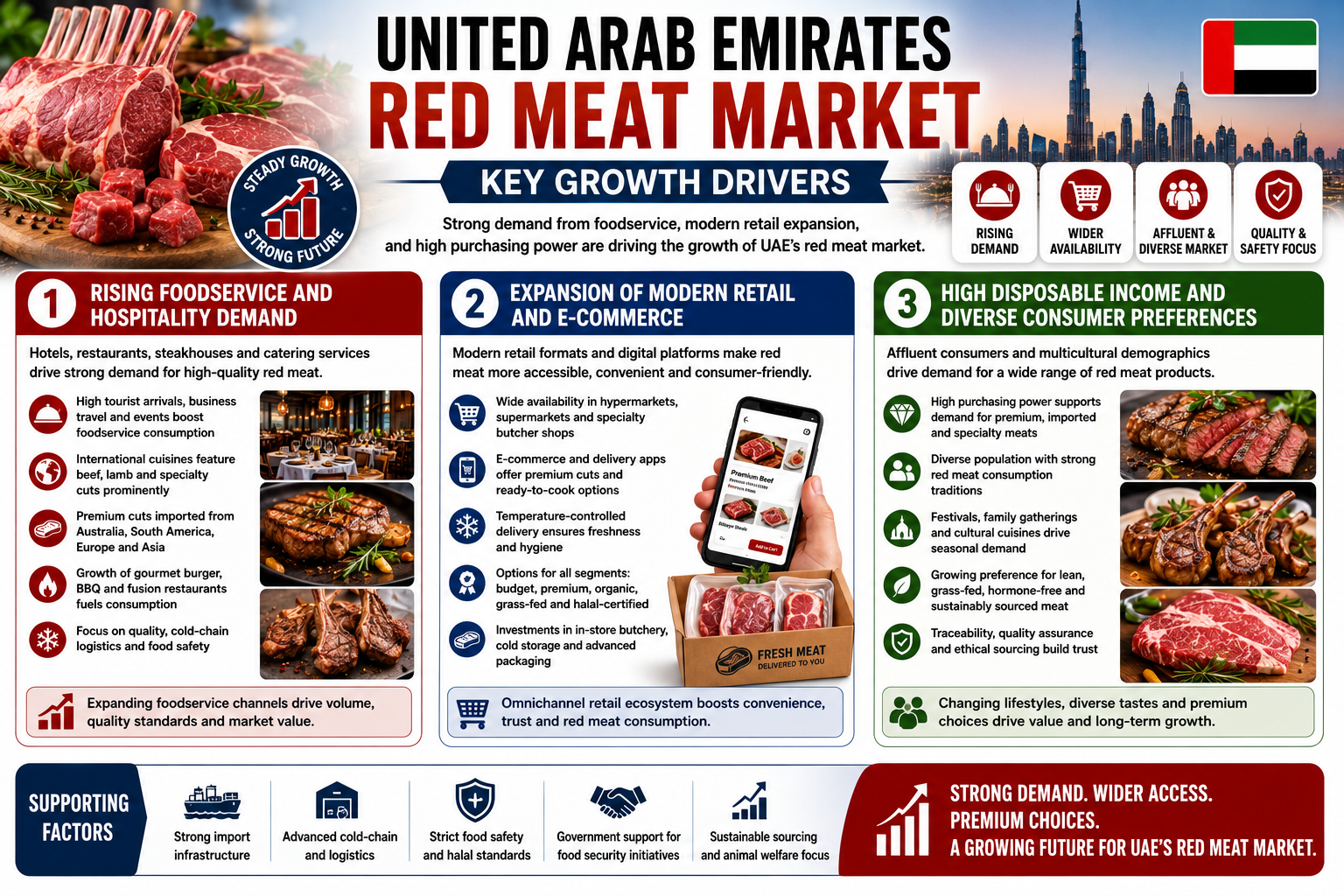
One of the most powerful growth drivers within the UAE red meat market is the country's thriving tourism and hospitality sector.
The UAE attracts millions of international visitors annually for business, leisure, conferences, sporting events, and cultural activities. This steady influx of tourists creates substantial demand for restaurants, hotels, resorts, catering services, and entertainment venues.
Many international cuisines popular within the UAE heavily feature red meat dishes. Mediterranean, Turkish, Brazilian, American, Arabic, South Asian, and European dining concepts all rely on high-quality beef, lamb, and specialty meat products.
Luxury hotels and fine-dining establishments often require premium imported cuts sourced from Australia, New Zealand, South America, Europe, and North America. As the hospitality sector continues expanding, demand for premium meat products is expected to grow alongside it.
The development of new tourism destinations and entertainment projects under national economic diversification strategies will likely create additional opportunities for meat suppliers in the coming years.
Growing Expatriate Population Supports Demand
The UAE's multicultural population is another important contributor to red meat consumption.
Expatriates represent a substantial portion of the country's residents and bring diverse culinary preferences from around the world. Consumers from South Asia, the Middle East, Europe, Africa, and Latin America all contribute to demand for different meat varieties, cuts, and preparation styles.
This demographic diversity encourages retailers and foodservice operators to offer broad product selections capable of meeting varied consumer expectations.
The result is a highly dynamic market where premium imported beef, traditional lamb cuts, specialty sausages, processed meats, and ready-to-cook products all coexist successfully.
As population growth continues and expatriate communities expand, red meat demand is expected to remain resilient.
Rising Disposable Income Encourages Premiumization
The UAE enjoys one of the highest per-capita income levels in the region, creating favorable conditions for premium food consumption.
Consumers with higher purchasing power are increasingly willing to pay for superior quality products, including organic meats, grass-fed beef, wagyu beef, angus beef, and premium lamb varieties.
The premiumization trend extends beyond retail and influences restaurant dining preferences as well. Consumers increasingly seek unique culinary experiences featuring high-end ingredients and specialty meat offerings.
Retailers and suppliers have responded by expanding premium product portfolios and emphasizing quality certifications, traceability, sustainability, and animal welfare standards.
As disposable incomes continue supporting premium purchasing behavior, value growth within the market is expected to remain strong.
Expansion of Modern Retail Strengthens Market Accessibility
Modern retail infrastructure has significantly transformed the UAE red meat market.
Consumers today have access to an extensive network of hypermarkets, supermarkets, specialty butcher shops, gourmet food retailers, and convenience stores. These channels offer a wide variety of products catering to different budgets and preferences.
Retailers are investing heavily in refrigerated displays, advanced packaging solutions, in-store butchery services, and premium meat counters to improve customer experiences.
The availability of both imported and locally distributed products provides consumers with greater choice than ever before.
Modern retail development has also enhanced transparency regarding product origin, quality, and certifications, helping build consumer trust.
As retail infrastructure continues evolving, accessibility and product diversity are expected to improve further.
E-Commerce Is Changing Consumer Purchasing Habits
Digital transformation is reshaping food retail across the UAE, including the red meat sector.
Online grocery platforms, mobile delivery applications, and direct-to-consumer services have made purchasing fresh and frozen meat more convenient. Consumers can now browse extensive product selections, compare prices, and schedule temperature-controlled deliveries directly to their homes.
Online channels are particularly attractive for busy professionals, families, and consumers seeking premium imported products.
Many e-commerce providers emphasize freshness, hygiene, traceability, and halal certification, helping build confidence among buyers.
As digital adoption continues accelerating, online sales are expected to become an increasingly important distribution channel within the red meat industry.
Cultural Traditions Continue Supporting Consumption
Red meat remains deeply embedded within the UAE's cultural and culinary traditions.
Lamb and goat meat are especially important during family gatherings, religious celebrations, weddings, and festive occasions. Traditional Emirati dishes frequently feature these proteins as central ingredients.
Cultural preferences help maintain stable demand regardless of broader economic fluctuations. Seasonal events and holidays often create significant consumption spikes, benefiting suppliers, retailers, and foodservice operators.
At the same time, younger consumers are embracing international cuisines that incorporate a broader range of beef and specialty meat products.
This combination of tradition and modern culinary influences supports long-term market growth.
Challenges Facing the UAE Red Meat Market
Despite positive growth prospects, several challenges continue to affect the industry.
Heavy Dependence on Imports
The UAE relies heavily on imported red meat due to limited domestic livestock production capacity.
This dependence exposes the market to international supply-chain disruptions, geopolitical uncertainties, transportation delays, and fluctuations in global commodity prices.
Events such as disease outbreaks, droughts, trade restrictions, and regulatory changes in exporting countries can significantly affect product availability and pricing.
Maintaining diversified supplier networks and effective risk-management strategies is therefore essential for market stability.
Rising Costs Across the Supply Chain
The red meat industry faces ongoing cost pressures related to transportation, refrigeration, packaging, labor, and compliance requirements.
Cold-chain logistics are particularly expensive due to the need for temperature-controlled storage and distribution systems.
Additionally, global inflation, feed costs, energy prices, and currency fluctuations continue influencing import prices.
Balancing affordability for consumers while maintaining product quality remains a key challenge for industry participants.
Northeast UAE Red Meat Market
The Northeast region benefits from strong retail infrastructure and growing residential developments.
High-income consumers and a substantial expatriate population create consistent demand for premium beef and lamb products. Supermarkets, butcher shops, and specialty retailers provide broad product availability.
Expanding hospitality activity also contributes to demand from hotels, restaurants, and catering businesses.
The region's modern logistics networks support efficient distribution and reliable product quality.
Midwest UAE Red Meat Market
The Midwest region is experiencing growth driven by expanding residential communities and commercial development.
Consumers seek both affordable and premium meat options, creating opportunities across multiple market segments. Foodservice operators, retail outlets, and specialty butchers all contribute to rising consumption.
Continued infrastructure development and growing adoption of online grocery platforms further support market expansion.
South UAE Red Meat Market
Traditional culinary preferences strongly influence consumption patterns within South UAE.
Lamb and goat meat remain particularly popular among local families and communities. Retailers increasingly offer value-added products such as marinated cuts, seasoned meats, and ready-to-cook solutions that appeal to modern households.
Improved transportation and cold-storage infrastructure are helping ensure consistent product availability throughout the region.
West UAE Red Meat Market
The West region benefits from tourism growth, hospitality development, and a diverse population.
Luxury hotels, resorts, and fine-dining restaurants generate strong demand for premium imported meats, including wagyu, angus, and specialty beef products.
Consumers in the region demonstrate strong interest in both premium and everyday meat offerings, supporting a balanced market environment.
Urbanization and commercial growth are expected to continue driving consumption in the coming years.
Recent Industry Developments
The UAE red meat market has witnessed several notable developments aimed at strengthening food infrastructure and supply chains.
In September 2025, Al Ain Farms Group and Food Tech Valley announced plans for a 260,000-square-foot logistics hub in Dubai. The facility is designed to improve food distribution efficiency while supporting the UAE's Net Zero 2050 objectives through reduced carbon emissions.
In October 2024, Union Coop partnered with Al Islami Foods in a strategic initiative aimed at enhancing customer experiences and strengthening value-focused retail offerings.
Earlier, in July 2024, Ghitha Holding completed the acquisition of Arabian Farms Investments LLC for AED 240 million. The acquisition expanded its presence within the livestock and food production sectors across the UAE and Saudi Arabia.
These developments demonstrate continued investment in strengthening the country's food ecosystem.
Future Outlook
The future of the UAE red meat market appears promising despite ongoing challenges related to imports and operational costs.
Continued tourism growth, rising population levels, expanding retail infrastructure, and increasing demand for premium protein products are expected to support market expansion through 2034.
Advancements in cold-chain logistics, digital retailing, food processing, and supply-chain management will further strengthen market efficiency.
Meanwhile, evolving consumer preferences for traceable, high-quality, and responsibly sourced meat products will encourage continued innovation throughout the sector.
Final Thoughts
The United Arab Emirates red meat market continues to benefit from a unique combination of economic strength, demographic diversity, tourism expansion, and evolving consumer preferences. The country's sophisticated retail landscape and thriving hospitality industry create strong demand for both premium and everyday meat products.
With the market expected to grow from US$ 801.42 million in 2025 to US$ 1,003.50 million by 2034, suppliers, retailers, and foodservice operators have substantial opportunities to capitalize on changing consumption trends. Businesses that focus on quality, traceability, efficient logistics, and customer convenience will be best positioned to succeed in the UAE's increasingly competitive red meat market.
About the Creator
Enjoyed the story? Support the Creator.
Subscribe for free to receive all their stories in your feed.
Comments
There are no comments for this story
Be the first to respond and start the conversation.