
UK E-Commerce Payments Are Entering a New Growth Phase: Why Digital Checkout Is Becoming the Engine of Online Retail
From digital wallets and contactless habits to BNPL and secure mobile checkout, the United Kingdom’s e-commerce payment market is expanding fast—and Renub Research expects it to rise from US$ 188.64 billion in 2025 to US$ 486.47 billion by 2034 at a CAGR of 11.10%.

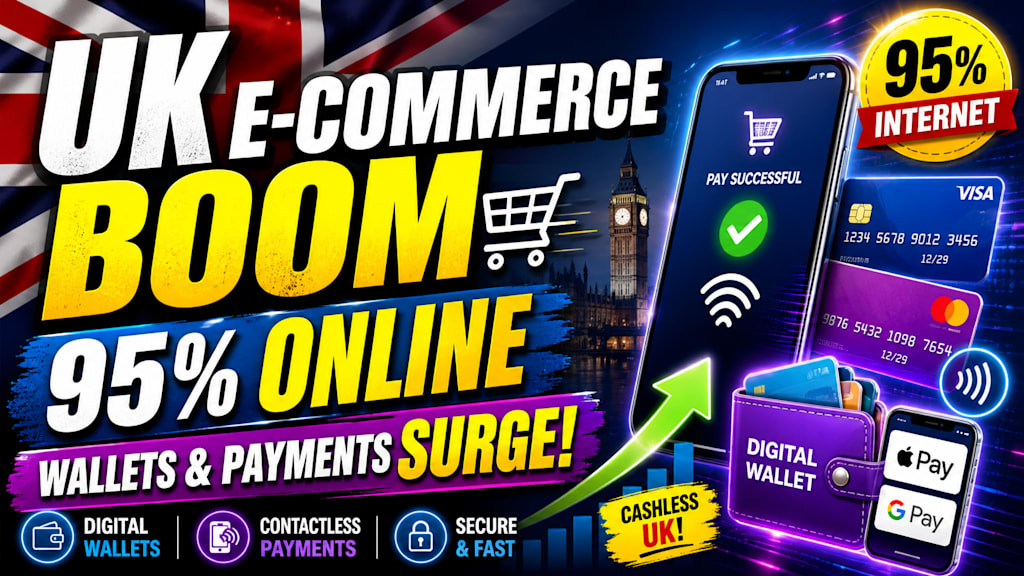
The United Kingdom’s e-commerce payment market is no longer just a back-end function for online shopping. It has become one of the most important parts of the digital economy, shaping how quickly consumers buy, how confidently they pay, and how efficiently businesses convert traffic into revenue. As online shopping continues to mature in the UK, payment choice, speed, and security are now as important as product price and delivery time.
According to Renub Research, the UK e-commerce payment market is expected to grow from US$ 188.64 billion in 2025 to US$ 486.47 billion by 2034, registering a CAGR of 11.10% during 2026–2034. The report points to rising online shopping activity, wider use of digital wallets and contactless payment habits, and strong demand for secure, fast checkout experiences as the main growth forces.
That forecast is more than a market statistic. It reflects a major shift in how British consumers buy online. The checkout page, once an afterthought, is now a critical battleground for merchants. A smooth payment flow can increase conversion rates, encourage repeat purchases, and build trust. A slow or complicated process can do the opposite in seconds.
One of the biggest reasons behind this momentum is the UK’s digital readiness. The file notes that internet penetration is very high and smartphone ownership is widespread, which makes consumers comfortable with making payments through mobile devices. With more people shopping online for food delivery, clothing, electronics, subscriptions, and everyday services, digital payments have become deeply embedded in daily life. In the UK, e-commerce is no longer a niche behavior; it is a routine habit.
This shift has also changed consumer expectations. British shoppers increasingly want payment methods that are quick, flexible, and secure. Many now prefer cashless and contactless options because they are familiar with the convenience of tapping a card in physical stores and expect the same ease online. That familiarity is helping digital wallet adoption rise across e-commerce channels, while merchants benefit from faster checkout and fewer abandoned carts.
Digital wallets are especially important in this story. They reduce friction by storing payment credentials securely and enabling one-click or biometric checkout. For consumers, this means less typing and fewer interruptions. For merchants, it means higher conversion potential and a more modern checkout experience. The file also highlights that digital wallets can support loyalty rewards, cashback, and pay-later features, giving them an added advantage in a competitive market.
Another strong driver is the evolution of payment technology itself. In the UK market, payment providers are not just competing on transaction processing anymore; they are competing on experience. Embedded finance, installment payments, better refund journeys, APIs, cloud-based payment infrastructure, and localized payment options are all improving how online checkout works for both small merchants and large enterprises. As a result, payments have moved from a support function to a strategic differentiator.
This is particularly relevant for small and mid-sized businesses. Modern payment infrastructure allows them to launch faster, accept more payment types, and create trust without needing large internal technology teams. That matters in a market where customer expectations are rising quickly. If a checkout process feels outdated, customers can leave. If it feels seamless, the merchant gains an edge.
The market’s expansion is also being supported by the way online retail itself is changing. Subscription services, next-day delivery models, social commerce, and mobile commerce all depend on reliable digital payments. The more online shopping becomes woven into everyday routines, the more essential payment systems become. In other words, e-commerce growth and payment growth are feeding each other.
Still, this market is not without challenges. Fraud and cybersecurity threats remain major concerns. As online payment volumes rise, so do risks related to identity theft, account misuse, unauthorized transactions, and other forms of digital fraud. This means merchants and payment providers must continuously invest in authentication tools, monitoring systems, and fraud-prevention technology. Security is no longer optional; it is central to consumer trust.
At the same time, regulatory compliance adds another layer of complexity. Payment service providers in the UK must follow strict rules around consumer protection, authentication, and data security. These rules are important for keeping the market safe, but they can also increase operational costs and make it harder for smaller merchants or international sellers to adapt quickly. Strong regulation protects customers, but it also demands ongoing investment from the industry.
Within the broader market, several payment types are shaping growth in different ways. Digital wallets are gaining speed because of convenience and trust. Credit cards and debit cards continue to play a major role because they are familiar and widely accepted. Account-to-account payments are gaining attention as more businesses and consumers look for efficient direct transfer options. BNPL is becoming increasingly important in categories where shoppers want flexibility. Prepaid methods still have relevance, especially for users who prefer controlled spending or do not wish to link purchases to bank accounts.
BNPL deserves special attention because of its rapid rise in the UK. The file explains that buy-now-pay-later is becoming popular due to the flexibility it offers customers, especially in fashion, electronics, and lifestyle categories. It allows buyers to spread payments over time or pay after receiving the product, which can reduce hesitation at checkout. For retailers, BNPL can raise average order values, reduce cart abandonment, and make larger purchases easier to complete.
That flexibility is especially powerful in today’s consumer climate. Shoppers are increasingly cautious about spending, but they still want convenience. BNPL offers a middle ground: it preserves the ease of online shopping while easing the immediate financial burden. This is one of the reasons why the method has become such a prominent part of digital commerce.
Different product categories inside e-commerce also depend on different payment behaviors. Electronics and media purchases often involve higher-value transactions and subscriptions, so security and payment assurance matter a great deal. Fashion accessories depend on fast, impulse-friendly checkout flows. Food and personal care purchases require reliable recurring or repeat-friendly payments. Furniture and appliances may involve larger baskets and more considered buying journeys. Each category places different demands on the payment system, which means payment providers need flexible, tailored solutions.
The file also shows how regional demand across UK cities and the rest of the country contributes to market strength. Major urban centers such as London, Manchester, Birmingham, Leeds, Liverpool, Edinburgh, Glasgow, Tyneside, and Bristol are part of the broader digital commerce ecosystem. These cities reflect the spread of internet-enabled shopping habits and the growing normalization of online transactions across the country.
What makes the UK market especially interesting is its balance of maturity and innovation. It already has strong digital adoption, but it is still evolving quickly. Consumers are comfortable with online transactions, but they also expect new levels of speed, personalization, and protection. That means payment firms cannot rely on old infrastructure or outdated user experiences. The winners in this market will be those that simplify checkout while maintaining security.
The competitive landscape reflects that reality. Major global payment and technology names are active in the sector, including Amazon.com Inc., American Express Company, Apple Inc., Fiserv Inc., Mastercard Incorporated, PayPal Holdings Inc., and Visa Inc. Their presence shows that the UK market is not just locally important; it is strategically significant for global payment innovation.
Recent developments also underline the pace of change. The file notes examples such as PayPal expanding its omnichannel vision and Stripe launching solutions to simplify cross-border payments, both of which point to an industry moving toward more integrated and internationally capable payment systems. These kinds of innovations matter because online commerce no longer stops at borders, and payment systems must support that reality.
Looking ahead, the UK e-commerce payment market appears positioned for sustained growth rather than a short-term spike. The combination of high internet access, smartphone-driven shopping, secure payment demand, and changing consumer habits is building a strong foundation for the next decade. As more people shop online and expect smoother payment experiences, businesses will continue investing in modern checkout systems, wallet integration, fraud protection, and flexible payment options.
In many ways, the payment layer is becoming the invisible infrastructure of online retail. Consumers may not think about it much when it works well, but they notice immediately when it does not. That is why payment innovation matters so much: it improves convenience, reduces friction, and helps online businesses grow.
Final Thoughts
The UK e-commerce payment market is entering a phase where scale, trust, and user experience are all equally important. Renub Research’s forecast of US$ 486.47 billion by 2034 shows just how large this opportunity has become. Yet the real story is not only about size. It is about how payment methods are reshaping digital commerce, how merchants are competing on checkout quality, and how consumers are demanding faster, safer, and more flexible ways to pay. For the UK’s online economy, payments are no longer the final step in the purchase journey—they are one of the main reasons the journey succeeds.
About the Creator
Enjoyed the story? Support the Creator.
Subscribe for free to receive all their stories in your feed.
Comments
There are no comments for this story
Be the first to respond and start the conversation.