
UAE Foodservice Industry Poised for Explosive Growth as Tourism and Digital Dining Transform Consumer Habits
From luxury restaurants and cloud kitchens to booming food delivery apps, the UAE foodservice market is entering a new era of rapid expansion.

The United Arab Emirates has long been recognized as one of the world’s most exciting culinary destinations. From Michelin-starred restaurants in Dubai to luxury hotel dining experiences in Abu Dhabi, the country has successfully positioned itself as a global foodservice hub that attracts millions of residents, tourists, and business travelers every year.
Now, the UAE foodservice industry is entering an even bigger phase of growth.
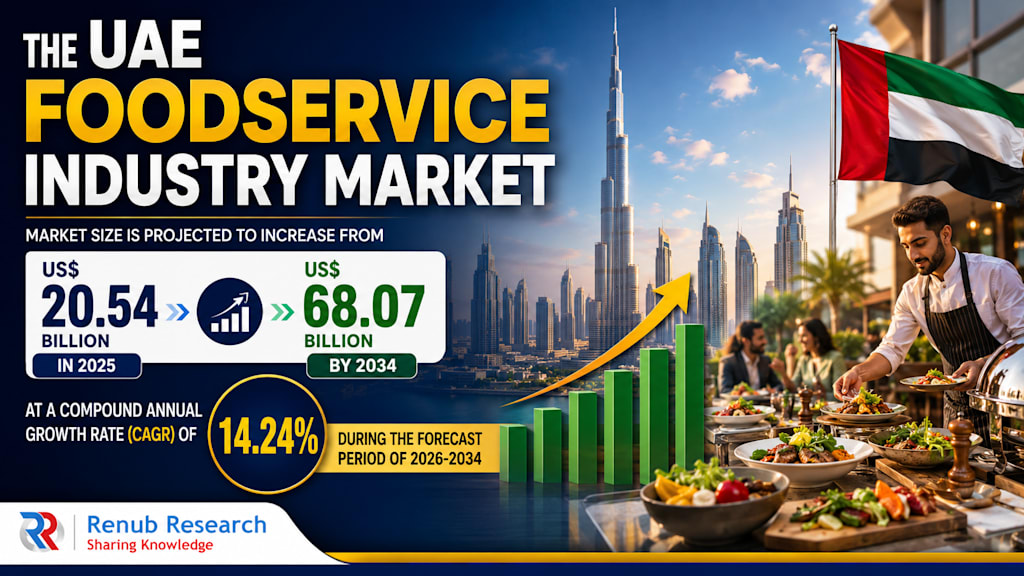
According to Renub Research, the UAE foodservice market is projected to grow from US$ 20.54 billion in 2025 to US$ 68.07 billion by 2034, expanding at a remarkable compound annual growth rate (CAGR) of 14.24% during the forecast period.
The growth reflects major changes happening across the UAE’s economy and consumer lifestyle. Rapid urbanization, a thriving tourism sector, digital food delivery platforms, cloud kitchens, luxury dining, and an increasingly multicultural population are all contributing to the market’s extraordinary momentum.
In many ways, the UAE has become a perfect environment for foodservice innovation.
Consumers are demanding convenience, variety, speed, quality, and premium dining experiences all at once. Restaurants, cafés, delivery operators, and hospitality brands are responding by reinventing how food is prepared, marketed, and consumed across the country.
A Nation Built Around Hospitality and Dining
Foodservice has become deeply connected to the UAE’s identity as a global tourism and business destination.
The foodservice industry includes restaurants, cafés, bars, hotels, quick-service restaurants (QSRs), cloud kitchens, catering services, and retail dining operations. In the UAE, this ecosystem has evolved rapidly due to the country’s dynamic population and world-class hospitality infrastructure.
Cities such as Dubai and Abu Dhabi are now internationally recognized for their culinary diversity.
Visitors can find nearly every cuisine imaginable — from traditional Middle Eastern dishes and Indian street food to Japanese fine dining, Italian gourmet experiences, and American fast-food chains.
The UAE’s multicultural population plays a major role in this diversity.
Millions of expatriates from Asia, Europe, the Middle East, and North America live and work in the country, creating constant demand for international cuisines and authentic dining experiences.
At the same time, local consumers are becoming increasingly interested in premium cafés, healthier food options, fast-casual restaurants, and technology-driven food delivery services.
This combination of global influence and modern urban lifestyle is helping transform the UAE into one of the fastest-growing foodservice markets in the world.
Tourism Continues to Fuel Market Expansion
Tourism remains one of the strongest drivers behind the UAE’s booming foodservice industry.
The country attracts millions of international visitors every year through luxury tourism, business events, shopping festivals, sporting competitions, and entertainment experiences.
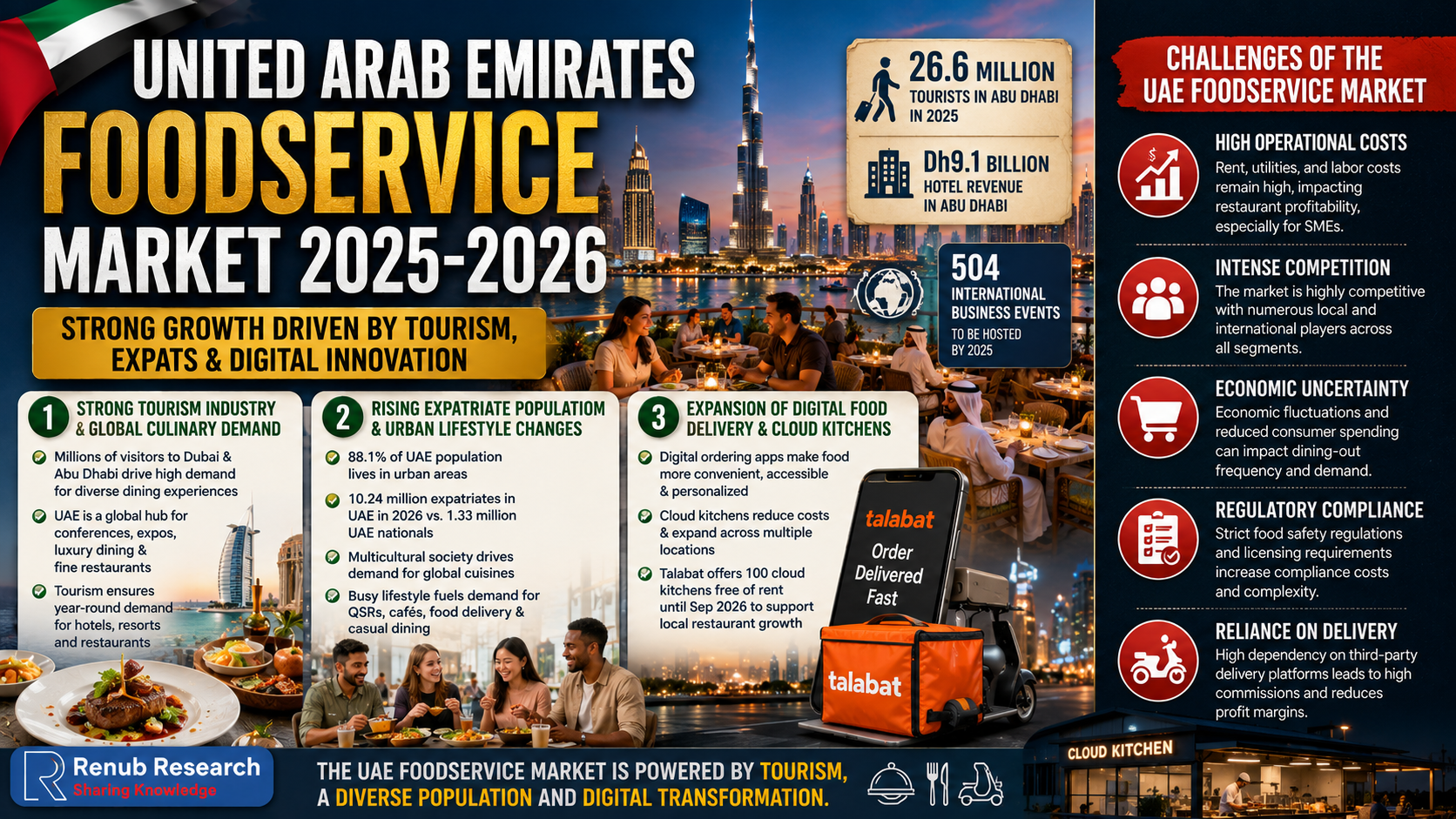
Abu Dhabi alone reportedly welcomed approximately 26.6 million tourists in 2025, generating hotel revenues of around Dh9.1 billion.
Dubai, meanwhile, continues to rank among the world’s top tourism destinations, famous for its luxury hotels, nightlife, shopping centers, and culinary experiences.
Tourists naturally contribute to restaurant traffic across every segment of the market.
Luxury travelers often seek premium dining experiences at five-star hotels and celebrity-chef restaurants, while business travelers rely heavily on cafés, quick-service restaurants, and hotel dining services.
Major international events also boost foodservice demand.
The UAE has become a preferred location for international conferences, exhibitions, sporting tournaments, and cultural festivals. Reports indicate the country secured more than 500 international business events scheduled over the coming years, further strengthening hospitality and restaurant demand.
As tourism continues to grow, restaurants and foodservice operators are expected to benefit from year-round customer traffic across multiple dining categories.
Expatriate Population Is Reshaping Consumer Preferences
One of the most unique characteristics of the UAE foodservice market is its large expatriate population.
Foreign nationals make up a significant majority of the country’s residents, creating one of the most multicultural consumer markets in the world.
Research suggests that expatriates in the UAE could exceed 10 million people by 2026, compared to a much smaller local Emirati population.
This demographic structure has a major impact on foodservice trends.
Different nationalities bring different food preferences, creating constant demand for international cuisines. Indian, Pakistani, Lebanese, Filipino, Chinese, Italian, Japanese, American, and British dining concepts all thrive within the UAE market.
Urban lifestyles also influence consumer behavior.
Many residents work long hours and prefer convenient meal options rather than cooking at home. As a result, quick-service restaurants, cafés, takeaway outlets, and food delivery services continue to experience strong demand.
Consumers increasingly value:
- Fast service
- Affordable pricing
- High-quality ingredients
- Convenient digital ordering
- Diverse menu choices
- Healthy and customizable meals
The multicultural environment gives restaurants significant opportunities to experiment with new concepts, fusion cuisines, and premium dining experiences.
Food Delivery Apps and Cloud Kitchens Are Revolutionizing the Industry
Perhaps the most transformative trend within the UAE foodservice market is the rapid rise of digital food delivery and cloud kitchens.
Online food ordering platforms have completely changed how consumers interact with restaurants.
Today, customers can order meals within minutes using mobile apps that offer real-time tracking, digital payments, personalized recommendations, and loyalty rewards.
This convenience has fueled explosive growth in delivery-focused dining.
Cloud kitchens — also known as ghost kitchens or dark kitchens — have become especially popular in the UAE. These kitchens operate without traditional dine-in facilities and focus entirely on preparing food for delivery orders.
The model offers several advantages:
- Lower operating costs
- Faster scalability
- Reduced rental expenses
- Ability to manage multiple brands from one location
- Strong compatibility with delivery apps
Major delivery platforms such as Talabat have expanded aggressively across the region.
Talabat recently introduced a major initiative offering rent-free cloud kitchens to local restaurant brands in the UAE until September 2026. The goal is to help small and medium-sized food businesses reduce operational costs while expanding delivery capabilities.
Cloud kitchens are particularly attractive in cities like Dubai, where high commercial rental costs can make traditional restaurant expansion expensive.
As technology continues advancing, digital food ecosystems are expected to become even more important in shaping the future of dining across the UAE.
Quick-Service Restaurants Continue to Dominate
Quick-service restaurants remain one of the most successful categories within the UAE foodservice market.
Consumers increasingly favor fast, affordable, and convenient meals that fit into busy schedules. International fast-food chains continue expanding aggressively across shopping malls, airports, entertainment districts, and residential communities.
Burger restaurants are especially popular.
The UAE burger segment has experienced strong growth due to rising demand for Western fast-food concepts and gourmet burger experiences. While international chains dominate the market, local gourmet burger brands are also gaining popularity by offering premium ingredients and customizable menus.
Pizza is another major growth category.
Pizza remains one of the most frequently ordered food items across delivery platforms because of its affordability, convenience, and social appeal. Restaurants continue introducing healthier crust options, fusion flavors, and premium toppings to attract younger consumers and health-conscious diners.
The rapid growth of delivery apps has further strengthened the position of QSR brands throughout the country.
Café Culture Is Becoming a Lifestyle Trend
The café and specialty coffee segment is also thriving across the UAE.
Cafés have evolved beyond simple beverage outlets and are now considered social hubs, workspaces, networking venues, and lifestyle destinations.
Specialty coffee culture has grown rapidly, particularly in Dubai and Abu Dhabi.
Consumers increasingly seek premium coffee experiences, artisanal beverages, gourmet desserts, and aesthetically designed café environments suitable for social media sharing and remote working.
Many cafés now combine:
- Premium coffee offerings
- Healthy snacks
- Luxury desserts
- Co-working environments
- Lifestyle branding
- Digital ordering technology
Hotel bars and luxury lounges also contribute to this segment, particularly in tourism-focused districts catering to international travelers.
The UAE’s high disposable income levels and luxury-focused consumer culture continue supporting growth in premium café experiences.
Chained Outlets Are Expanding Rapidly
Chained foodservice outlets represent another major growth segment within the UAE market.
Consumers often prefer established restaurant brands because they associate them with hygiene standards, service consistency, and reliable food quality.
International and regional chains dominate shopping malls, airports, entertainment venues, and major commercial areas throughout the country.
Franchising has become a key expansion strategy.
Global brands can quickly scale operations through franchise partnerships, allowing them to establish strong market presence across multiple emirates.
Technology is further strengthening customer engagement.
Many restaurant chains now use:
- Mobile loyalty programs
- Digital payment systems
- Personalized marketing
- App-based ordering
- AI-powered customer recommendations
As shopping malls and lifestyle destinations continue expanding throughout the UAE, chained outlets are expected to maintain strong growth momentum.
Dubai Leads the UAE Foodservice Market
Dubai remains the largest and most advanced foodservice market within the UAE.
The city’s massive tourism industry, luxury hospitality sector, and multicultural population create ideal conditions for restaurant growth.
Dubai offers every type of dining experience imaginable, ranging from street food and casual cafés to celebrity-chef fine dining establishments and delivery-only cloud kitchens.
Large-scale events, shopping festivals, exhibitions, and international conferences generate constant restaurant demand throughout the year.
The city has also become one of the world’s most competitive markets for food innovation.
Restaurants continuously experiment with new cuisines, immersive dining concepts, digital technologies, and social media marketing strategies to attract customers.
Food delivery services are especially advanced in Dubai, where consumers expect fast delivery times and premium convenience.
Abu Dhabi and Sharjah Continue Expanding
Abu Dhabi is also experiencing strong foodservice growth.
As the UAE capital, the emirate benefits from government activity, luxury tourism, and high-income consumers. Premium hotels, international restaurants, and entertainment attractions contribute significantly to dining demand.
Meanwhile, Sharjah represents a more family-oriented market.
The emirate focuses more heavily on affordable dining, casual restaurants, cafés, and quick-service food concepts targeting working families and middle-income consumers.
Although Sharjah offers fewer luxury dining experiences compared to Dubai, urbanization and population growth continue driving steady market expansion.
Key Challenges Facing the Industry
Despite impressive growth forecasts, the UAE foodservice market still faces several major challenges.
One of the biggest issues is operational cost.
Restaurant operators in major cities such as Dubai and Abu Dhabi face high expenses related to:
- Commercial rent
- Labor salaries
- Raw material sourcing
- Licensing fees
- Technology integration
Competition is also extremely intense.
International brands, local chains, independent restaurants, and delivery-focused startups are all competing for market share. Businesses must constantly innovate in order to attract and retain customers.
Workforce dependency presents another challenge.
The UAE foodservice sector relies heavily on expatriate labor, including chefs, kitchen workers, delivery staff, and hospitality employees. Immigration policies, labor shortages, and employee turnover rates can significantly impact operations.
Strict food safety and licensing regulations also increase compliance requirements for restaurant operators.
The Future of Foodservice in the UAE
The UAE foodservice market is entering a period of extraordinary transformation.
Digital technology, changing consumer lifestyles, urban expansion, and tourism growth are reshaping how people dine, order food, and experience hospitality.
Cloud kitchens, food delivery apps, premium cafés, and experiential dining concepts are expected to become even more influential over the next decade.
Consumers will likely continue demanding:
- Faster service
- Healthier menus
- Sustainable packaging
- Personalized experiences
- Mobile-first convenience
- Premium hospitality standards
The country’s ability to combine luxury tourism with technological innovation gives it a unique advantage within the global foodservice industry.
Final Thoughts
The UAE foodservice market is no longer simply about restaurants and cafés. It has evolved into a highly dynamic ecosystem driven by tourism, technology, globalization, and changing consumer behavior.
Renub Research’s projection that the market could grow from US$ 20.54 billion in 2025 to US$ 68.07 billion by 2034 demonstrates the enormous potential still ahead for the industry.
From luxury dining experiences and cloud kitchens to quick-service restaurants and delivery platforms, the UAE continues redefining what modern foodservice looks like in one of the world’s most competitive hospitality markets.
As urban lifestyles evolve and international tourism expands further, the UAE is expected to remain a global leader in culinary innovation, hospitality excellence, and digital dining transformation for years to come.
About the Creator
Enjoyed the story? Support the Creator.
Subscribe for free to receive all their stories in your feed.
Comments
There are no comments for this story
Be the first to respond and start the conversation.