
UAE Dairy Market Expands as Health Awareness and Premium Dairy Demand Transform Consumer Preferences
Rising demand for functional dairy products, organic options, and convenient nutrition is driving strong growth across the United Arab Emirates dairy industry.

The United Arab Emirates dairy market is entering a period of steady and innovation-driven growth as consumers increasingly prioritize nutrition, convenience, premium food quality, and healthier lifestyles.
From probiotic yogurt drinks and protein-rich Greek yogurt to organic laban and lactose-free milk products, dairy consumption in the UAE is evolving rapidly to meet changing dietary habits and multicultural consumer preferences.
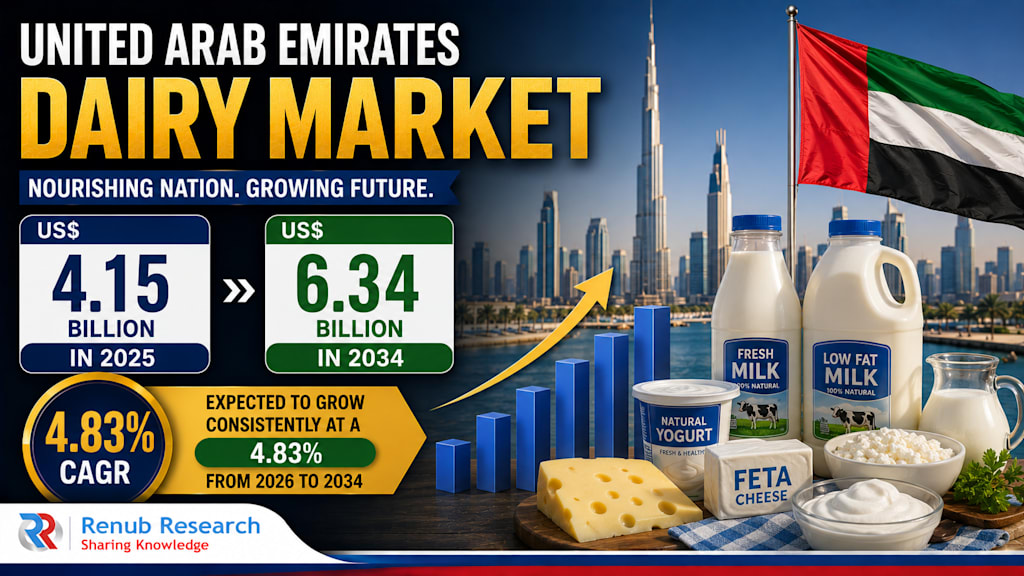
According to Renub Research, the United Arab Emirates dairy market is projected to grow from US$ 4.15 billion in 2025 to US$ 6.34 billion by 2034, expanding at a compound annual growth rate (CAGR) of 4.83% during 2026–2034.
The market’s growth is being supported by rising population levels, growing health consciousness, expansion of modern retail channels, government food security initiatives, and increasing demand for high-quality dairy products.
At the same time, innovation across organic dairy, plant-based alternatives, functional nutrition, and advanced cold-chain logistics is reshaping how dairy products are produced, distributed, and consumed across the UAE.
Dairy Products Remain Central to UAE Food Culture
Dairy products continue playing a major role in the everyday diets of consumers throughout the UAE.
Products such as:
- Milk
- Yogurt
- Laban
- Cheese
- Butter
- Cream
- Ice cream
are widely consumed across households, restaurants, hotels, cafés, and foodservice outlets.
The UAE’s multicultural population strongly influences dairy consumption patterns.
Consumers from South Asia, the Middle East, Europe, and other global regions contribute to highly diverse demand for products ranging from paneer and ghee to premium European cheeses and probiotic yogurt beverages.
Traditional products such as laban remain extremely popular because of their refreshing qualities during the region’s hot climate.
At the same time, modern consumers increasingly seek premium, health-oriented, and convenience-focused dairy options that fit fast-paced urban lifestyles.
Health and Wellness Trends Are Driving Market Growth
One of the strongest drivers behind the UAE dairy market is the growing focus on health and wellness.
Consumers increasingly understand the nutritional importance of dairy products because they provide:
- Calcium
- Protein
- Vitamin D
- Probiotics
Essential nutrients for bone health and immunity
As a result, demand is rising for functional and fortified dairy products designed to support healthier lifestyles.
Consumers increasingly prefer:
- High-protein yogurt
- Low-fat milk
- Reduced-sugar dairy products
- Probiotic drinks
- Fortified milk products
- Lactose-free dairy
Fitness-conscious consumers and younger demographics are especially contributing to this trend.
Greek yogurt products have become particularly popular because of their high protein content and association with active lifestyles.
In February 2025, Al Ain Dairy introduced a new high-protein Greek yogurt range in the UAE market, highlighting the growing popularity of functional dairy nutrition.
Health-conscious purchasing behavior is expected to remain one of the market’s strongest long-term growth drivers.
Organic and Premium Dairy Products Are Gaining Popularity
The demand for organic and premium dairy products is increasing rapidly across the UAE.
Consumers are becoming more selective about food quality, ingredient sourcing, and product transparency.
As a result, organic dairy products are attracting growing attention among:
- Affluent consumers
- Families
- Fitness enthusiasts
- Wellness-focused buyers
Products containing natural ingredients and A2A2 proteins are becoming increasingly popular because they are considered easier to digest and healthier for regular consumption.
In February 2025, Sharjah-based agriculture company Ektifa introduced organic laban beverages under its Meliha dairy brand.
The product line includes A2A2 protein and is available in multiple packaging formats designed for modern convenience.
Premiumization is also shaping the market.
Consumers are increasingly willing to pay higher prices for products offering:
- Superior nutritional value
- Organic certification
- Sustainable production
- Innovative ingredients
- Imported quality standards
The growing popularity of premium dairy reflects broader shifts toward lifestyle-oriented food consumption in the UAE.
Product Innovation Is Reshaping the Dairy Industry
Innovation has become a major competitive factor within the UAE dairy market.
Manufacturers are continuously introducing new products designed to meet evolving consumer preferences.
Key innovation trends include:
- Lactose-free dairy
- Plant-based alternatives
- Protein-enriched products
- Functional beverages
- Organic dairy items
- Flavored milk drinks
The growing vegan and lactose-intolerant consumer base has encouraged companies to diversify beyond traditional dairy products.
In June 2025, Alpro introduced oat milk products in the UAE market, reflecting rising interest in plant-based alternatives.
At the same time, flavored milk beverages remain highly popular among younger consumers and families.
In April 2025, Almarai launched a new flavored milk product line designed to target convenience-oriented consumers.
Manufacturers are also improving packaging formats to support portability and on-the-go consumption.
Single-serve packs, resealable bottles, and ready-to-drink dairy beverages are becoming increasingly common in supermarkets and convenience stores.
Retail Expansion and E-Commerce Are Increasing Accessibility
Modern retail infrastructure has significantly improved dairy product accessibility across the UAE.
Supermarkets and hypermarkets remain the dominant distribution channels, offering consumers access to a wide variety of local and imported dairy brands.
Retail chains provide:
- Extensive product selection
- Competitive pricing
- Refrigerated storage systems
- Promotional offers
- Premium imported products
Private-label dairy products are also becoming increasingly popular due to affordability and product quality improvements.
At the same time, e-commerce growth is reshaping purchasing behavior.
Consumers increasingly prefer online grocery shopping because of:
- Convenience
- Fast delivery
- Broader product access
- Time savings
Improved cold-chain logistics are helping maintain product freshness during transportation and home delivery.
In May 2025, Carrefour launched an enhanced online grocery platform focused on fresh dairy delivery services in the UAE.
Digital retail is expected to become an increasingly important sales channel over the next decade.
Government Food Security Initiatives Are Supporting Industry Growth
The UAE government continues prioritizing food security and agricultural sustainability.
Because the country relies heavily on imported food products, authorities are investing in technologies designed to strengthen domestic production capabilities.
Government initiatives include:
- Investment in advanced dairy farms
- Climate-controlled agriculture technologies
- Financial support for local producers
- Agri-tech innovation programs
- Sustainable production systems
In January 2025, the UAE Ministry of Climate Change and Environment announced new investment plans for Agri-Tech dairy farms.
These initiatives aim to improve domestic dairy production while reducing long-term dependence on imports.
Advanced cooling systems, automation, and water-efficient technologies are becoming increasingly important because of the UAE’s harsh climate conditions.
The Hospitality Industry Is Increasing Dairy Consumption
The UAE’s rapidly expanding hospitality and tourism sectors are also major contributors to dairy demand.
Hotels, restaurants, cafés, bakeries, and luxury resorts rely heavily on dairy products for foodservice operations.
Cheese, butter, cream, yogurt, and ice cream are essential ingredients in:
- International cuisine
- Bakery products
- Desserts
- Coffee beverages
- Hotel breakfast services
Dubai and Abu Dhabi especially generate strong institutional demand because of their large tourism industries and premium hospitality sectors.
As tourism continues expanding under national development strategies, foodservice-related dairy consumption is expected to rise steadily.
Ice Cream Demand Continues Rising
The UAE ice cream market remains highly dynamic due to the country’s warm climate and growing consumer appetite for indulgent desserts.
Consumers increasingly seek:
- Premium ice cream
- Protein-enriched frozen desserts
- Reduced-sugar options
- Exotic flavors
- Dairy-free alternatives
In June 2024, The Brooklyn Creamery launched protein-rich ice cream bars in the UAE market containing:
- 5 grams of protein
- Zero added sugar
- Only 125 calories
The product reflects rising demand for healthier dessert alternatives.
Luxury ice cream brands and artisanal dessert concepts are also gaining popularity among affluent consumers and tourists.
Liquid Milk Remains a Core Product Category
Liquid milk continues serving as one of the UAE’s most essential dairy products.
Consumers use milk daily for:
- Tea and coffee
- Breakfast cereals
- Cooking
- Baking
- Direct consumption
Long-life milk remains especially popular because of its convenience and extended shelf life.
At the same time, demand for specialized milk products is increasing rapidly.
Popular categories include:
- Lactose-free milk
- Organic milk
- Fortified milk
- Low-fat milk
- Flavored milk beverages
The country’s multicultural population strongly influences demand for diverse milk varieties and imported brands.
Yogurt and Laban Continue Dominating Consumer Preferences
Yogurt remains one of the UAE’s fastest-growing dairy categories due to its health benefits and compatibility with regional dietary preferences.
Laban and yogurt drinks are especially popular because they provide hydration and cooling effects during hot weather conditions.
Consumers increasingly prefer:
- Probiotic yogurt
- Reduced-fat yogurt
- Functional yogurt beverages
- High-protein yogurt
- Sugar-free yogurt products
Innovation in flavors, packaging, and nutritional formulations continues strengthening the segment.
In March 2025, Al Ain Dairy launched new probiotic yogurt drinks in Abu Dhabi, reflecting growing consumer demand for digestive wellness products.
Dubai Leads the UAE Dairy Market
Dubai remains the largest and most advanced dairy market in the UAE.
The emirate’s:
- Large expatriate population
- Tourism sector
- Luxury hospitality industry
- Modern retail infrastructure
all contribute to strong dairy demand.
Consumers in Dubai increasingly seek premium and health-focused dairy products including:
- Lactose-free milk
- Organic yogurt
- Plant-based dairy alternatives
- Imported cheese products
In January 2025, Almarai introduced a new lactose-free milk line in the UAE market targeting health-conscious consumers.
Dubai’s sophisticated retail environment and affluent consumer base continue supporting product innovation and premiumization.
Abu Dhabi and Sharjah Continue Expanding
Abu Dhabi’s dairy market continues growing due to rising population levels, higher disposable incomes, and increasing health awareness.
The city’s healthcare-focused consumer culture supports strong demand for:
Probiotic dairy products
- Low-fat milk
- Functional beverages
- Premium imported dairy
Sharjah also represents an important growth market due to population expansion and rising demand for affordable and nutritious dairy products.
Health-conscious consumers in Sharjah increasingly prefer reduced-fat and lactose-free options.
Major Challenges Continue Affecting the Industry
Despite strong growth projections, the UAE dairy market faces several challenges.
One major issue is the country’s harsh climate.
Extreme temperatures and limited water availability make local dairy farming expensive and operationally difficult.
Producers must invest heavily in:
- Climate-control systems
- Refrigeration infrastructure
- Feed imports
- Animal healthcare technologies
Dependence on imported feed also increases vulnerability to global price fluctuations.
Competition remains another major challenge.
Local producers compete aggressively against multinational dairy brands that often benefit from lower production costs in their home markets.
Consumers also frequently associate imported dairy products with premium quality, increasing competitive pressure on domestic companies.
The Future of the UAE Dairy Market
The future of the UAE dairy industry appears highly innovation-driven and health-focused.
Future growth will likely center around:
- Functional dairy nutrition
- Organic products
- Plant-based alternatives
- Sustainable packaging
- Premium dairy experiences
- Digital grocery retail
- Smart farming technologies
As consumer lifestyles continue evolving, dairy manufacturers are expected to invest heavily in product diversification, health-oriented innovation, and supply chain modernization.
Final Thoughts
The United Arab Emirates dairy market is rapidly evolving into one of the region’s most dynamic food industries.
According to Renub Research, the market’s projected growth from US$ 4.15 billion in 2025 to US$ 6.34 billion by 2034 reflects the increasing importance of nutrition, convenience, and premium food experiences within modern consumer lifestyles.
Health awareness, retail modernization, government food security initiatives, and product innovation are all helping reshape the industry’s future.
From protein-rich Greek yogurt and organic laban to plant-based milk alternatives and premium ice cream products, the UAE dairy market is becoming increasingly sophisticated and consumer-focused.
As the country continues expanding its healthcare, tourism, and retail sectors, the dairy industry is expected to remain on a strong and sustainable growth trajectory for years to come.
About the Creator
Enjoyed the story? Support the Creator.
Subscribe for free to receive all their stories in your feed.
Comments
There are no comments for this story
Be the first to respond and start the conversation.