
Travel Technology Market Trends: AI Integration, Smart Booking Solutions & Forecast to 2034
How AI-driven personalization, digital booking platforms, and seamless travel experiences are transforming customer engagement and operational efficiency across the global travel technology market

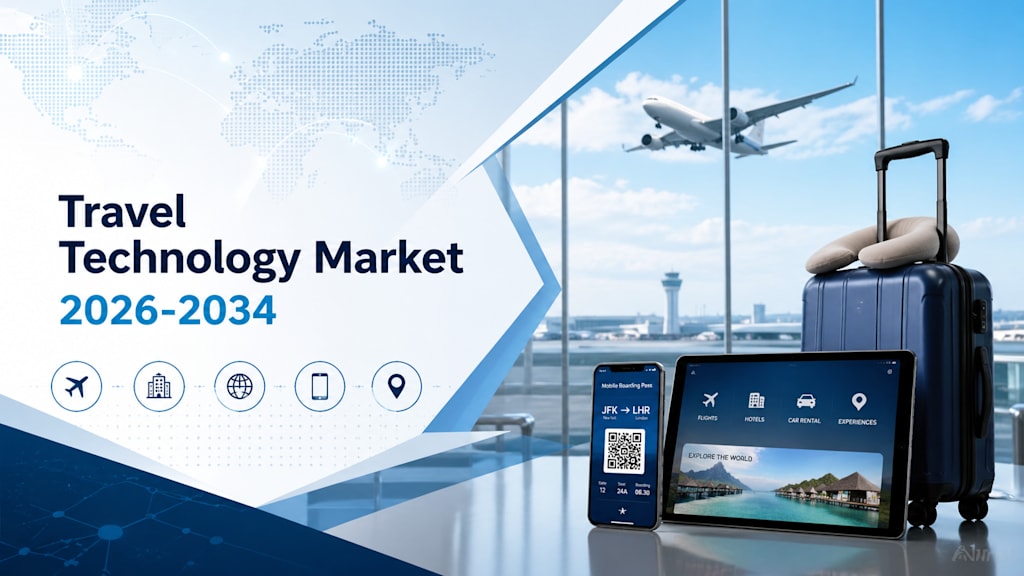
According to IMARC Group's latest research publication, The global travel technology market size reached USD 11.3 Billion in 2025. Looking forward, IMARC Group expects the market to reach USD 18.7 Billion by 2034, exhibiting a growth rate (CAGR) of 5.75% during 2026-2034.
How AI is Reshaping the Future of the Travel Technology Market
- Predictive Demand Forecasting and Personalization at Scale: AI-powered algorithms analyze traveler behavior, booking history, and real-time preferences to deliver hyper-personalized itineraries and recommendations with exceptional accuracy. Platforms leveraging these capabilities have improved customer engagement rates significantly, enabling travel companies to move beyond generic offerings toward one-to-one experience design. Over 60% of corporate travel agencies now rely on AI analytics for itinerary planning, while around 42% of travelers globally used AI tools to plan trips, reflecting a structural shift in how journeys are conceived and organized. This capability is particularly valuable for airlines and online travel agencies where aligning inventory availability with individual traveler preferences drives both conversion and loyalty.
- Mobile-First Booking and Real-Time Travel Management: Mobile technology has become the primary channel through which travelers research, book, and manage their journeys. Over 75% of travelers now use smartphones to search flights, compare hotels, and manage reservations, while mobile wallet payments for travel services grew by 70% in a two-year period. AI-integrated mobile applications provide real-time flight status updates, instant rebooking during disruptions, dynamic pricing alerts, and personalized push notifications, making mobile platforms not just booking tools but end-to-end travel companions. Booking.com reports that over half of its total reservations are made via mobile, with exclusive in-app pricing driving sustained loyalty among frequent travelers.
- Biometric Verification and Contactless Passenger Processing: Machine learning and computer vision are enabling fully automated passenger experiences across airports and transit hubs globally. Biometric verification systems using facial recognition and fingerprint scanning can reduce passenger processing times by up to 40%, drastically cutting queues and minimizing manual document handling. Over 300 airports worldwide have integrated facial recognition technologies to streamline check-ins, while IATA's One ID program is progressively replacing physical travel documents with biometric credentials across international routes. Abu Dhabi's Zayed International Airport is deploying biometrics at every checkpoint under its Smart Travel initiative, establishing a benchmark for frictionless, end-to-end automated travel.
- Global Distribution System Transformation and NDC Adoption: AI-driven analytics are reshaping how Global Distribution Systems operate, transitioning them from legacy aggregation networks to sophisticated, retail-oriented platforms capable of offering richer, differentiated content. GDS platforms handled more than 500 million booking transactions in a single year, with over 110,000 travel agents globally relying on them daily for inventory access, pricing, and reservations across airlines, hotels, and car rental services. In December 2024 alone, Amadeus announced NDC content distribution deals with LATAM Airlines and Saudia, while Sabre highlighted NDC agreements with Qantas and Emirates, and Travelport signed Cathay Pacific, signaling an accelerated industry-wide shift toward modern distribution standards.
- Smart Hotel Technology and AI-Driven Hospitality Operations: AI and Internet of Things technologies are transforming how hotels manage operations and deliver personalized guest experiences. Hospitality IT systems are now implemented in 71% of global hotel chains for reservation management, customer relationship management, and virtual concierge services. Large-scale hotel groups invested over USD 2.5 billion globally in smart room automation and integrated CRM solutions to enhance personalization, enabling guests to control room environments, access curated local recommendations, and manage service requests through a single mobile interface. These intelligent systems reduce operational costs by streamlining staff workflows while elevating guest satisfaction across properties.
- Augmented and Virtual Reality for Destination Discovery: Immersive technologies are fundamentally changing how travelers evaluate and select destinations before committing to a booking. Research by Amadeus Hospitality found that 70% of travelers would use virtual or VR tours to explore destinations ahead of their visit, significantly reducing booking hesitation for high-value experiences. The AR market in travel is projected to grow from USD 29 billion to USD 108 billion over the coming decade, with travel agencies already using VR walkthroughs to showcase luxury properties and destinations to prospective clients. Cities such as Stirling in Scotland have launched AR navigation maps for visitors, illustrating how immersive technology is evolving from a novelty into a mainstream planning tool.
- Sustainability-Driven Technology and Eco-Conscious Travel Solutions: Growing consumer awareness around environmental responsibility is driving the integration of sustainability features directly into travel technology platforms. From carbon footprint calculators embedded in booking engines to AI tools that proactively surface lower-emission routing options, sustainability has become a genuine product differentiator rather than an optional add-on. Digital route optimization and virtual destination previews further reduce unnecessary travel and carbon output, enabling tour operators and destination management companies to align their product offerings with the rising demand for responsible and eco-conscious travel experiences.
Travel Technology Industry Overview:
The global travel technology sector is experiencing a period of accelerated transformation, driven by record travel volumes, rising digital adoption, and deepening investment in next-generation infrastructure. The global economic contribution of the travel and tourism sector reached an all-time high of USD 11.1 trillion, with tourism contributing an additional USD 770 billion compared to the previous year and accounting for one in every ten dollars generated across the global economy. An estimated 1.4 billion tourists travelled internationally in a single year, representing an 11% increase over the prior period and reflecting a robust recovery across major source markets and Asia-Pacific destinations. Technology investment is accelerating in response to this growth, with an average 14% increase in technology spending planned across the travel industry and 91% of travel companies surveyed expecting moderate to aggressive increases in their technology budgets. Singapore and the UAE launched smart tourism innovation funds totaling USD 600 million to modernize airport infrastructure, enable digital immigration processes, and promote cashless travel ecosystems, while the European Union allocated over EUR 200 million for AI-powered cross-border travel coordination tools under its Digital Europe Program. These government-backed initiatives underscore the strategic importance of travel technology as a driver of national economic competitiveness and tourism development.
Travel Technology Market Trends and Drivers
The explosive growth of online and mobile travel booking is the primary structural force reshaping the global travel technology market. Over 74% of global travel bookings are now completed via online platforms, reflecting a steep increase from 61% just a few years prior. By 2026, more than 65% of all bookings are expected to be completed online, with over 55% of those transactions originating from smartphones, fundamentally establishing mobile-first architecture as the industry baseline rather than an emerging trend. AI is projected to drive 32% of travel revenue by 2026, with businesses that fail to integrate predictive personalization, dynamic pricing, and intelligent automation at risk of significant market share erosion. Generative AI has emerged as the single most prioritized technology investment among travel industry leaders, cited as a top priority by 46% of travel technology decision-makers surveyed globally, a figure rising to 61% in Asia Pacific markets, where digital adoption is advancing at the fastest pace.
Voice search and conversational AI are opening new booking channels and redefining how travelers interact with service platforms. Voice search already accounts for 22% of travel queries in North America, with voice-enabled booking assistants projected to reach 100 million users globally, representing a significant investment opportunity for travel companies developing next-generation interface strategies. The cloud kitchen and delivery-first model has its parallel in travel through the rapid growth of ghost hotel operations and digital-only booking channels, with the broader hospitality sector embracing technology-led, asset-light models that generate higher margins and greater geographic flexibility. Automation and AI-based personalization now drive over 40% of travel application functions, reducing operational costs while simultaneously improving user satisfaction scores across platforms.
Retail sector investment, sustainable technology integration, and infrastructure modernization are creating additional growth avenues across the travel technology ecosystem. The contactless payment market for travel services is projected to reach USD 162.56 billion over the coming years, confirming that the elimination of physical touchpoints has become a permanent structural feature of the traveler experience rather than a pandemic-era adaptation. Online short-term rental bookings alone are approaching USD 190 billion, demonstrating the scale of digital commerce now flowing through technology-mediated travel platforms. Hotel technology investment in smart room automation and integrated property management systems exceeds USD 2.5 billion globally, while transportation network upgrades including 5G infrastructure expansion are reducing friction in real-time travel data delivery and enabling more responsive, adaptive travel services. Regional regulatory frameworks are evolving in parallel, with authorities enforcing digital security and data protection standards that create consistent market conditions for established technology providers while raising the bar for new entrants.
Leading Companies Operating in the Global Travel Technology Industry:
- Amadeus IT Group SA
- Sabre Corporation
- Travelport International Limited
- Navitaire LLC
- CRS Technologies India Pvt Ltd
- Qtech Software Private Limited
- Lemax
- mTrip
- Tramada Systems Pty Ltd
Travel Technology Market Report Segmentation:
By Product Type:
- Airline and Hospitality IT Solutions
- Global Distribution System (GDS)
Global Distribution System (GDS) represents the largest segment, as it enables seamless real-time transactions between airlines, hotels, car rental providers, and travel agencies at a scale and speed that no direct booking channel can replicate independently.
By Application:
- Travel Industry
- Tourism Industry
- Hospitality Industry
The travel industry segment holds the largest application share, driven by the widespread adoption of booking engines, customer relationship management systems, and AI-powered pricing platforms across airlines, travel agencies, and corporate travel management companies.
Regional Insights:
- North America (United States, Canada)
- Asia Pacific (China, Japan, India, South Korea, Australia, Indonesia, Others)
- Europe (Germany, France, United Kingdom, Italy, Spain, Russia, Others)
- Latin America (Brazil, Mexico, Others)
- Middle East and Africa
North America exhibits a clear dominance in the travel technology market, holding approximately 45% of global market share, driven by high consumer spending, advanced digital infrastructure, and the presence of major industry players including Amadeus, Sabre, and Expedia Group. Asia Pacific is the fastest-growing region, with mobile travel bookings accounting for 62% of total reservations, reflecting the region's deeply smartphone-first consumer behavior and its rapidly expanding middle-class travel demographic.
Recent News and Developments in the Travel Technology Market
- October 2025: Amadeus IT Group expanded its partnership with Microsoft to deploy advanced generative AI tools designed to automate corporate travel booking workflows and enhance dynamic pricing models across North American distribution channels, marking a significant step in the commercialization of AI-powered travel management.
- June 2025: Qantas disclosed a cyberattack that compromised an external customer service platform, exposing personal data of approximately six million customers, highlighting the critical importance of cybersecurity investment as a non-negotiable component of travel technology infrastructure.
- December 2024: Amadeus announced NDC content distribution agreements with LATAM Airlines and Saudia alongside existing EDIFACT content, with Sabre simultaneously securing NDC deals with Qantas and Emirates and Travelport signing Cathay Pacific, collectively accelerating the industry-wide transition toward modern airline retailing standards.
- December 2024: EHang Holdings Limited partnered with Zhejiang Sunriver Culture and Tourism Co. Ltd. to promote urban air mobility and smart tourism solutions in China, deploying autonomous aerial vehicles at scenic locations to enrich visitor experiences and establish a new benchmark for technology-integrated cultural tourism.
- January 2024: Sabre Corporation entered into a multi-year distribution contract with International Airlines Group (IAG), advancing contemporary travel retailing methods and reinforcing innovation in airline distribution across IAG's global network.
Note: If you require specific details, data, or insights that are not currently included in the scope of this report, we are happy to accommodate your request. As part of our customization service, we will gather and provide the additional information you need, tailored to your specific requirements. Please let us know your exact needs, and we will ensure the report is updated accordingly to meet your expectations.
About the Creator
Abhay Rajput
I am working in market research company that provides market and business research intelligence across the globe.
Enjoyed the story? Support the Creator.
Subscribe for free to receive all their stories in your feed.
Comments
There are no comments for this story
Be the first to respond and start the conversation.