
Tomato Processing Market Report: Ketchup Demand, Retail Growth & Forecast to 2034
How private label products, modern retail channels, and rising household demand are transforming the global tomato processing market outlook worldwide.

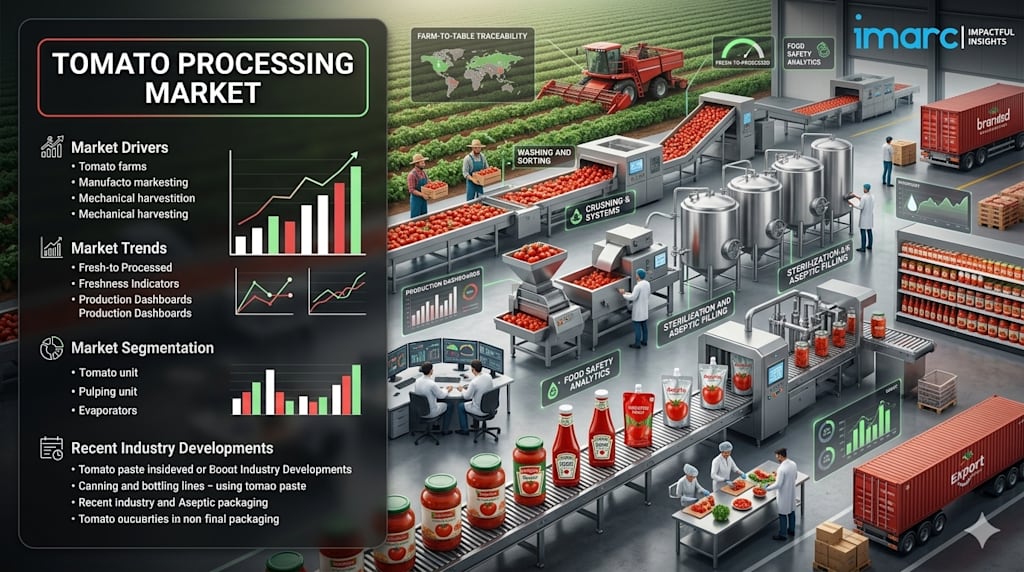
Rising demand for convenience foods, globalization of cuisine, and growing health awareness around lycopene-rich diets are driving tomato processing market growth, supported by advancements in processing technology, clean-label product innovation, and expanding retail and food service distribution channels. According to IMARC Group's latest data, the global tomato processing market size reached 50.1 Million Tons in 2025. Looking forward, IMARC Group expects the market to reach 66.3 Million Tons by 2034, exhibiting a growth rate (CAGR) of 3.08% during 2026-2034. Sauces currently dominate the product type segment, while the retail market holds the leading share across distribution channels.
The tomato processing industry represents a large-scale global sector with volumes exceeding 50 million tons, exhibiting steady year-on-year expansion. Demand is driven by rising consumer preference for convenient, shelf-stable meal solutions, the globalization of tomato-heavy cuisines such as Italian, Mexican, and Indian cooking, and growing awareness of the nutritional benefits of lycopene and other antioxidants found in processed tomato products. Retail innovation and e-commerce, continuous investment in advanced sorting and pasteurization technologies, and product reformulation targeting reduced sodium and clean-label claims are further accelerating uptake.
Tomato Processing Market Growth Drivers:
Rising Demand for Convenience Foods
Busy lifestyles and urbanization have made processed tomato products a staple for quick, easy meal preparation at home and in food service settings. Ready-made sauces, pastes, and ketchup eliminate preparation time while delivering consistent flavor, making them highly attractive to millennials and Gen Z consumers who prioritize speed without compromising nutrition. Manufacturers are continuously innovating to offer lower-sodium, preservative-free formulations that align with health-conscious purchasing behavior, further widening the consumer base across retail and food service channels globally.
Globalization of Cuisine and Culinary Integration
International travel, global restaurant chain expansion, and the proliferation of food media have introduced tomato-centric cuisines such as Italian pasta sauces, Mexican salsas, and Indian gravies to markets across Asia, Africa, and the Middle East. This culinary integration creates sustained demand for processed tomato products including purees, pastes, and canned tomatoes as foundational cooking ingredients. The desire for authentic global food experiences is pushing both mainstream retail buyers and food service operators to increase procurement of processed tomato variants tailored to regional taste profiles.
Health and Nutritional Awareness Around Lycopene
Tomatoes are a significant source of lycopene, vitamins A and C, and other antioxidants, and processing can actually increase the bioavailability of lycopene compared to fresh consumption. This nutritional advantage is driving consumer interest in processed tomato products marketed with functional health claims. Brands are responding by prominently labeling lycopene content, removing artificial preservatives, and launching organic and non-GMO certified lines.
Tomato Processing Market Trends:
Advancements in Processing and Packaging Technology
Innovations in machine vision-based sorting and grading systems have streamlined production lines, significantly reducing waste and improving batch consistency across high-volume processing facilities. Developments in vacuum sealing, modified atmosphere packaging, and continuous pasteurization have extended shelf life without reliance on synthetic preservatives, directly supporting clean-label product launches.
Farm-to-Table Movement and Organic Product Premiumization
Processors who adapt to the farm-to-table trend by offering specialty organic, non-GMO, and sustainably sourced products are finding strong new growth channels in premium retail and e-commerce. Consumer demand for full traceability, from the farm to the factory to the shelf, is reshaping sourcing strategies and encouraging closer partnerships between processors and tomato growers.
E-Commerce Expansion and Digital Shelf Presence
The rapid growth of online grocery platforms has permanently altered distribution dynamics for processed tomato products, making specialty and artisanal variants accessible to consumers in markets previously limited to mainstream supermarket selections. Brands investing in digital shelf presence, including optimized product listings, subscription models, and direct-to-consumer channels, are gaining meaningful market share advantages.
Recent News and Developments in the Tomato Processing Market
August 2025: Del Monte Foods announced a major capacity upgrade at its California tomato processing facility, incorporating high-speed optical sorting technology aimed at reducing production waste by approximately 18% while improving overall output quality for both retail and food service customers.
September 2025: Conagra Brands launched a new organic pasta sauce line under its Hunt's brand, specifically targeting premium retail channels and responding to growing consumer demand for clean-label tomato products with no added sugar and non-GMO certification.
March 2026: Kagome Co., a leading Japanese tomato processing company, announced a strategic partnership with a Brazilian agri-tech firm to develop drought-resistant tomato cultivars specifically optimized for industrial processing, addressing supply reliability concerns linked to increasing climate variability in key growing regions.
April 2026: India's Ministry of Food Processing Industries expanded its Pradhan Mantri Kisan SAMPADA Yojana scheme to include enhanced cold storage grants for horticultural producers, creating fresh investment incentives for tomato paste and puree manufacturers across Maharashtra and Karnataka.
Note: If you require specific details, data, or insights that are not currently included in the scope of this report, we are happy to accommodate your request. As part of our customization service, we will gather and provide the additional information you need, tailored to your specific requirements. Please let us know your exact needs, and we will ensure the report is updated accordingly to meet your expectations.
About the Creator
Suhaira Yusuf
I specialize in Consumer Insights, focusing on transforming detailed market data into strategic business solutions that accelerate growth and improve customer engagement.
Enjoyed the story? Support the Creator.
Subscribe for free to receive all their stories in your feed.
Comments
There are no comments for this story
Be the first to respond and start the conversation.