
Title: The $3 Billion Bet Behind Every New Biologic: Recombinant Cell Culture Supplements Market
How engineered proteins are quietly replacing animal serum — and reshaping the future of drug manufacturing.
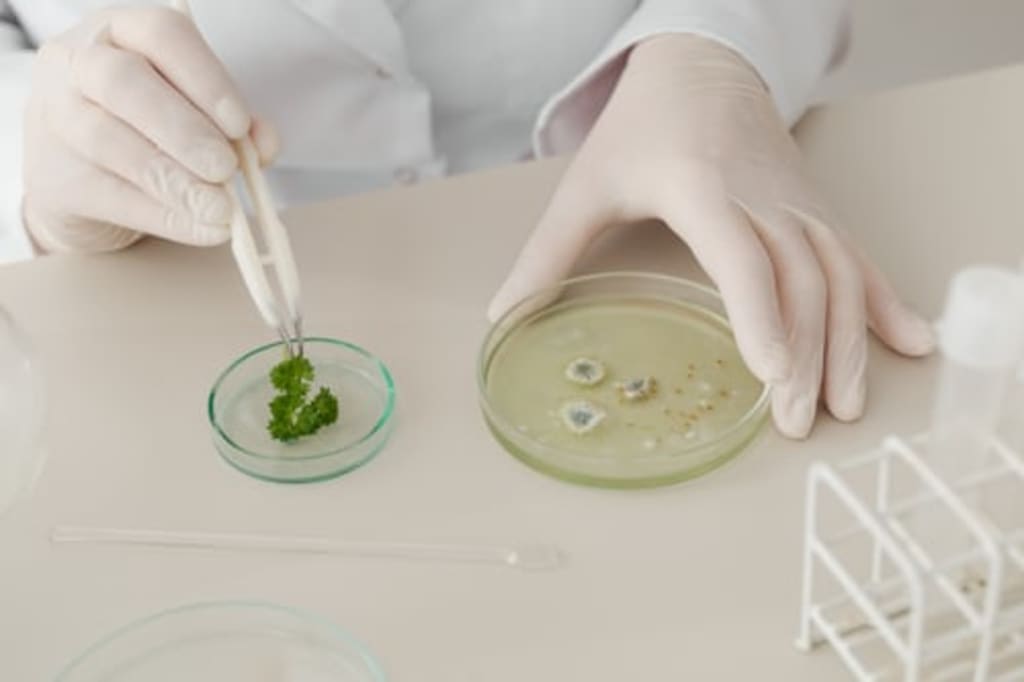
The Quiet Revolution Happening Inside Bioreactors
Most people have never heard of recombinant albumin. Fewer still could tell you what a chemically defined media formulation does. But these molecular-scale decisions — made by bioprocess engineers in facilities from New Jersey to Singapore — are quietly reshaping how every next-generation cancer drug, CAR-T cell therapy, and mRNA vaccine gets made. The recombinant cell culture supplements market, valued at roughly $917 million in 2025, is projected to nearly quadruple to $3.25 billion by 2035, growing at a 13.5% compound annual rate. Those numbers deserve more attention than they typically get; a detailed sector breakdown is available in this recombinant cell culture supplements industry overview.
Why Animal Serum Became a Liability
For decades, the standard approach to growing cells in a laboratory was simple, if a little crude: bathe them in fetal bovine serum. It worked. The problem is that "it worked" is not the same as "it worked consistently." Serum is a biological soup. Its exact composition varies between batches, between suppliers, between slaughterhouses in different countries. For a pharmaceutical company trying to manufacture a monoclonal antibody to the same specifications every single time, that variability is not an inconvenience — it is a fundamental threat to product quality.
Regulatory agencies, particularly the U.S. Food and Drug Administration, have spent years tightening their expectations around exactly this issue. The push toward chemically defined, animal-component-free media isn't just an ethical preference or a niche scientific trend. It's increasingly a compliance requirement. And recombinant supplements — proteins like growth factors, insulin, transferrin, and albumin produced through engineered expression systems rather than animal extraction — are the primary tools filling that gap.
The Companies Driving the Transition
The major players in this space read like a who's-who of life sciences infrastructure. Thermo Fisher Scientific, Merck KGaA, Sartorius, and Lonza are all deeply embedded in the transition. In March 2026, Merck KGaA announced its acquisition of HUB Organoids, positioning itself at the intersection of 3D cell culture and recombinant supplement formulation — a bet that the future of drug screening lies in organoid models rather than flat cell monolayers. Lonza, meanwhile, has been expanding its GMP production capacity for mRNA and viral vectors, incorporating specialized recombinant proteins into its manufacturing workflows for both autologous and allogeneic cell therapies.
Sartorius has taken a slightly different angle, doubling down on its Recombumin line — a recombinant human albumin product used as a stabilizer during cryopreservation. The logic is sound: as cell and gene therapies move toward commercial scale, the logistics of freezing and transporting living cells becomes a critical bottleneck, and protecting cell viability during that process has real commercial value.
Bio-Techne went a step further in February 2026, introducing a fully defined synthetic platform specifically for 3D stem cell and organoid culture — animal-free by design, aimed squarely at the regenerative medicine sector where regulators are most demanding about traceability.
Who's Actually Buying, and What's Driving Growth
Pharmaceutical and biotechnology companies account for 58.4% of end-user demand, which makes intuitive sense. They run the largest bioreactors, face the strictest regulatory scrutiny, and have the financial resources to invest in higher-cost recombinant inputs. But the contract manufacturing sector is also emerging as a significant pull factor. As more biotech startups outsource production to CDMOs rather than building their own facilities, those contract manufacturers become de facto standardizers — when they adopt recombinant supplements, dozens of client programs shift simultaneously.
On the product side, recombinant growth factors lead with a 34.8% share, followed by a cluster of cytokines, hormones, and albumin variants. Biopharmaceutical production, not surprisingly, dominates application demand at 42.6%, outpacing regenerative medicine and cancer research applications — though those segments are growing fastest in percentage terms. Mammalian cell-based expression systems, which produce proteins with the complex folding and post-translational modifications that therapeutic applications require, account for 45.7% of production by source.
Geographically, North America holds 46.3% of the market today, anchored by U.S. biopharmaceutical manufacturing density. The recombinant cell culture supplements market is, however, expected to see its fastest growth in Asia Pacific, where China, India, South Korea, and Singapore are all investing heavily in domestic biologics manufacturing capacity — partly for commercial reasons, partly for the kind of supply chain independence that the COVID-19 pandemic made a national priority for many governments.
Cost Is Still the Honest Obstacle
It would be misleading to paint this as a frictionless transition. Recombinant supplements are more expensive to produce than their animal-derived counterparts — the expression systems, purification steps, and quality control requirements are genuinely complex and costly. Smaller academic labs and early-stage biotechs often can't justify the price premium, particularly when their experiments don't yet require the stringent consistency that commercial manufacturing demands. There are also real technical challenges: a recombinant growth factor that performs beautifully in one cell line can behave unpredictably in another, and optimization adds both time and expense.
Current trade conditions aren't helping. U.S. tariffs on imported laboratory equipment and biochemical inputs are raising operational costs for facilities that rely on globally sourced components, potentially slowing capacity expansion among smaller manufacturers. Ironically, though, those same dynamics are encouraging investment in domestic production and localized supply chains — which could, over a decade, reduce some of the structural cost disadvantages that currently hold back adoption.
What the next ten years likely brings is not a sudden industry-wide switch but a gradual, regulatory-driven ratchet. As each new cell therapy or gene therapy earns approval under xeno-free manufacturing conditions, it sets a precedent that becomes harder for competitors to ignore. The supplement suppliers smart enough to build modular, flexible portfolios — ones that can scale from a research flask to a 2,000-liter bioreactor without reformulation — are positioning for a market that isn't just growing, but fundamentally maturing into something the biopharmaceutical industry will depend on for its most ambitious treatments.
About the Creator
Enjoyed the story? Support the Creator.
Subscribe for free to receive all their stories in your feed.
Comments
There are no comments for this story
Be the first to respond and start the conversation.