
Thermal Paper Market: BPA-Free Paper Adoption, Regulatory Shifts & Market Expansion
How BPA-free thermal paper innovations, sustainability regulations, and eco-friendly packaging trends are transforming manufacturing strategies and industry competitiveness

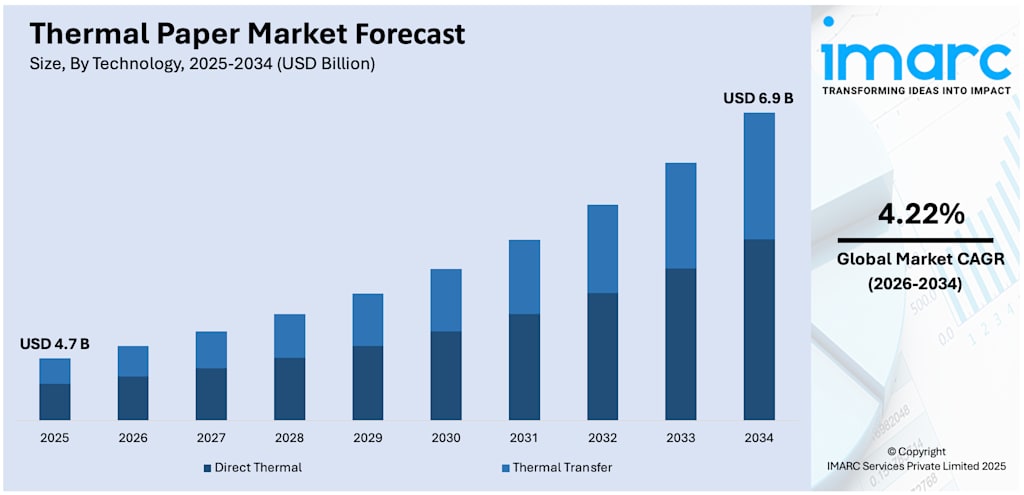
The growing integration of automation in retail, logistics, and banking sectors is accelerating the global demand for reliable transaction solutions, which in turn fuels the consumption of high-grade paper for POS applications, self-service kiosks, and shipping labels. According to IMARC Group’s latest data, the global thermal paper market size was valued at USD 4.7 Billion in 2025. Looking forward, IMARC Group estimates the market to reach USD 6.9 Billion by 2034, exhibiting a CAGR of 4.22% from 2026-2034.
Thermal paper now represents a multi-billion-dollar global market showing steady year-on-year expansion. Demand is driven by the rapid expansion of e-commerce distribution networks, the widespread adoption of point-of-sale terminals, and strict requirements for clear, durable product labeling in pharmaceutical and food supply chains. Technical innovation in protective topcoats, the rollout of self-checkout counters, and strict international shipping standards are further accelerating market uptake.
Thermal Paper Market Growth Drivers:
- Expanding E-Commerce Logistics and Warehouse Labeling
The explosive rise in online shopping forces fulfillment centers to process millions of packages daily, generating vast demand for highly visible tracking media. Warehouse operators rely on automated print-and-apply label configurations to maintain accurate package routing and real-time transit visibility. This surge in volume directly expands the consumption of thermal materials for barcode printing, packing slips, and final delivery labels. Because supply chain systems depend on immediate, scannable documentation to prevent sorting errors, logistics companies require material formulations that consistently withstand abrasion, humidity variations, and mechanical friction throughout the shipping journey.
- Widespread Adoption of POS Systems and Self-Checkout Kiosks
Retail environments, restaurants, and grocery stores are systematically upgrading infrastructure to streamline consumer transactions and minimize wait times. The continuous installation of self-checkout terminals and mobile point-of-sale systems ensures a constant need for reliable receipt paper at transaction counters. Retailers demand high-quality rolls that offer rapid printing speeds and crisp clarity without the operational downtime associated with ink cartridge replacements. This systemic dependency on direct thermal printing technologies safeguards consistent utility consumption across high-volume commercial channels, ensuring that daily banking transactions and purchase validations remain fully documented for consumer records.
- Strict Product Traceability and Pharmaceutical Labeling Requirements
Global regulatory mandates across healthcare, biotechnology, and food industries require rigorous end-to-end traceability to protect consumer safety and combat counterfeiting. Pharmaceutical companies and food packaging facilities use specialized thermal labels to clearly display critical data, such as production batch numbers, expiration dates, and specialized matrix barcodes. Because these labels frequently face challenging storage conditions, including cryogenic freezing, chemical exposure, or sudden temperature fluctuations, manufacturers must utilize dependable direct thermal printing. This technical necessity guarantees that vital patient instructions and ingredient declarations remain legible from the factory floor directly to the end user.
Thermal Paper Market Trends:
- Transition Toward Bisphenol-Free and Sustainable Formulations
Stricter occupational safety regulations and heightened corporate social responsibility programs are causing manufacturers to shift away from traditional chemical developers. Production facilities are actively re-engineering chemical coating formulations to replace both Bisphenol A and Bisphenol S with advanced, non-phenolic alternatives that prevent dermal absorption risks for retail workers. This regulatory push has sparked extensive product development in eco-friendly alternatives, including vitamin-based chemical developers or innovative wood-derived polymers like lignin. The resulting sustainable paper products maintain premium contrast levels while safely integrating into standard municipal recycling streams without polluting the recycled pulp supply.
- Innovations in Durable Topcoated Technologies for Extended Archival Life
Industrial users increasingly demand printouts that preserve information for multiple years without fading when exposed to harsh outdoor conditions. Chemical engineers are introducing high-performance, topcoated variations that provide an extra protective layer against water, heavy oils, rubbing alcohol, and intense ultraviolet light exposure. These durable formulations are widely utilized for long-term archiving needs, transit tickets, parking citations, and multi-year warehouse storage tags. By preventing the premature fading common in older, non-topcoated alternatives, these advanced material coatings expand direct thermal printing applications into demanding industrial sectors that previously relied on alternative printing technologies.
- Integration of Color-Shifting Security Elements and Anti-Counterfeiting Features
To combat fraud and protect transaction verification, manufacturers are incorporating advanced security technologies directly into raw paper substrates. Modern premium rolls often feature integrated security details, including hidden fluorescent threads, complex micro-printing patterns, or distinct color-shifting chemical indicators that appear under specific frictional heat. These features allow event venues, transportation authorities, and high-end retailers to instantly verify the authenticity of admission tickets, lottery slips, and official purchase receipts. This focus on product security drives high-value material upgrades, allowing businesses to seamlessly integrate immediate visual verification directly into their standard physical printing workflows.
Recent News and Developments in Thermal Paper Market
- September 2025: A global packaging materials leader launched an ultra-durable, weather-resistant topcoated direct thermal label designed explicitly for high-speed industrial automated labeling machines, aimed at maximizing barcode legibility under severe outdoor shipping and logistics conditions.
- October 2025: A major chemical developer specialist completed a strategic production facility upgrade to double the output of its proprietary non-bisphenol color developers, matching the surging demand from corporate suppliers looking to replace conventional thermal coatings.
- January 2026: A leading technology and thermal printing brand introduced a highly efficient, lightweight paper rolls solution that reduces raw material consumption per roll by 15%, aligning with corporate corporate sustainability metrics while maximizing printing run times.
Note: If you require specific details, data, or insights that are not currently included in the scope of this report, we are happy to accommodate your request. As part of our customization service, we will gather and provide the additional information you need, tailored to your specific requirements. Please let us know your exact needs, and we will ensure the report is updated accordingly to meet your expectations.
About the Creator
Andrew Sullivan
Hello, I’m Andrew Sullivan. I have over 9+ years of experience as a market research specialist.
Enjoyed the story? Support the Creator.
Subscribe for free to receive all their stories in your feed.
Comments
There are no comments for this story
Be the first to respond and start the conversation.