
The World Needs 2.4 Million Pilots. Who's Training Them?
A global shortage, a $31 billion market, and the race to build aviation's next generation of cockpit crew.
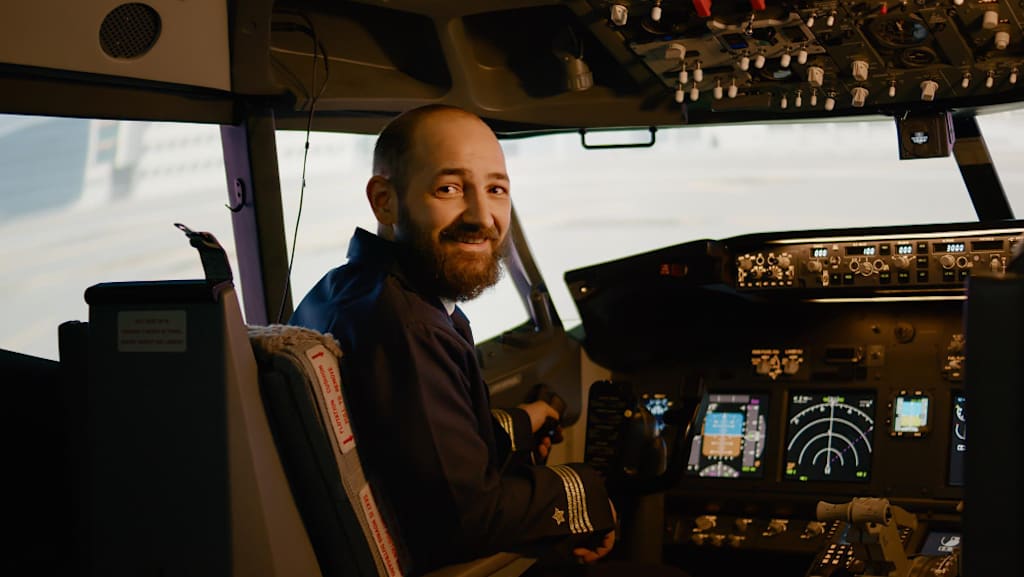
The World Needs 2.4 Million Pilots. Training Them Is Becoming a Billion-Dollar Race.
By the time you finish reading this sentence, somewhere in the world a commercial airline is turning away a qualified aircraft because there's no one certified to fly it. That's not hyperbole. Regional carriers in the United States grounded hundreds of aircraft over the past few years due to sheer pilot scarcity, and the Regional Airlines Association has been sounding that alarm loudly, citing the loss of meaningful air service at dozens of smaller airports. The Pilot Training Market Size and share projections have become, in their own quiet way, one of the more consequential economic stories in aviation — a detailed breakdown of this trajectory is documented in this pilot training industry market overview. The numbers being projected aren't modest. Market analysts peg the sector's value at roughly $9.7 billion in 2025, climbing toward $31.2 billion by 2035, expanding at a compound annual growth rate of 12.4%. That's not a niche industry quietly humming along. That's a structural transformation.
The Shortage Nobody Planned For
Boeing's 2025 Pilot and Technician Outlook puts the global need at nearly 2.4 million new aviation professionals through 2044. North America alone will require around 127,000 new pilots by 2042, according to the same projections. And the pipeline feeding that demand is, to put it plainly, struggling. Flight schools were shuttered during the pandemic. Training programs froze. Then air travel returned — faster and more aggressively than virtually anyone predicted — and the industry was caught flat-footed.
What makes this shortage structurally stubborn is the retirement math. U.S. federal regulations mandate that airline pilots retire at 65. That's a hard ceiling, and thousands of senior captains age out every year regardless of how much the airlines need them. They cannot be retained. They cannot be delayed. Meanwhile, turning a raw student into a commercially certified pilot doesn't happen in a semester. Depending on the program, pathway, and country, it takes years and tens of thousands of dollars. That gap — between the rate of attrition and the pace of replacement — is exactly what's feeding the training market's explosive expansion.
Where the Money Is Flowing, and Why Asia Is the One to Watch
Europe currently leads in pilot training market share, holding roughly 30% in 2025, backed by established institutions like Lufthansa Aviation Training and the density of commercial aviation infrastructure across Germany and neighboring markets. But the real momentum story is elsewhere. The Asia-Pacific region is growing fastest, contributing approximately 20% of the global training market this year, with China, India, and Southeast Asia driving the bulk of that demand. India's case is instructive: Air India placed a massive order for 220 Boeing aircraft, which cascades directly into a need for hundreds of newly trained pilots to operate them. You cannot buy a fleet without simultaneously building the human infrastructure to run it.
In the Middle East, a similar pattern is playing out. FlyDubai placed an order for 225 aircraft in 2025 — a mix of A320neos and 737 MAXs — while Qatar Airways locked in 160 widebodies in what became Boeing's largest widebody order of the year. Each of those aircraft needs trained crew. The Emirates Flight Training Academy reported a 30% rise in Commercial Pilot License enrollments in 2024, directly tied to regional airline hiring initiatives and partnerships with manufacturers. Saudi Arabia's launch of Riyadh Air adds another layer — a government strategy to position Riyadh as a global aviation hub is not merely a PR ambition; it implies a training infrastructure buildout measured in the hundreds of millions.
Simulators, AI, and the Uncomfortable Economics of Learning to Fly
One area reshaping the pilot training market size and share dynamics is simulation technology. Full-flight simulators — the ones that replicate cockpit conditions with enough fidelity to satisfy aviation regulators — can cost upward of $15 million each. The companies that build and operate them, chiefly CAE Inc. and FlightSafety International, have quietly become power centers in aviation training. CAE, the Montreal-based simulation giant, has expanded its training network aggressively and now operates facilities across multiple continents. These aren't flight schools in the traditional sense; they're technology businesses that happen to train pilots.
The emergence of AI-driven assessment tools and virtual reality training environments is beginning to compress certain parts of the training timeline and, slowly, the cost. But here's the honest counterweight to that optimism: you cannot yet fully replace seat time and physical hours in an aircraft. Regulatory bodies, particularly the FAA, maintain strict minimum flight-hour requirements that no software has managed to negotiate away entirely. Cheaper simulation tools help. They don't solve the structural economics of producing a licensed, airworthy pilot.
What the Next Decade Actually Looks Like
Aircraft delivery delays from both Boeing and Airbus created an odd wrinkle in 2025 — because airlines couldn't receive new planes on schedule, they weren't placing as many Type Rating training orders. That's the course that certifies pilots on specific aircraft models. In that narrow segment, demand actually softened. But the broader trend is unmistakable. The ab initio pipeline — taking someone from zero experience to a commercial license — is expanding in almost every major market. Airlines have moved beyond hoping the industry fixes itself and are now building in-house cadet programs and signing long-term training partnerships.
The world's commercial aviation system runs on a steady, predictable supply of qualified pilots. Right now, that supply is neither steady nor predictably sufficient. The institutions positioned to close that gap — whether they're established simulation companies, Gulf state academies, or regional flight schools in Vietnam and Indonesia — are sitting at the intersection of genuine need and serious capital. That combination tends to produce markets that move quickly, and this one is moving.
About the Creator
Mark K. Belton
I’m Mark K. Belton, 26 years old, currently working as a Digital Marketing Intern. I have a strong interest in digital marketing and have been developing my skills in SEO, social media marketing, content creation, and online campaign
Enjoyed the story? Support the Creator.
Subscribe for free to receive all their stories in your feed.
Comments
There are no comments for this story
Be the first to respond and start the conversation.