
The Transfer Switch Market Is Quietly Powering the Modern World
From hospital operating rooms to solar microgrids, a $2.3B industry keeps critical infrastructure alive.
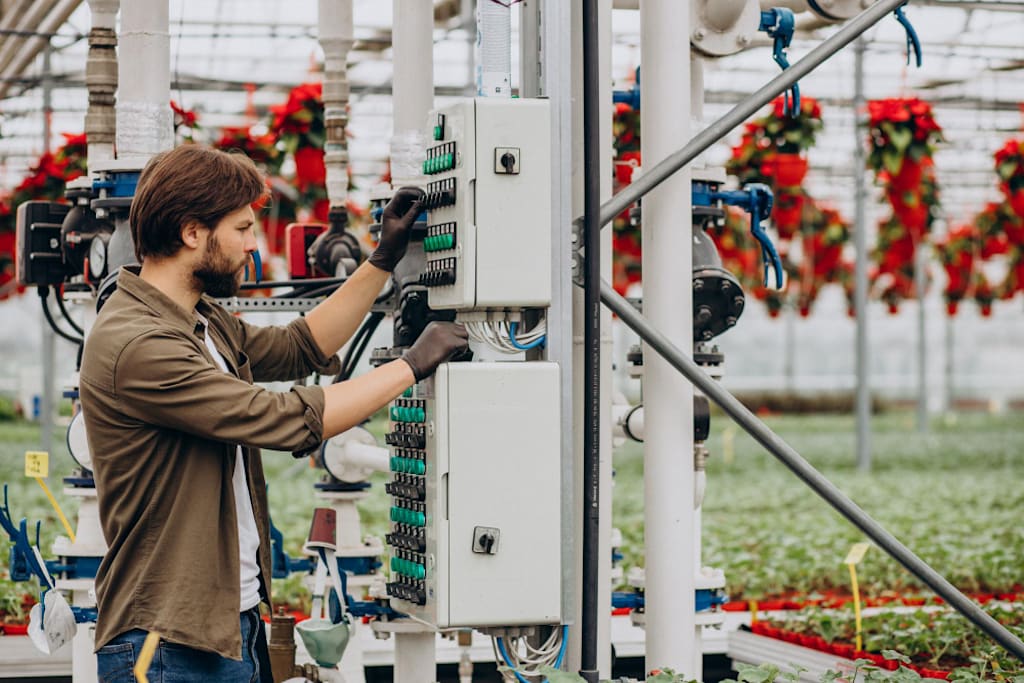
When the Lights Go Out, This $2.3 Billion Industry Keeps Everything Running
Every major hospital, data center, and factory floor has one thing in common: somewhere in the building, a transfer switch is waiting for the grid to fail. It's not glamorous infrastructure. Most facility managers couldn't describe it at a cocktail party. But when a power outage hits mid-surgery or mid-server transaction, that device — not the generator itself — is what determines whether the backup kicks in within milliseconds or whether someone has to run to a panel and flip it manually. The global Transfer Switch Market size stands at USD 2.3 billion in 2025, and the forces driving it aren't slowing down. A detailed breakdown of segments, regional trends, and competitive dynamics is available in this transfer switch industry analysis.
The basic engineering hasn't changed much in decades. A transfer switch monitors an incoming power supply and, the moment it detects a failure or voltage anomaly, redirects the electrical load to a backup source — a diesel generator, a battery bank, or increasingly, a solar-plus-storage system. What has changed is everything surrounding that core function: the speed at which it must operate, the number of sources it must arbitrate between, and the digital intelligence it now needs to carry.
Why Automatic Systems Are Taking Over
Manual transfer switches still exist, and for small residential applications, they remain a cost-effective choice. But for anything with serious operational stakes, automatic systems have become the default. In 2025, automatic transfer switches account for 65.4% of the total market by type — a dominance that reflects not brand preference but operational reality. A hospital ICU cannot wait for a technician to walk to the electrical room. A data center running cloud services for thousands of clients cannot tolerate even a brief human-response gap.
The speed expectations around these systems have become genuinely remarkable. Vertiv's PowerIT Rack Transfer Switch achieves a total transfer time of 4 to 8 milliseconds using hybrid switching topology — fast enough that connected servers and storage arrays never trigger an automatic shutdown. ABB, meanwhile, launched its Zenith T-series automatic transfer switch in July 2025, covering 30 to 1,200 amperes, with a voltage-agnostic design and modular construction that simplifies installation for commercial buyers. These aren't incremental product updates. They signal an industry recalibrating around intelligence and speed rather than just raw switching capacity.
The Industrial Core and the Residential Surge
Industrial applications anchor the market, accounting for 45.6% of demand. The math is unforgiving in manufacturing: downtime on a continuous production line doesn't mean paused output — it means scrapped batches, damaged equipment, and contractual penalties. For an automotive stamping plant or a petrochemical processor, a transfer switch is a financial instrument as much as an electrical one.
The residential segment is a different story, and it's growing faster than almost anyone expected a decade ago. Homeowners in storm-prone regions across the United States, India, and Southeast Asia have been steadily adding standby generator systems to their properties. Generac, the dominant U.S. residential generator brand, introduced a new automatic transfer switch design with integrated surge protection in early 2025, aimed directly at this accelerating home backup market. The product captures a buyer who ten years ago might have considered backup power a luxury — and today considers it insurance.
Asia Pacific leads all regions with a 38.6% share, valued at approximately USD 0.8 billion. The driver there isn't just industrial scale but grid reality. In large parts of India, Indonesia, and Vietnam, grid reliability remains inconsistent enough that transfer switches aren't a contingency measure — they're part of the baseline electrical design for any serious facility.
Renewables Are Rewriting the Use Case
Perhaps the most significant shift in this market isn't about outages at all. Transfer switches are becoming critical infrastructure for renewable energy integration. Research published in E3S Web of Conferences in January 2025 examined a hybrid photovoltaic-generator system managed by an automatic transfer switch, and the results were striking: in an eight-hour operational window, the PV source covered 7.88 hours of the requirement, reducing the generator to just 0.12 hours of runtime and cutting fuel consumption from 2.147 liters to 0.032 liters. The transfer switch, in that context, isn't a safety device — it's an energy arbitration engine, determining in real time which source is available and cheapest.
This repositioning matters for where the Transfer Switch Market share migrates over the next decade. Vendors who build systems capable of handling multiple simultaneous input sources — grid, generator, solar, battery — and doing so with IoT monitoring and remote diagnostics are capturing specification advantages in procurement cycles that older single-source architectures simply can't match.
The Decade Ahead
The market is forecast to reach USD 4.2 billion by 2035, growing at a compound annual rate of 6.2%. That trajectory is built on intersecting pressures: aging utility grids in North America and Europe requiring more robust backup architectures, industrial expansion across Asia requiring new critical power infrastructure, and a renewable energy transition that turns transfer switches from passive components into active energy management nodes. Private equity has noticed — Advent International's acquisition of LayerZero Power Systems in mid-2025 signaled institutional conviction in the mission-critical power switching segment as a standalone investment thesis. The companies that move earliest toward integrated, software-defined switching platforms will likely determine who controls the premium end of this market when that 2035 horizon arrives.
About the Creator
Mark K. Belton
I’m Mark K. Belton, 26 years old, currently working as a Digital Marketing Intern. I have a strong interest in digital marketing and have been developing my skills in SEO, social media marketing, content creation, and online campaign
Enjoyed the story? Support the Creator.
Subscribe for free to receive all their stories in your feed.
Comments
There are no comments for this story
Be the first to respond and start the conversation.