
The Tech Identity Crisis: Why Mastering Syntax Is No Longer Enough for Modern Developers
Shifting our perspective from manually writing code to orchestrating intelligent logic in an automated ecosystem.

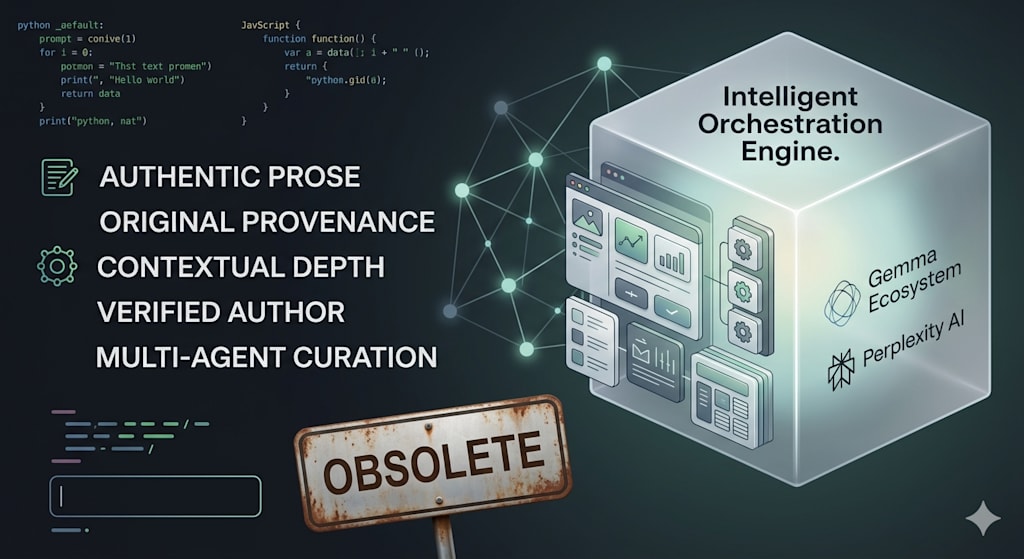
For decades, entering the software development industry required a steep, uncompromising learning curve. You had to master complex syntax, understand meticulous memory management, and spend countless nights debugging missing semicolons. The pride of a developer was tied directly to their ability to write lines of code from scratch.
But the digital landscape has shifted underneath our feet. Today, traditional coding workflows are undergoing a massive transformation. The focus is rapidly moving away from raw manual coding toward the integration of next-generation code generators and sophisticated engineering tools.
If you are a programmer, creator, or tech professional looking to protect your trajectory, it is time to realize that the industry is no longer measuring your value by how fast you can type code, but by how effectively you can direct the engines driving it.
From Code Completion to Full Autonomy
When modern developer assistants first emerged, they functioned like advanced predictive text. You started typing a function, and the software suggested the most logical way to finish that specific line. It was a helpful utility, but a human engineer still had to manage the overarching architecture and handle the execution.
The latest evolution of these platforms represents a massive leap forward. Next-generation tools don't just complete your sentences; they interpret your abstract intentions.
Today, a creator can describe a complex system architecture—such as a responsive multi-layered application or an automated data pipeline—in plain English. The underlying system processes the logic, hooks up the necessary functional modules, and outputs clean, deployable code instantly. The technical barrier is dissolving, leaving room for pure innovation.
The Blind Spot of Standard Algorithmic Filters
As automation accelerates across the web, institutions and platforms are desperately trying to filter out machine-generated logic. There is a frantic rush to develop sophisticated checkers to police repositories and digital assets.
However, in the realm of high-level software engineering, traditional detection models are hitting a permanent dead end. Code compiled through modern, optimized frameworks does not leave predictable, repetitive patterns.
Because advanced deployment pipelines independently test, evaluate, and debug their own code before delivering the final product, the resulting logic is clean, standardized, and structurally perfect. It conforms precisely to industry best practices, making it completely indistinguishable from the work of an experienced human architect.
The New Superpowers: System Architecture and Product Vision
If code generation is becoming democratic, instant, and frictionless, where does human value actually reside? The premium lies in high-level strategy and deep contextual understanding.
- Architectural Oversight: Knowing where to place a comma in a script is no longer a premium skill. Understanding why a platform requires a specific database architecture, how data moves securely between systems, and how to maintain user integrity is where human expertise is irreplaceable.
- Empathetic User Experience (UX): A machine can generate a flawless, highly optimized backend algorithm, but it cannot empathize with human frustration. The ability to design workflows that feel intuitive, culturally grounded, and emotionally resonant remains a uniquely human advantage.
- Modular Integration: The future does not belong to those who memorize syntax, but to those who connect specialized ecosystems together, managing multiple tools to execute a grand vision.
The democratization of development isn't a threat to our careers—it is a massive liberation. By removing the mechanical burden of syntax, technology is allowing anyone with a powerful vision to become a builder.
What are your thoughts on this evolution? Are we heading toward a more creative era of software building, or are we losing the core discipline of programming? Let's open up a discussion in the comments below!
Enjoyed this deep dive? If you found this article insightful and gained new value from it, please leave a Like below to support and motivate us! Don't forget to Follow for more high-quality tech perspectives delivered straight to your feed.
About the Creator
AI Lens
Exploring the profound intersection of human nature, philosophy, and the future of artificial intelligence. Writing about our evolving digital world.
Enjoyed the story? Support the Creator.
Subscribe for free to receive all their stories in your feed.
Comments
There are no comments for this story
Be the first to respond and start the conversation.