
The Silent Growth of the Capacitive Sensor Market
How IoT, AI, and automation are transforming a core technology used in everyday devices

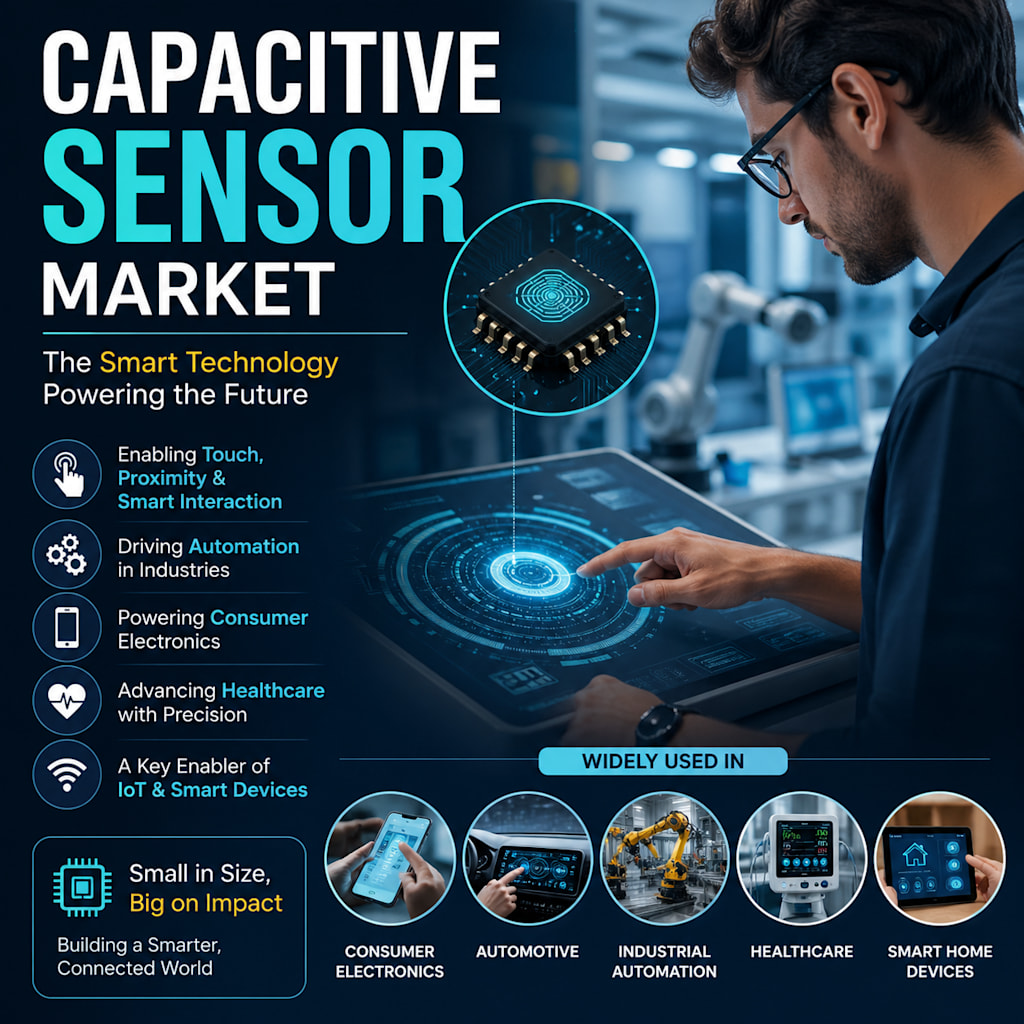
Every time you unlock your smartphone‚ adjust your car's touchscreen or use a smart home device‚ you are using a technology that you probably never think about: capacitive sensors․
These sensors are now one of the most ubiquitous electronic devices in modern times‚ powering touchscreens‚ detecting when an object is near‚ and enabling smooth human-machine interaction in virtually every industry․
In addition to an increasingly digital and connected world‚ the performance characteristics of capacitive sensors are enabling steady growth across the market․
Behind the Scenes of a Market
The global capacitive sensor market size was valued at about USD 35․2 billion in 2025 and is expected to reach around USD 51․7 billion in 2034․
This represents an average annual growth rate of 4․22% from 2026 to 2034․
Its growth may have been slower than other newly emerging technologies‚ but it is defined by another feature: steady uptake across a wide range of industries․
Smartphones‚ industrial machines‚ and other modern devices increasingly rely on capacitive sensors to operate․
Why Capacitive Sensors Are Everywhere Today
The extent to which the use of capacitive sensors is increasing is technology-dependent․
Touch‚ contactless and natural user interfaces increasingly replace buttons and other forms of manual input‚ creating a smooth and frictionless experience for the design of products․
This is possible with capacitive sensors․
They can sense a touch or an approach or minute changes to an electric field‚ and can respond to human interactions instantaneously‚ making them:
- Smartphones and tablets
- Automotive dashboards
- Smart home systems
- Industrial control panels
As consumers demand smooth‚ responsive technologies for their devices‚ these sensors have begun to proliferate․
Consumer electronics are also driving market growth
The consumer electronics industry is one of the largest markets for the capacitive sensor industry․
Smartphones‚ tablets‚ laptops‚ and wearable devices are based on capacitive touch technology․ Users expect the device to be responsive‚ and precise‚ and smooth․ Capacitive sensors provide these qualities․
The emergence of the Internet of Things accelerated the increase in demand; capacitive sensors are used in smart displays‚ kitchen appliances‚ cars and innumerable other devices․
Major technology companies are working on increasing touch sensor sensitivity‚ reducing power consumption and developing more durable materials for touch sensors․
Health care is becoming a booming industry․
Capacitive sensors are also used in healthcare technology․
Sensors also have no direct physical contact‚ making them desirable for use in environments where hygiene and safety are paramount․ Today‚ such sensors are often used in hospitals and medical facilities for:
- Patient monitoring systems
- Contactless vital sign detection
- Medical equipment interfaces
- Wearable health devices
For example‚ capacitive sensors can be used to monitor a patient's respiration or heart rate without contact․
As chronic diseases are on the rise across the globe‚ healthcare systems are expanding demand for non-intrusive monitoring technologies․
Industry automation is creating new opportunities․
Industrial automation and smart factories are another major factor expected to drive market growth․
In modern factories‚ sensors will be used to monitor manufacturing processes‚ to check for the presence of materials and monitor precision․ Capacitive sensors:
- Liquids
- Solids
- Powders
- Granular materials
all without physical contact․
This makes them highly durable and reduces wear and tear‚ which is desirable in industrial environments․
With the Industry 4․0 revolution underway‚ capacitive sensors are integrated into automated production lines․
The Role of IoT and Artificial Intelligence
As the Internet of Things (IoT) and artificial intelligence are becoming commonplace‚ the role of capacitive sensors continues to expand․
Sensors provide the IoT with the ability to sense and respond to the physical world․ Among sensors‚ capacitive sensors are a common type due to their accuracy and real-time response․
With billions of connected devices expected globally‚ the demand for reliable sensing technology is only growing․
Artificial intelligence improves the sensors‚ such as through the interpretation of touch patterns‚ gesture recognition‚ and the development of more responsive user interfaces․
Capacitive sensors‚ along with the IoT and AI‚ are a building block of smart ecosystems․
Regional Growth: Where Innovation Is Leading
The capacitive sensor market varies greatly by region․
Currently‚ North America dominates the market due to the presence of advanced infrastructure‚ the high rate of smart devices adoption‚ and strong investments in technologies․
In the United States‚ capacitive sensors dominate the consumer electronics market‚ and are increasingly being deployed in automotive and industrial automation systems․
By contrast‚ in Asia-Pacific‚ the major markets in China‚ Japan and South Korea have driven the growth of electronics in the region and are seeing large-scale uptake of capacitive sensors․
Europe is growing steadily helped by advances in automotive technologies and efficient systems․
Innovation and Competition in the Market
The capacitive sensor industry is fast-paced and constantly innovating․
Companies are focusing on:
- Improving sensitivity and accuracy
- Reducing power consumption
- Designing smaller‚ space-efficient products
- Convergence of multiple sensing capabilities into single devices
The companies are also able to pursue other markets such as smart surfaces‚ automotive controls and advanced industrial systems through calculated partnerships and continuing research․
More recent developments include sensors which can work in extreme temperatures‚ and detect not just touch‚ but force or work even while submerged in water or oil․
Challenges That Might Influence the future
Despite the booming market‚ there are still growth constraints․
Creating such advanced capacitive sensors and tying them into a larger system can be expensive‚ and capacitive sensors may be incompatible with legacy technologies․
In addition‚ competition from other sensing technologies may limit some applications․
However‚ they are also pushing companies to develop better‚ more efficient‚ cheaper and more versatile options․
Looking Ahead
The future of capacitive sensors depends on the continued advancement of smart technology․
As devices become more interactive‚ connected‚ and smart‚ the role that sensors play is expected to grow․
Capacitive sensors have become ubiquitous in our daily lives‚ being found in smartphones‚ vehicles‚ the healthcare sector‚ and industrial automation․
The market is projected to have steady and sustained demand across various industries‚ with a projected value of more than USD 50 billion by 2034․
What is really interesting about this market is not that it is the fastest growing market‚ but that it is everywhere and powering the technology you use every day․
About the Creator
Robert
Senior Market Researcher at IMARC Group, specializing in global market analysis, industry trends, and data-driven insights across diverse sectors.
Enjoyed the story? Support the Creator.
Subscribe for free to receive all their stories in your feed.
Comments
There are no comments for this story
Be the first to respond and start the conversation.