
The Rise of Commercial Displays: How Screens Are Transforming Modern Business
From retail stores to smart cities, digital displays are redefining how brands communicate, engage, and sell

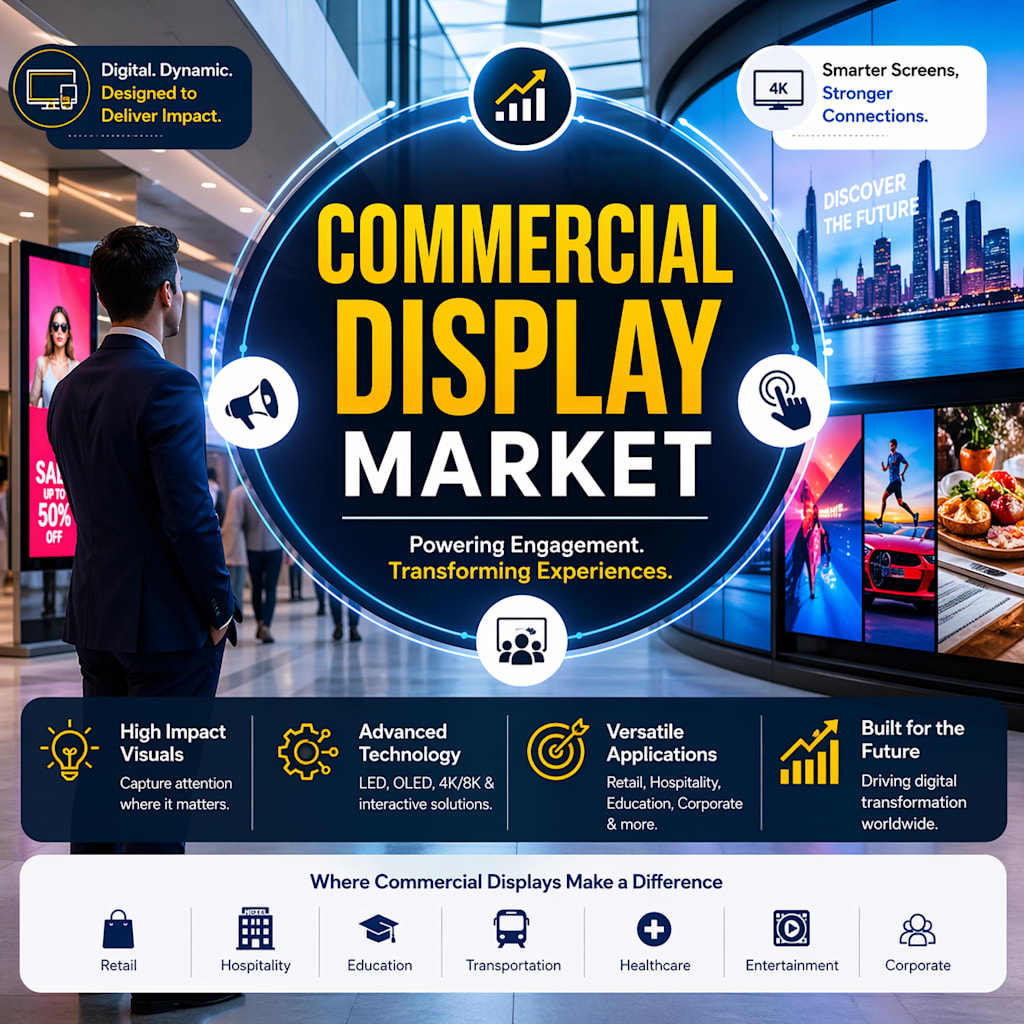
Walk into a store‚ an airport‚ a hotel‚ a room of any sort‚ even a classroom‚ and the first thing you see is the screens․
From vibrant digital signage displays‚ to interactive kiosks‚ to super-resolution video walls‚ commercial digital display technology is not just a new way to communicate‚ it's how businesses attract‚ inform and influence people․
Behind this transformation is a fast-growing industry that is quietly changing the customer experience․
A Market Growing with Digital Transformation
The global market for commercial displays was worth some $60․8 billion in 2025 and is projected to reach some $106 billion by 2034 at a compound annual growth rate (CAGR) of 6․37%․
The trend is likely to continue‚ with business communications moving from static to dynamic‚ digital‚ and potentially interactive communications․
From buzz marketing in retail environments to cooperative workspaces in corporate offices‚ commercial displays are becoming increasingly integrated into our lives․
Why Businesses Are Moving Toward Digital Displays
Advertising mediums like posters and static banners are becoming relatively ineffective‚ as dynamic advertisements cannot compare to advertisements that change based on real-time events․
But digital signage offers companies something much more effective:
- Common ability to update content immediately
- More interesting and interactive experiences
- Targeted messaging for specific audiences
- More accurate campaign performance measurement
From retail posters to restaurant menu boards to real time displays at transportation hubs‚ digital signage is in all walks of life․
The Rise of Engaging In-Store Experiences
Retail is one of the biggest drivers of the commercial display market․
Since e-commerce is growing quickly‚ physical stores have to provide the experience that online retailers cannot․
That's where commercial displays come into play․
Stores are now using:
- Interactive screens for product discovery
- Digital mirrors used for virtual try-ons
- Large video walls for brand storytelling
- Smart kiosks for self-service
These technologies not only attract customers but also lead them to remain longer and convert more frequently․
Technology Is Pushing Display Innovation Forward
Advancements in display technologies are another major driver for growth․
Modern displays are generally superior to older displays in terms of brightness‚ contrast‚ energy use and cost‚ as seen in LED and organic LED displays․
Higher resolutions of 4K and 8K are also growing in appeal․ They define the future of display technology in entertainment‚ gaming‚ and advertising․
New innovations include:
- Transparent displays
- Flexible and rollable screens
- Touch-enabled interactive panels
- Ultra-thin designs with energy efficiency
These developments lead to new applications for displays and the ways that they can be used․
Beyond Retail: Where Commercial Displays Are Making an Impact
Retail is the largest segment‚ with commercial displays also serving all other segments․
In hotels‚ displays are used for in-room entertainment‚ digital check-ins and communicating with guests․
Screens are also used for patient information‚ navigation‚ and to disseminate real-time information․
In education‚ digital whiteboards and interactive displays are turning schools into smart learning environments․
Transportation-related displays provide real-time schedule‚ navigation and advertising information in airports‚ train stations and metro or bus stations․
In the office‚ ultra-high-definition displays are improving communication‚ presentations and collaboration․
The Growing Role of Smart Cities
One of the biggest prospects for the commercial display market is the development of smart cities․
As cities become increasingly smart and connected‚ commercial displays are becoming an integral part of this ecosystem of communication and efficiency in cities․
They are used for:
- Public information systems
- Traffic and navigation updates
- Emergency alerts
- Digital advertising systems in cities
The development of smart cities is expected to considerably increase demand for connected and clever display systems․
Regional Growth: Where the Market Is Expanding Fastest
Each region is contributing to the market in its unique way․
North America remains the largest market‚ driven by rapid adoption of digital advertising‚ advanced advertising technology infrastructure‚ and concentration of technology companies․
Asia-Pacific is expected to emerge as one of the fastest-growing markets owing to rising demand for smart classrooms‚ digital signage and consumer electronics in China‚ India and other emerging economies․
The retail and entertainment industries in Europe show moderate growth and are seeing engaging experiences rising in importance․
Meanwhile‚ other regions such as Latin America and the Middle East are growing slowly as businesses invest more in digital transformation․
A Competitive Market Driven by Innovation
The commercial display industry is a highly competitive market with enhancements and technology improvements constantly evolving․
Samsung Electronics‚ Sony Corporation‚ LG Display and Cisco Systems invest to develop Content Addressable Memory for production in this market․
Their focus areas include:
- Higher resolution LCD panels (4K‚ 8K‚ etc․)
- Higher color accuracy and brightness
- Energy-efficient display solutions
- Interactive displays with AI features
Customization has become another growing trend‚ with businesses increasingly demanding displays that are built around their requirements․
Obstacles to the market's development
There are‚ however‚ challenges in the market․
Durability of the display is a concern outdoors‚ where extreme weather‚ constant on and off cycles and physical damage are common․
Meanwhile‚ companies must balance performance and energy consumption‚ as sustainability is increasingly becoming a concern․
However‚ companies are meeting these challenges by designing new products to be more durable‚ energy efficient‚ and environmentally friendly․
The Future: Smarter‚ Connected‚ and More Interactive
In the future‚ we can expect further integration between the commercial display market and new technologies․
The Internet of Things (IoT) is expected to connect displays to other devices for smarter content delivery and automation․
Artificial intelligence could provide personalized content based on user data; cloud-based networks would make managing displays across different locations easier․
Displays will no longer simply show you things‚ they will respond‚ adapt and interact․
Final Thoughts
Display is no longer a screen‚ it is becoming the interface between business and people․
They are also in use elsewhere within retail‚ smart cities‚ and other applications‚ to communicate information‚ promote a brand or improve experience․
As the market is expected to continue growing through 2034 and digital signage technology continues to innovate‚ commercial displays will continue to play an integral role in digital signage․
About the Creator
Robert
Senior Market Researcher at IMARC Group, specializing in global market analysis, industry trends, and data-driven insights across diverse sectors.
Enjoyed the story? Support the Creator.
Subscribe for free to receive all their stories in your feed.
Comments
There are no comments for this story
Be the first to respond and start the conversation.