
The Red Line: How the New AI Executive Order is Shocking Silicon Valley
A sudden political shift is rewriting the rules of technology. Here is why the latest executive decision has left tech CEOs scrambling.

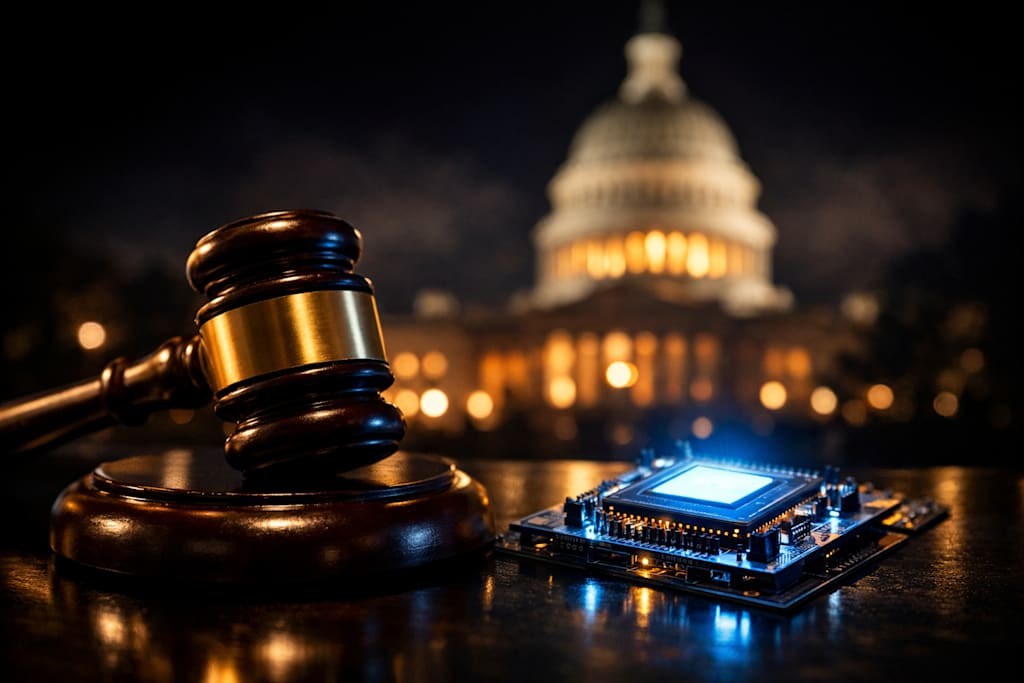
For the past year, the tech industry has operated in a state of high-stakes suspense. Silicon Valley giants have been racing forward at a breakneck pace, releasing increasingly autonomous models, while quietly lobbying governments to ensure that federal regulations wouldn't stifle their multi-billion-dollar investments.
But over the last 24 hours, the comfortable landscape of artificial intelligence development was completely disrupted.
A massive 1,050% spike in global search interest has suddenly captured the world’s attention around a singular, highly controversial topic: the new AI Executive Order. Behind closed doors, the messaging coming out of Washington is no longer about gentle suggestions or voluntary corporate compliance. Instead, a strict new regulatory framework is being introduced, and it has sent a shockwave directly through the executive boards of major tech conglomerates.
The boundaries of digital innovation are being redrawn by political decree, and the friction between federal oversight and technological autonomy has officially reached a boiling point.
The Crackdown on Deepfakes and Autonomous Systems
The core urgency driving this sudden executive intervention isn’t just long-term existential dread; it is the immediate, chaotic impact of consumer technology on society. This week, platforms have been flooded with highly sophisticated, unmonitored tools capable of hyper-realistic video generation and seamless voice cloning.
The new directive introduces clear, aggressive guardrails targeted at two specific areas that have left developers scrambling:
- The Mandatory Digital Watermark: Under the new order, any company producing generative media tools—whether text, audio, or video—must embed an un-erasable, cryptographic identifier into the metadata of every single output. This means anonymous generation is effectively coming to an end for commercial tools.
- The Sovereign Audit Requirement: Before a tech firm can train a computational model that exceeds a specific computing threshold, they are now legally obligated to submit their architecture and data source logs to federal safety inspectors. The era of training giant, mysterious systems in complete secrecy is officially over.
- Liability Over Autonomy: Tech platforms can no longer hide behind standard software liability shields. If an autonomous agent or tool facilitates financial fraud or severe disinformation, the parent company can now be held directly legally responsible for the actions of their algorithm.
The Great Silicon Valley Backlash
As expected, the response from the technological elite has been swift and deeply fractured. On one side of the debate, open-source advocates are expressing profound alarm. They argue that wrapping complex software development in thick layers of federal bureaucracy will only serve to kill independent innovation, inadvertently shifting absolute power back to a handful of trillion-dollar tech monopolies who can actually afford teams of compliance lawyers.
Meanwhile, the centralized tech giants are put in a delicate, incredibly complex position. Publicly, their executives are releasing polished statements welcoming the focus on safety and national security. Privately, however, product managers are in a state of quiet panic.
Tuning models to strictly comply with shifting political red lines means slowing down implementation. In a hyper-competitive global market where a single week of delayed deployment can cost a company its technical edge, these new compliance hurdles are viewed by many as a self-inflicted wound to domestic tech dominance.
The Paradigm Shift: A New Era of Compromise
We are officially leaving the wild-west era of artificial intelligence behind. The illusion that digital technology could permanently outrun the slow, heavy hand of government regulation has vanished. The upcoming months will not just be defined by who has the fastest processing chips or the largest training datasets, but by who can navigate the complex labyrinth of international compliance without breaking their software’s utility.
The true future of technology will be shaped by this tense, ongoing compromise between the state and the silicon. As governments step in to claim sovereignty over the digital frontier, the tech industry must learn a hard, inescapable truth: the machine might code at lightning speed, but it still exists in a world ruled by human laws.
Do you believe aggressive government regulation is absolutely necessary to protect society from AI abuse, or will it simply destroy independent tech innovation? Let's discuss this critical political turning point in the comments section below.
Moved by this urgent political and technological analysis? If you want to stay completely ahead of the curve on the real conflicts, executive orders, and strategic power struggles shaping our digital world this week, support this work by leaving a Like, Sharing this piece with your network, and hitting Follow for more unfiltered dispatches from the front lines of the tech frontier!
About the Creator
AI Lens
Exploring the profound intersection of human nature, philosophy, and the future of artificial intelligence. Writing about our evolving digital world.
Enjoyed the story? Support the Creator.
Subscribe for free to receive all their stories in your feed.
Comments
There are no comments for this story
Be the first to respond and start the conversation.