
The Pocket-Sized Portal:
How Our Phones Quietly Rewired Our Emotions

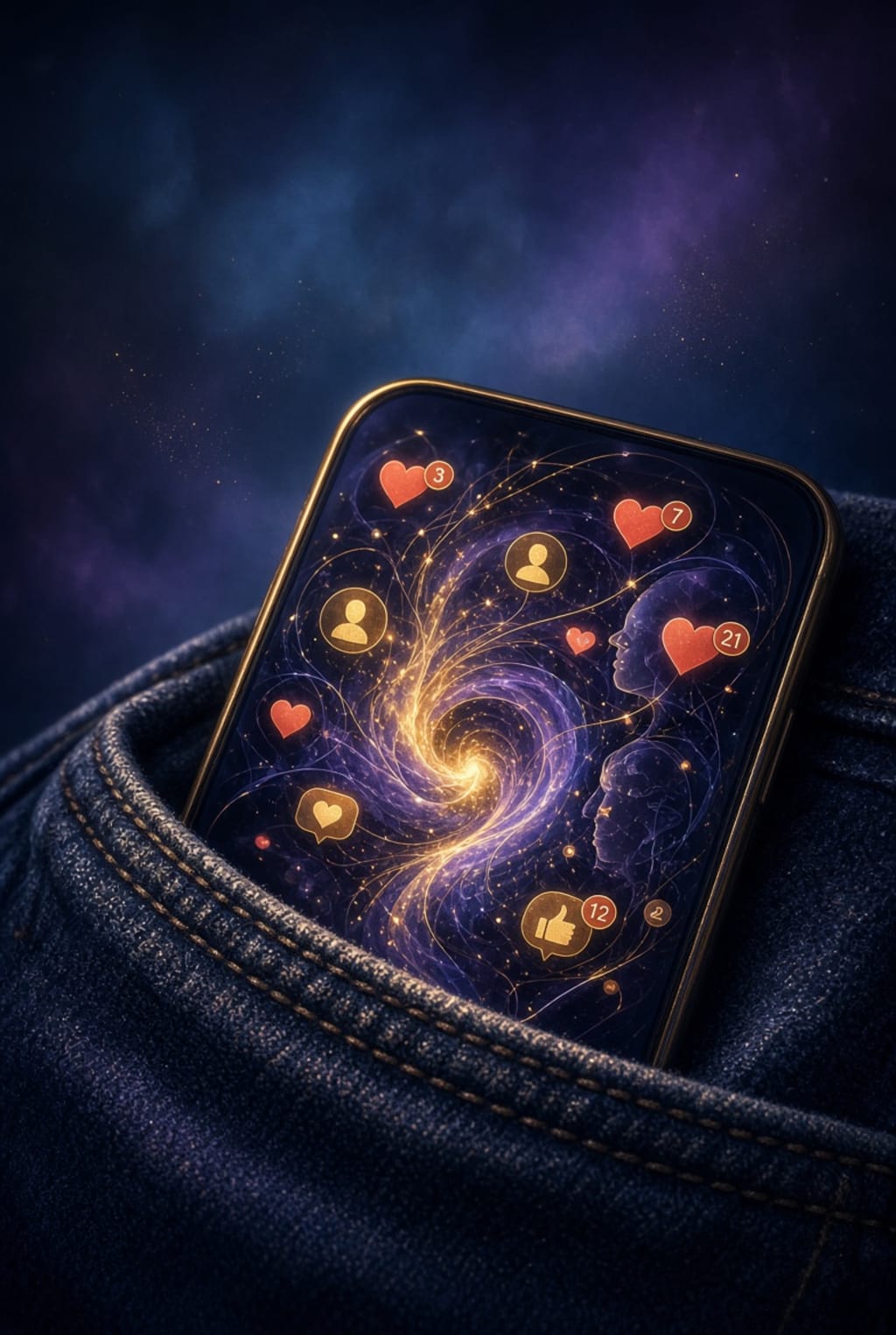
There are technologies that announce themselves with spectacle—robots, rockets, holograms, machines that look like the future. And then there are technologies that slip into our lives quietly, almost politely, until one day we realize they’ve rearranged the architecture of our days, our attention, and even our sense of self. The smartphone is one of those technologies. It’s the science fiction device we stopped noticing.
We carry it everywhere. We sleep beside it. We reach for it before we reach for water. It has become the portal through which we communicate, create, escape, perform, remember, and forget. It is our camera, our map, our diary, our entertainment, our distraction, our tether to the world. And yet, beneath all its convenience and brilliance, there is a quieter emotional shift happening—one that feels strangely futuristic and strangely human at the same time.
Our phones are changing us, not just in how we act, but in how we feel. And the feelings they generate—guilt, shame, compulsion, relief, anxiety—are becoming part of the emotional climate of everyday life.
The Science Fiction We Don’t Recognize
If someone from the 1980s saw a modern smartphone, they would think it was magic. A glowing slab of glass that contains the world. A device that can summon any song, any face, any fact, any map, any memory. A device that listens, speaks, predicts, and learns. A device that knows where you are, what you like, who you talk to, and how long you stare at a screen.
It is a tricorder, a communicator, a personal assistant, a pocket computer, a camera, a television, a radio, a newspaper, a library, and a social stage—all fused into one object that fits in your hand.
But because we grew into this technology gradually, we don’t see it as science fiction. We see it as normal. And that’s the quiet trick of it: the more normal it feels, the more invisible its influence becomes.
The Addiction We Don’t Want to Admit
Most people don’t like the word addiction when it comes to phones. It feels dramatic, accusatory, too heavy for something so ordinary. But the truth is that smartphones are engineered to be irresistible. They are designed to hijack attention, reward impulsivity, and create loops of behavior that feel automatic.
Notifications are tiny dopamine taps.
Endless scrolling is a slot machine.
Apps compete for your time like advertisers in your mind.
The phone vibrates, and your body reacts before your brain does.
This isn’t a moral failing. It’s design.
And yet, even knowing this, people feel guilt. They feel shame. They feel like they should be stronger, more disciplined, more in control. They blame themselves for losing hours to scrolling, for checking their phone during conversations, for reaching for it when they’re bored, anxious, lonely, or overwhelmed.
The phone becomes both the comfort and the culprit.
The Guilt Loop
There’s a specific kind of guilt that smartphones create—a guilt that feels modern, subtle, and strangely intimate.
You pick up your phone to check one thing, and suddenly twenty minutes disappear. You feel the sting of wasted time. You promise yourself you’ll stop. You don’t. You feel bad again. You hide the habit. You try to justify it. You try to quit. You fail. You feel shame.
It’s a loop.
And the loop is powerful because it’s emotional. It’s not just about time; it’s about identity. People start to feel like their phone use says something about who they are: lazy, distracted, undisciplined, disconnected. They feel judged by their own behavior.
This is new. No previous technology created this kind of internal moral conflict. No one felt shame about reading too many books or listening to too much radio. But phones are different because they blur the line between choice and compulsion.
The Shame of Being Seen
There’s another layer: the shame of being caught.
When someone sees you scrolling instead of listening, you feel exposed.
When you check your phone during a conversation, you feel rude.
When you reach for it during a quiet moment, you feel weak.
When you realize your screen time report is higher than you expected, you feel embarrassed—even though no one else sees it.
The phone becomes a mirror that reflects your habits back to you, and sometimes the reflection feels uncomfortable.
This shame isn’t about the device. It’s about the fear that we’re losing something: attention, presence, depth, patience, connection. We worry that the phone is stealing parts of us we didn’t mean to give away.
The Escape Hatch
But the phone isn’t just a source of guilt. It’s also an escape hatch.
It’s the place you go when you need distraction.
When you need relief.
When you need to numb out.
When you need to avoid a feeling.
When you need to feel connected without risking vulnerability.
It’s a portal to somewhere else—somewhere easier, somewhere curated, somewhere controlled.
This is where the science fiction feeling intensifies: the phone becomes a psychological device, not just a technological one. It becomes a coping mechanism. A buffer. A shield. A sedative. A stimulant. A companion. A stage. A hiding place.
And because it can be all of these things at once, it becomes hard to put down.
The Quiet Reshaping of Daily Life
Smartphones have changed the rhythm of life in ways we barely notice.
We fill every empty moment with stimulation.
We avoid boredom, even though boredom once sparked creativity.
We multitask constantly, even though multitasking fractures attention.
We scroll instead of sitting with discomfort.
We check instead of resting.
We refresh instead of reflecting.
The phone becomes the default action—the thing we do when we’re not doing anything else. It becomes the background hum of our existence.
This shift is subtle but profound. It changes how we think, how we feel, how we relate, how we rest, how we work, how we connect, how we escape.
The Emotional Cost
The emotional cost of smartphone addiction isn’t dramatic. It’s quiet. It’s cumulative. It’s the erosion of presence. The thinning of attention. The soft ache of guilt. The whisper of shame. The sense that you’re not fully in your own life.
It’s the feeling of being pulled away from yourself.
And yet, the solution isn’t to throw the phone away. It’s to understand the relationship. To see the device clearly. To recognize the emotional patterns it creates. To reclaim agency without self‑punishment.
The Future We’re Already Living In
Smartphones are the first technology that lives in our pockets, our palms, our beds, our conversations, our routines, our emotions. They are the first technology that feels like an extension of the self.
They are also the first technology that makes us feel guilty for using them.
This is the quiet science fiction of our time: a device that shapes our emotional landscape without ever announcing its power. A device that creates both connection and compulsion. A device that gives us everything and still leaves us wanting more. A device that feels indispensable and yet somehow intrusive.
We are living in a future where the most powerful technology is the one we barely notice anymore.
And maybe the next step—the next evolution—is not to reject the phone, but to renegotiate our relationship with it. To see it not as a master or a weakness, but as a tool that requires boundaries, awareness, and intention.
The science fiction isn’t the phone itself. It’s the emotional world it has created inside us.
About the Creator
Alexandria Hypatia
A philosopher and Libra to the fullest. I have always enjoyed writing as well as reading. My hope is that someday, at least one of my written thoughts will resonate and spark discussions of acceptance and forgiveness for humanity.
Enjoyed the story? Support the Creator.
Subscribe for free to receive all their stories in your feed.
Comments
There are no comments for this story
Be the first to respond and start the conversation.