
The Phone We Never Owned
"The device stopped belonging to the hallway and started belonging to the person, and somewhere in that shift, the very fact of a phone call became a private thing instead of a shared one."

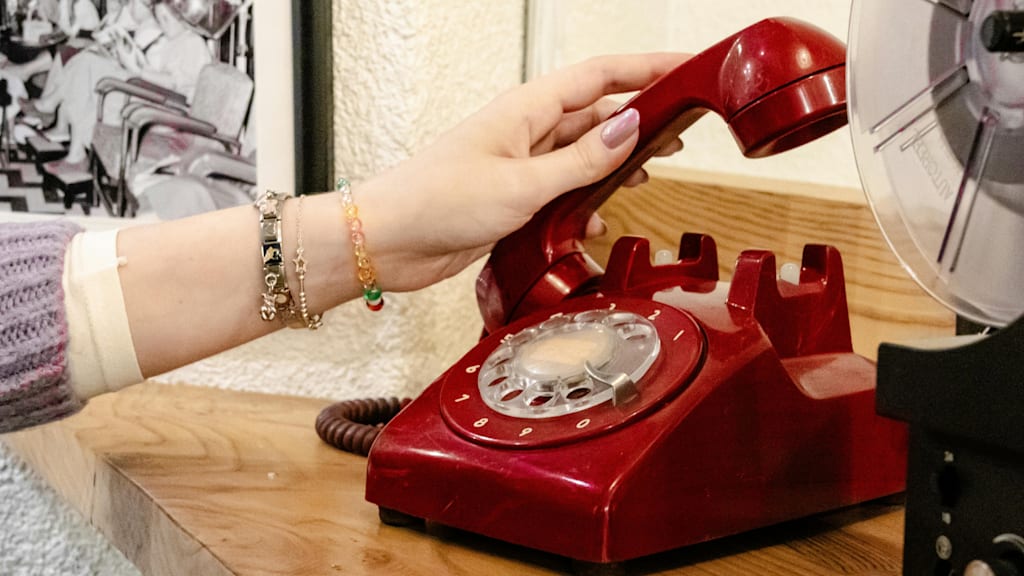
The phone arrived in 1975, and it wasn't really ours.
I remember the GPO engineer more clearly than I remember most of that year, a man in overalls running a cable along the skirting board of the hall in our house in Newburn, on the western edge of Newcastle, drilling one careful hole through the wall, and setting a heavy plastic handset down on the little telephone table my mother had bought specifically to hold it. We'd chosen red. You could have red, ivory, green, black, grey, yellow, or a deep navy blue if you wanted, and the colour cost you slightly more on the quarterly bill, a few extra pence for the privilege of red or ivory over the plain black everyone assumed you'd take by default. Different factories turned out slightly different shades of the same colour too, GEC's green wasn't quite Plessey's green, though nobody but an engineer would ever have known that or cared.
None of it belonged to us. You didn't buy a telephone in 1975, not really, you rented it from the GPO for a fee every quarter, and if it broke, a man came and fixed the phone, in your hall. It sat there the whole time on loan, like a library book nobody expected back.
The dial is the thing I actually remember using it. You put your finger in the hole over the number you wanted, dragged it clockwise round to the little metal stop, and let go, and the dial spun itself back with a mechanical whirr and a satisfying clack on every digit, seven clacks for a seven-digit number, a small percussive countdown before the phone at the other end even started ringing. It took a proper physical decision to call someone. You couldn't do it by accident.
The strangest thing I did with that phone, and the thing that actually felt like science fiction at the time, had nothing to do with calling another person at all. There was a number, 123, that connected you to the Speaking Clock, a recorded voice reading out the exact time down to the second, "at the third stroke, the time will be," and then three precise pips. For most of the decade it was the same woman's voice, Pat Simmons, though I didn't know her name at the time, I just knew there was a voice, with no person attached to it as far as I could tell, living somewhere inside the telephone system itself, that would speak to you correctly and instantly any hour of the day, forever, and never once get it wrong or get tired or hang up on you. I didn't have a word for what that was. I just knew it was the closest thing to magic the hallway had to offer.
It wasn't the only strange thing you could dial, either. There was a number for Dial-a-Disc, that played that week's chart hit down a crackly line so you could hear it without buying the record. There was one that gave you a recipe for that evening's dinner, read out by a voice with no face. There was a horoscope line, a road and ice warning line for drivers, and during the summer, a special number just for live cricket scores.
None of it needed the internet, because none of it had heard of the internet yet. It just needed a telephone exchange, a recording, and someone willing to dial three digits and wait.
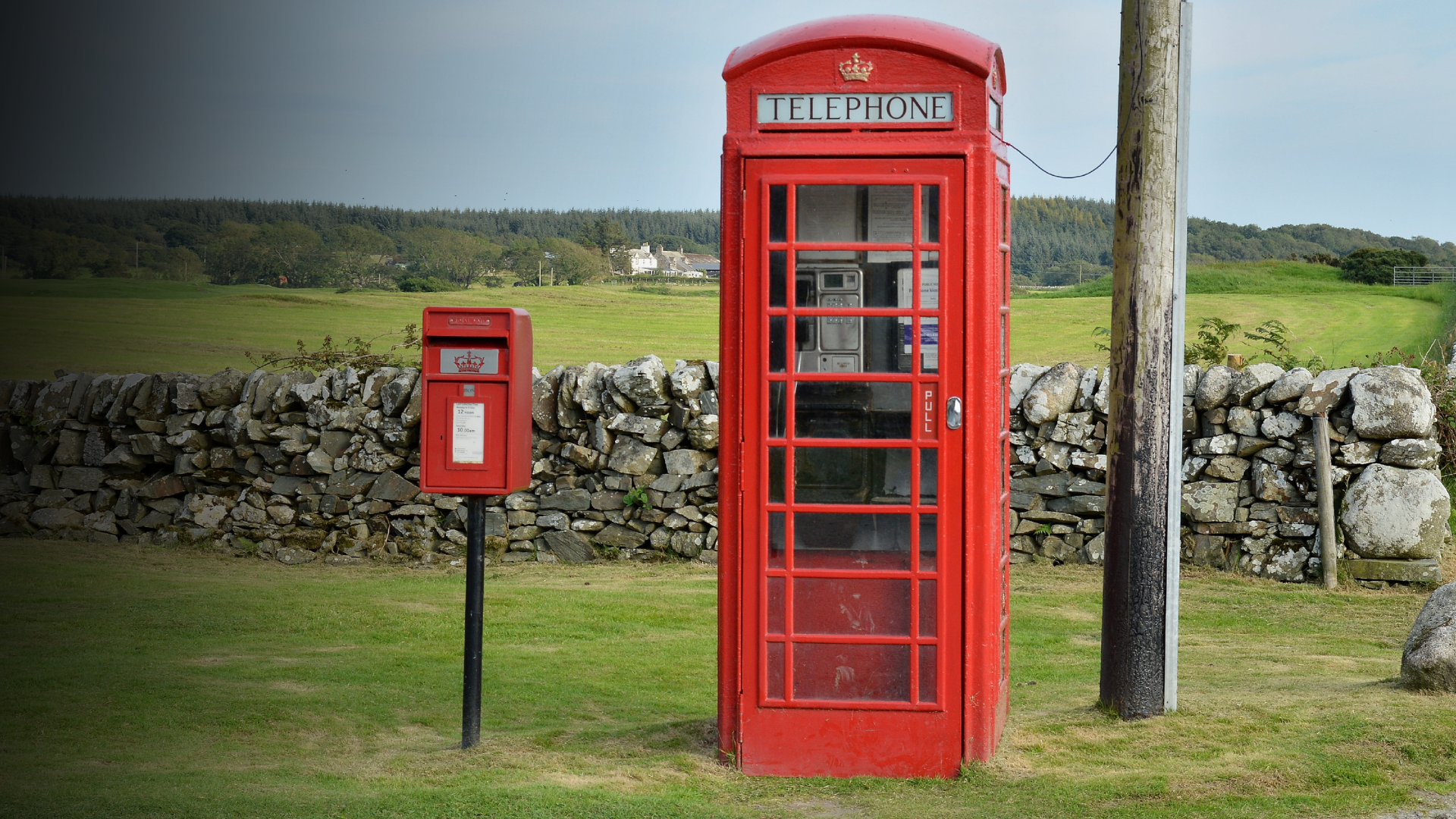
Outside the house, the phone belonged even less to any one person. There were red boxes on street corners all over Newburn, glass and cast iron, and inside every single one of them, on a heavy metal shelf under the coin slot, sat the phone book, thick volumes of names, home addresses, and numbers for the whole area. Ours was in there. Everyone's was in there, automatically, the moment the GPO connected your line, unless you specifically paid extra to be left out of it. Anyone who walked into that box, a stranger, a kid messing about, anyone at all, could look up exactly where we lived. Nobody thought much of it. That was just what having a telephone meant.
Using the box meant coming prepared too, coins lined up on the little shelf before you even lifted the receiver, because the call would cut you off mid-sentence the second your money ran out, no warning beyond the pips telling you to feed it more. You'd hear those pips and if your hand wasn't already moving toward another coin you'd lose whoever you were talking to, sometimes for good, if it was a call that mattered and you didn't have the coins to try again. Queuing for the box on a Friday night, breath fogging in the cold, waiting your turn to have a rationed, metered conversation that the whole street could see you having through the glass, next to a book with your own address in it, that was just what a phone call was.
I'm typing part of this on a phone right now, one that fits in a coat pocket, that I own outright, that no engineer installed and no GPO can repossess. It holds more computing power than existed in the whole of Newburn in 1975, and it does roughly four hundred things the red phone in our hall never came close to. That's not really the part that gets me, though. Processing power is an easy thing to be impressed by and a hard thing to actually feel.
What gets me is that the phone used to belong to a place, and now it belongs to a person.
Ours sat in the hall. It couldn't come with you to work, or to the shops, or to bed. It was tethered to a wall, shared by everyone in the house, and everyone in the house knew roughly who you'd been ringing and for how long, because the quarterly bill itemised it and your mother read the itemised bill. Our name and address sat in a book in a glass box on the corner, free for any stranger to find. A phone call was a household event, witnessed, budgeted, queued for, and the fact of the phone itself was never really private to begin with. Now the phone goes everywhere I go, and nobody else in my house has the faintest idea who I've called today, or when, or for how long, unless I choose to tell them, and there's no book anywhere listing where I live just because I own one. The device stopped belonging to the hallway and started belonging to the person, and somewhere in that shift, the very fact of a phone call became a private thing instead of a shared one.
I'm not sure I'd trade it back. I don't miss the pips cutting off my girlfriend mid-sentence, back before either of us would say the actual words, when it was still just "no, you hang up," "no, you," neither one of us willing to be the one who actually did it, for hours some nights.
I definitely don't miss standing outside a phone box in the cold, waiting my turn because I'd promised to call my girlfriend at quarter past seven, as always, watching whoever was in there through the glass and willing them to finish. But every so often, dialling a number I already know by heart into a phone that never makes a sound doing it, I think about that seven-clack whirr, the little mechanical countdown that used to happen before anyone answered, and how you always knew, just from the rhythm of it, whether you'd dialled the number right before the line even started to ring.
I don't think anyone under fifty in my family would recognise 123 if I said it out loud, or know what it used to connect to. The voice is still running somewhere, probably, still correct to the second, still speaking to an empty line for anyone who bothers to call it.
I haven't called it in about forty years. Might be worth finding out if it still picks up. Or maybe, memories are better left as memories?
Phil
EDIT: I just realised we no longer actually have a house phone, landline any longer, I don't think there will be many houses in the UK that do either
About the Creator
Phil Henderson
I'm Phil Henderson. I ghostwrite for brands and founders by day as well as consult as a SAP Project Manager for major organisations. Here on Vocal I just write, essays, critiques, the odd short story.
Enjoyed the story? Support the Creator.
Subscribe for free to receive all their stories in your feed. You could also become a paid subscriber, letting them know you appreciate their work.
Comments
There are no comments for this story
Be the first to respond and start the conversation.