
The most prevalent type of beach trash worldwide is food and drink packaging.
An international audit

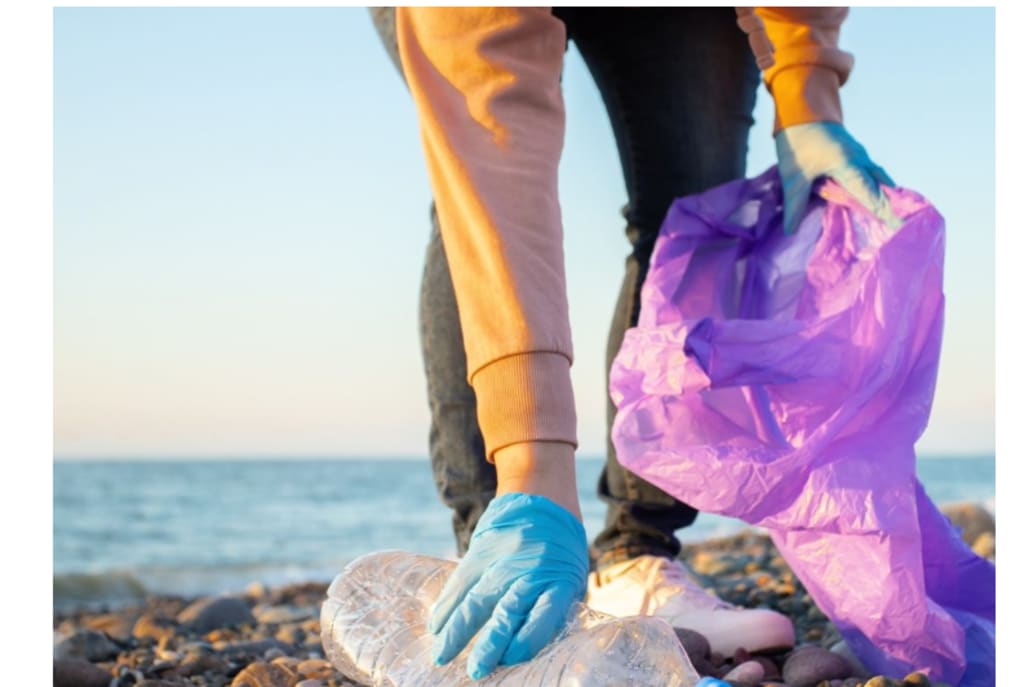
The majority of people believe that the plastic that washes up on beaches originates from distant locations, such as ships, industrial facilities, or ocean currents. The majority of discussions about where to concentrate cleanup efforts have been influenced by that image.
Researchers discovered something different in a recent investigation. Food and drink packaging was the most prevalent category when the team combined beach litter surveys from all across the world and classified the data by the purpose of each item.
An international audit
More than 5,000 beach litter surveys were combined in a recent research from the University of Plymouth to create the first worldwide image of marine litter arranged by the purpose of each item.
Seven continents, nine ocean systems, thirteen regional seas, and 112 countries are covered by the combined dataset. Approximately 86% of the world's population resides in these locations combined.
The principal author of the paper is Max Kelly, a postdoctoral research fellow at the University of Plymouth. Kelly spent years standardising beach litter surveys collected worldwide by several teams using various techniques. That map's conclusion was clear-cut. Regardless of location or financial level, food and drink packaging dominated the rankings in every country.
The common suspects
In 93% of the countries surveyed, plastic pollution from food and beverage containers was one of the top three categories of beach litter. The United Kingdom and the five most populous countries in the world—India, China, the United States, Indonesia, and Pakistan—were among them.
The majority of the heavy lifting was done by three particular things. In over half of all countries, plastic bottles, caps and lids, and food packaging were found to be among the most prevalent types of trash. Cigarette butts and plastic bags ranked slightly lower, but they were nonetheless present on shorelines practically wherever the studies were conducted.
Beach litter's consistency
The constancy across widely disparate country contexts was noteworthy. Dense mega cities, small island states, wealthy coastal nations, and poorer ones have left the same imprint on their coastlines. This challenges a widely held belief that the majority of beach trash comes from fishing gear lost at sea or offshore industrial sources.
Everyday consumer goods, rather than fishing or industrial equipment, are most prevalent near inhabited shores. A similar conclusion was achieved at a smaller scale in an earlier study involving 12 million pieces of maritime trash. The majority of the populous areas are confirmed by the latest work.
Wider ramifications of the research
For any nation that still relies only on recycling and pickup, the inference is unsettling. No amount of curbside sorting will be able to catch up at the source if the majority of the packaging that ends up in the water is short-lived. Not in terms of production.
The new study's principal author is Richard Thompson, a marine biology professor at Plymouth who founded the institution's International Marine Litter Research Unit. According to Thompson, "this study identifies the most prevalent categories of debris at national, regional, and global scales for the first time."
This instructs officials on which particular issues to take action on in addition to where. According to a 2024 inventory, about 50 million tonnes of plastic are released into the environment annually, mostly through open dumping. While tightening collection is helpful, it is unable to keep up with the amount of new packaging being manufactured.
Butts from cigarettes continue to
The small size of cigarette butts makes them easier to ignore. However, every filter is filled with chemical residue from whatever was burnt through it as well as plastic fibres. Seabirds, sea turtles, and marine animals have been found to have substantial mortality rates when even modest amounts of plastic fragments are consumed.
Trillions of bits are produced annually only from cigarette filters. Similar grey areas are occupied by plastic bags, which are light enough to travel great distances on wind and current, prohibited in certain countries, and nonetheless common in others.
Where there is a paucity of data
Surveys of beaches are limited. They don't see what's going on beneath the surface, in the open ocean, or beneath sediment. Additionally, the polls rely on respondents arriving at certain locations at designated times.
The data is most trustworthy in areas with the highest frequency of surveys, and coverage varies by region. Some of the most pristine, least-monitored coasts were not included in the current study. Categories like fishing gear are also undercounted on populated beaches compared with rural ones, which may drive their global rank lower.
From the coast to the law
PISCES, a £3.8 million Brunel University of London initiative supported by the UK's Natural Environment Research Council, was used to carry out the investigation. The objective is to convert Indonesian coastline data into proof that is applicable worldwide.
According to Susan Jobling, director of Brunel's Institute of Environment, Health, and Societies, "this study demonstrates why waste management alone cannot solve plastic pollution." Researchers are advocating for upstream actions, such as cutting production, changing packaging, and avoiding single-use plastics in favour of non-disposable items.
One thing is evident from the study: regardless of waste management strategies, beach litter is dominated by a small set of food and drink items in almost every country. Governments now need to consider whether so much disposable packaging is actually necessary, rather than just where the trash ends up.
About the Creator
Enjoyed the story? Support the Creator.
Subscribe for free to receive all their stories in your feed.
Comments
There are no comments for this story
Be the first to respond and start the conversation.