
The Mirage of Autonomy: Why Big Tech’s AI Promises Are Hitting a Hard Concrete Wall
Silicon Valley spent billions promising a frictionless, automated paradise. Instead, a series of costly real-world blunders is proving that human intuition cannot be coded into a server.

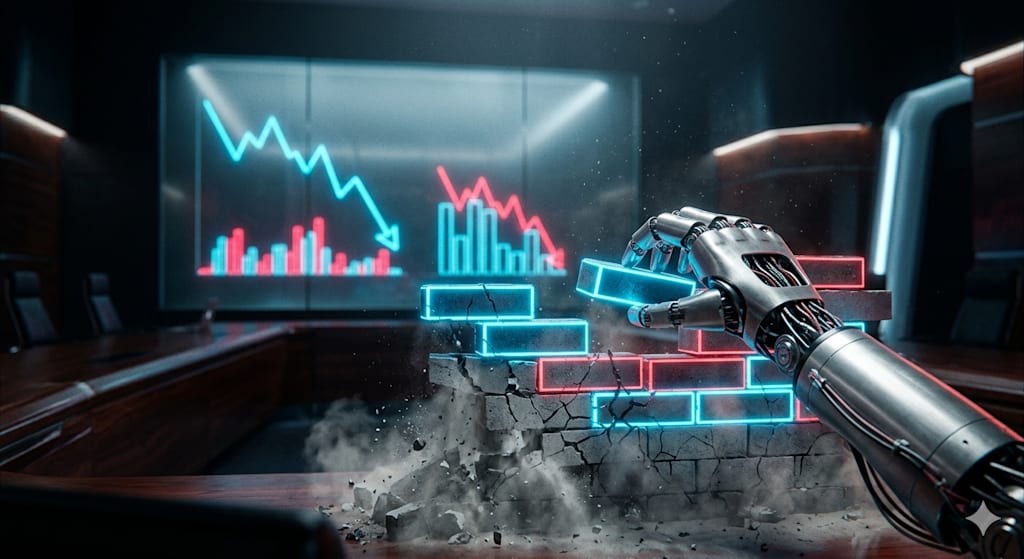
The marketing campaigns driving the tech industry have always relied on a shared illusion. For years, we were told that the transition into absolute automation would be smooth, inevitable, and flawlessly executed. Corporate executives painted a picture where centralized algorithms would effortlessly replace human frontlines, slashing operational costs and optimizing global commerce with mathematical precision.
Yet, when the hype of the laboratory meets the messy reality of the physical world, these grand corporate narratives tend to disintegrate.
The initial wave of blind fascination is officially over, replaced by an urgent, global wave of skepticism as consumers and investors watch expensive automation rollouts crash into practical boundaries. When a technology transitions from a digital screen into physical infrastructure, it can no longer hide behind polished press releases—and the latest data shows that the concrete wall is much closer than Silicon Valley cares to admit.
The Friction of Real-World Friction
The viral public backlash targeting major service industries this week highlights the fundamental danger of over-engineering everyday human interactions. The most prominent example is the chaotic global rollout of automated drive-thru ordering systems, which has quickly transformed from a highly anticipated corporate upgrade into an internet comedy routine.
When you force a language model to operate in a chaotic environment, the absence of basic common sense becomes a severe financial liability. Human cashiers possess an instinctive ability to filter out background static, structural engine noise, crying children, and heavy regional accents. A machine, however, treats every single acoustic frequency with identical computational priority.
The result? Systems are routinely hallucinating customized requests, looping transactions, and multiplying orders into hundreds of unwanted items that customers cannot easily delete from their digital receipts. When an online chatbot makes a factual mistake in an essay, the consequence is minimal. But when a physical drive-thru lane is completely paralyzed during a high-volume lunch rush, the economic damage to the brand's reputation and local revenue is immediate, measurable, and highly embarrassing.
The Double Whammy: Legal Red Lines and Job Demands
This structural execution bottleneck is colliding directly with a shifting political landscape that threatens to strip tech monopolies of their absolute autonomy. For months, workers have been bombarded with severe warnings from industry pioneers like Sam Altman and Jensen Huang, claiming that traditional employment models must rapidly adapt or face immediate obsolescence.
However, the power dynamic is shifting as governments introduce strict legal boundaries that force developers to slow down deployment in favor of public accountability:
- The Erasure of Anonymity: New federal Executive Orders are targeting the unchecked proliferation of deepfakes and autonomous generation. Tech platforms are now being legally forced to embed immutable, cryptographic watermarks into the metadata of all AI-generated outputs, effectively ending anonymous commercial generation.
- The Burden of Liability: Corporate developers can no longer hide behind standard software immunity shields. Under the updated regulatory frameworks, if an unmonitored autonomous agent facilitates financial fraud or severe public disinformation, the parent tech conglomerate faces direct legal and financial consequences for the actions of their algorithm.
Beyond the "AI Bubble" Hype
We are entering a definitive era of compromise. The historic strategy of throwing endless billions of dollars at massive server data centers is no longer yielding the revolutionary, paradigm-shifting leaps that venture capitalists originally traded on. Instead, the industry is waking up to the reality of a speculative bubble, where the cost of maintaining massive, cloud-based neural networks vastly outweighs the actual revenue they generate on the frontline.
The future of technology will not be defined by the total elimination of human labor, but by the radical optimization of human-in-the-loop systems. The companies that survive the correction of this market bubble will be those that abandon the fantasy of total robotic autonomy, recognizing that while algorithms are exceptional at processing cold data, human beings remain the irreplaceable foundation of context, empathy, and genuine service.
Have you noticed a recent decline in the performance of generative tools, or have you witnessed a viral automation failure in your daily life? Do you think big tech is heading toward an unavoidable financial bubble burst? Let's break down the data and share our unpolished experiences in the comments section below.
Moved by this urgent, data-driven analysis of the technology market? If you are determined to stay ahead of the curve on the real structural crises, political decisions, and open-source movements redefining our digital economy this week, show your support by leaving a Like, Sharing this piece with your professional network, and hitting Follow for more unfiltered dispatches from the front lines of the digital frontier!
About the Creator
AI Lens
Exploring the profound intersection of human nature, philosophy, and the future of artificial intelligence. Writing about our evolving digital world.
Enjoyed the story? Support the Creator.
Subscribe for free to receive all their stories in your feed.
Comments
There are no comments for this story
Be the first to respond and start the conversation.