
The Machines Feeding the Future
How tractors are helping farmers boost productivity in an increasingly demanding world.

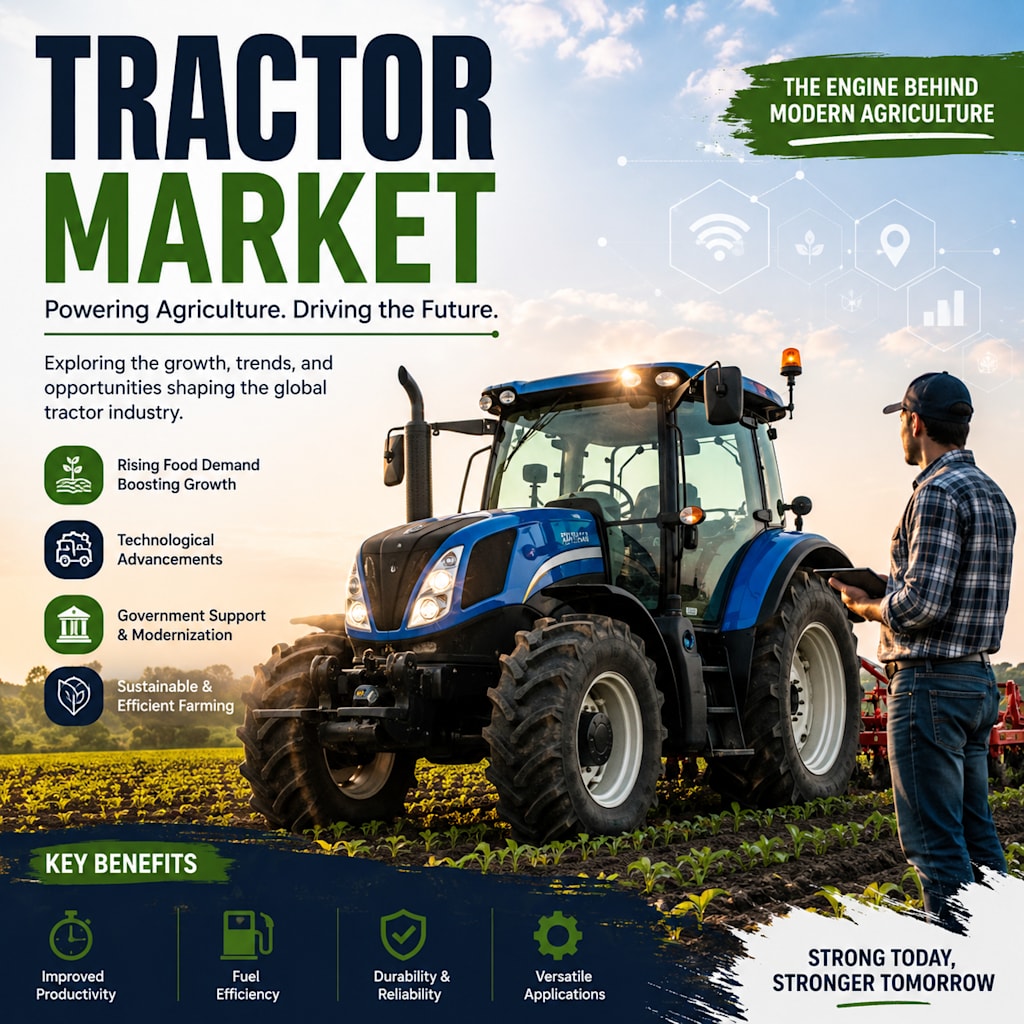
Why the Global Tractor Market Continues to Drive the Future of Agriculture
Agriculture has been the backbone of human civilization since the beginning. It helps to feed the ever-increasing population and has become one of the largest and most important industries in the world to support the rural economy. However, modern agriculture is nothing like it used to be.
Today, technology has a crucial role in how we produce food, harvest it, and even transport it. At the center of this transformation is one single machine which has proved to be a must-have for farmers around the world – the tractor.
From an agricultural machine that just toed equipment across fields to a complex one that efficiently reduces labor demands and enhances productivity; the importance of tractors is increasing at an unprecedented pace.
A Market Built on Necessity
The global tractor market size was valued at around USD 44.4 billion in 2025, projected to reach nearly USD 61.3 billion by 2034.
The steady rise of the market, which is expanding, is largely driven by a simple fact, if you need to feed the ever-increasing global population, you need modernized agriculture equipment.
As farm operations become larger, labor shortages become the norm in many regions, the need to increase the cultivation area while maintaining productivity becomes paramount for farmers. Tractors are one of the most valuable assets they have to achieve this goal.
Why Food Demand is Reshaping Agriculture
One of the biggest drivers in the tractor market today is the increasing demand for food around the world.
Rapid population growth, the need for improved diets, and the changing lifestyles are putting significant strain on our agricultural systems. More food needs to be produced on the limited available land while also keeping efficiency and environmental sustainability in check.
Traditional farming methods can't achieve this on their own.
Tractors enable farmers to prepare fields, plant seeds, cultivate and even harvest produce more quickly and effectively than manual labor, while the reduction in overall time for a specific farm activity is significant and enhances the total farm output.
For many farming enterprises, mechanization is slowly becoming less of a luxury and more of a necessity.
The Rise of Farm Mechanization
Across developed and emerging economies, farm mechanization is witnessing a rapid expansion.
The benefits of adopting modernized agricultural equipment are becoming widely recognized, even by small and medium-sized farm owners. Tasks that once consumed hours and significant labor can now be accomplished with relative ease using a tractor and a specialized implement.
These are the primary benefits of farm mechanization:
- Increased Productivity
- Reduced labor dependence
- Optimized use of land
- Better crop yield
- Faster farming operations
Labor shortages continue to affect various regions in the world, and mechanization is expected to become even more critical in the coming years.
Governments Are Supporting Agricultural Modernization
A number of governments around the world have actively initiated programs to facilitate farmers’ access to advanced agricultural equipment, including the purchase of tractors, through various incentives like low-interest financing programs, subsidies and training initiatives, along with the implementation of rural development projects.
All of this is helping to ensure:
- Enhanced food security
- Increased productivity of the agricultural sector
- Support to the rural economy
- Promotion of technological advancement
Modernization programs by governments have been particularly crucial in a number of developing countries where there has been a marked increase in tractor ownership among farmers.
As governments continue to increase their spending on agriculture, the demand for tractors is expected to rise significantly.
Smart Technology Is Changing the Tractor Industry
Tractors have come a long way from what they were a few decades back.
The present-day tractors are not just simple, mechanical machines anymore. In fact, more and more manufacturers are embedding technologically advanced features to help increase efficiency. These may include:
- GPS guided navigation
- Precision agriculture technology
- Remote monitoring systems
- Automated steering
- Real-time performance analytics
The above mentioned features empower the farmers to make more precise decisions while minimizing any wastage of resources. Precision farming techniques are becoming more widely adopted. These systems help farmers in making better decisions about planting, irrigation, fertilization and harvesting while helping reduce losses in agricultural yield.
Tractors are now transforming from simple farm vehicles to intelligent agricultural platforms.
The Growing Interest in Electric Tractors
Apart from a need for increased productivity, a growing concern for sustainability is also playing a vital role in the future of agricultural machinery.
Various manufacturers globally are exploring electric and hybrid tractor options that may eventually replace the current diesel-powered ones. These can reduce emissions and also cut down the maintenance costs while also offering quiet operation.
Although the electric tractor market currently constitutes a small portion, over the next decade there could be an acceleration in the adoption of these technologies.
As environmental concerns increase, and governments globally continue to pursue stricter clean energy policies, electric farming machinery could become a preferred option for the farmers in the years to come.
Beyond Agriculture: Tractors in Construction and Infrastructure
While agriculture represents the biggest market segment for tractors, these robust machines are also finding other applications, particularly in construction and infrastructure. Construction projects around the world commonly rely on tractors to move building materials, prepare the land for construction and maintain the site. Increased focus on infrastructure in emerging markets is further creating more demand for farm equipment manufacturers. Forestry and mining activities and municipal works also depend on the use of tractors.
Why Asia-Pacific Leads Global Growth
Currently, Asia-Pacific is one of the biggest markets for tractors globally.
The Asia-Pacific region is a leader for a number of reasons:
- Huge agriculture dependent economies
- Growing population and demand for food
- Strong governmental support for agricultural modernizaton
- Increased mechanization in the rural areas
The growing population and demand for food has compelled governments of nations like India and China to focus more on increasing food production through farm mechanization, as it helps them produce more food on the available agricultural land. Rising per capita incomes and improved living standards have also enabled farmers to purchase these advanced machines. All this is positioning the Asia-Pacific region at the forefront of the global tractor market.
Challenges Facing the Industry
Despite all positive trends, the global tractor market is also facing certain challenges. The significant initial cost of buying advanced farm equipment still proves to be a major drawback for a large section of farmers, particularly in the developing parts of the world. Moreover, the high maintenance and operating costs, along with financing limitations, have also been a hurdle to the adoption of new technologies. The manufacturers also continue to be under pressure to produce eco-friendly farming equipment.
The Future of Farming Is Mechanized
The future of agriculture lies in technology, automation, and data-driven insights. Tractors are evolving from basic towing machines into sophisticated and smart farming equipment that enhance efficiency, support sustainable agricultural practices, and enable farmers to meet the rising demands of global food production. With ongoing advancements in precision farming, automation, and alternative energy sources, the importance of tractors will only continue to grow. The expanding global tractor market is an indicator of more than just growing demand for farming machinery; it is a reflection of a complete overhaul in the agriculture sector, emphasizing efficiency, sustainability, and the unwavering need to produce more food for a growing world.
About the Creator
Robert
Senior Market Researcher at IMARC Group, specializing in global market analysis, industry trends, and data-driven insights across diverse sectors.
Enjoyed the story? Support the Creator.
Subscribe for free to receive all their stories in your feed.
Comments
There are no comments for this story
Be the first to respond and start the conversation.