


The prevailing narrative—recently echoed by figures like Elon Musk—suggests a pivot in human value. The argument goes: as silicon outpaces the PhD in raw "intelligence," our only remaining moat is the "heart" or "character." While the sentiment is noble, it relies on a fundamental misunderstanding of what intelligence actually is. It conflates the vast, rapid retrieval of data—knowledge—with the actual spark of IQ: the ability to navigate the absolute unknown.
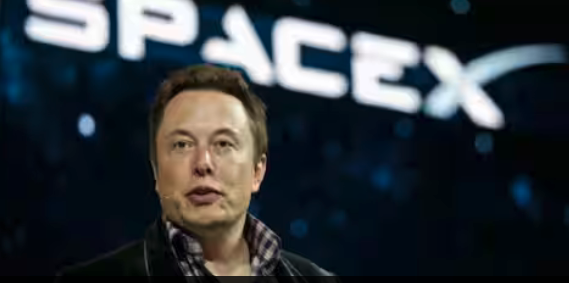
According to Elon:
- The establishment sold the opposite story for more than a thousand years.
- Get the degree. Get the credential. Get the paper (diploma).
- That paper was supposed to prove you were exceptional.
- According to Elon it doesn’t.
- A degree is proof of compliance.
- It proves you showed up. Met deadlines. Followed a rubric.
- Sat inside an institution for four years. Never once challenged the structure that held it together.
- It does not prove you will speak when the room expects silence.
- It does not prove you care about the thing you are building more than the title you hold while building it.
- It does not prove you have a spine.
Elon raw knowledge without character is not an advantage.
In the next few paragraphs, I will prove to you that Elon Musk is completely and absolutely wrong, that we acquired techniques during our education that enhance our ability to take advantage of what nature gives us: our IQ.
The original text argues that degrees are merely "proof of compliance" and that algorithms are "demonetizing intelligence" by solving in seconds what once took a PhD a lifetime. It claims that as cognitive power becomes "unlimited," the premium on being smart "collapses to zero."
This perspective rests on a fundamental category error: it mistakes knowledge—the vast, lightning-fast retrieval of existing data—for intelligence. While an LLM is undeniably superior to any human at aggregating and synthesizing known information, this is a feat of storage and pattern matching, not "smartness."
In other words, just like the pixels on your iPhone show you images that are not really there, LLMs produce texts and dialogs that show you an "intelligence" that also is not there.
True intelligence is the specific capacity to navigate the unprecedented.
The unknown. The completely new.
Deriving the next step from the previous one is mechanical, and in the same way that calculator do with numbers, computers now do with sentences and images.
But nobody in my generation called a calculator "intelligent."
Knowledge is a map of where we have already been; intelligence is the ability to orient oneself when the map ends and the unknown begins.
What we are witnessing today is not the infinite expansion of cognitive power, but the finite expansion of knowledge retrieval. A machine can "know" everything recorded in human history (which is finite) and still remain utterly "unintelligent" the moment it is confronted with a problem that exists entirely outside its database.
When the data runs out, the LLM hits a structural ceiling—proving that while knowledge is being demonetized, the intelligence required to overcome the unknown remains a uniquely human frontier.
The Value of Human Character

As for the value of human integrity and character, let me just remind the reader that every man that we have met that claims to be honest and incorruptible can claim that because he has never been made the right offer.
In public life, in politics, we constantly see people who we thought were paradigm of dignity the sink to the filthiest shame when a scandal opens.
The ones the most frequently disappoint us are the ones that claim "I'm telling you the truth", and specially those that say "trust me ".
Knowledge can and should be "demonetized"

To argue that "intelligence" is being "demonetized" is to mistake a library for a thinker. There is a distinct difference between an LLM and a journey of the mind:
• Knowledge (The Database): This is what current AI excels at. It is the ability to access and synthesize information that already exists.
• Intelligence (The Journey/IQ): True IQ is measured by how an entity reacts to the complete unknown. It is the ability to solve problems for which there is no pre-existing data, no rubric, and no training set.
Computers may never possess IQ in this sense. An LLM operates within the boundaries of its training data; it is a closed system of logic. When faced with an issue about which its database has absolutely no information, the model does not "think"—it hallucinates or fails. It cannot embark on the "journey" of discovery because it cannot exist outside the parameters of what has already been recorded.
Why Character Isn't the Only "Scarce Resource"
The original text claims that because "intelligence" (they mean knowledge) is becoming cheap, "character becomes the only scarce resource left."
"A computer model cannot hold a moral line... Integrity is not a soft skill anymore. It is the last advantage that cannot be automated."
While it is true that a server farm cannot feel conviction, the argument misses a more critical human advantage: originality in the face of the void.
If we concede that AI has "won" the knowledge war, we are effectively saying that there is nothing left to discover that isn't already in a database.
If we define intelligence as the ability to adapt to the unprecedented, then "being smart" is not collapsing to zero. In fact, it is becoming more valuable than ever.
Refuting the "Heart vs. Brain" Binary
Elon Musk’s realization that "it actually matters whether somebody has a good heart" is a valuable lesson in leadership, but a poor metric for the future of technology.
1. The "Stunning but Corrosive" Fallacy: The text suggests that "sharp minds" without character build corrosive things. This is a human flaw, yes. But to suggest that AI is the "sharpest mind" is a category error.
AI is a tool, not a mind.
2. The Automation of Logic, Not Reason: We have taught silicon to mimic logic faster than a human. We have not taught it to reason through the unknown.
3. The Value of the Spine: The text rightly notes that a degree doesn't prove you have a "spine" to speak when the room is silent. However, neither does an algorithm.
The "spine" required to innovate—to move toward a truth that no one else sees—is an intellectual act as much as it is a moral one.
Conclusion

The "mind" was never just a repository for facts; facts were always just a convenient way for institutions to grade us. If we allow the narrative that "intelligence is becoming the cheapest thing on earth" to take hold, we surrender the very thing that makes us human: our capacity to navigate the unknown.
Character is essential, but it is not our only moat. Our true advantage lies in the journey—the ability to apply IQ to the gaps where the database ends and the unknown begins.
That is a journey no machine can ever take.
About the Creator
R F Dace
I say what others won't, this makes you think and stays with you. I won’t tell you what to think, but I will show you the issues. You will be challenged, and trusted to reach your own conclusions. Don't be shy, I'll appreciate your comments
Enjoyed the story? Support the Creator.
Subscribe for free to receive all their stories in your feed.
Comments
There are no comments for this story
Be the first to respond and start the conversation.