
The Invisible Interface: Why the 800% Siri AI Surge Changes the Compute Wars
We are moving past the web-browser chatbot era. The next massive tech super-cycle belongs to the algorithms living inside your operating system hardware.

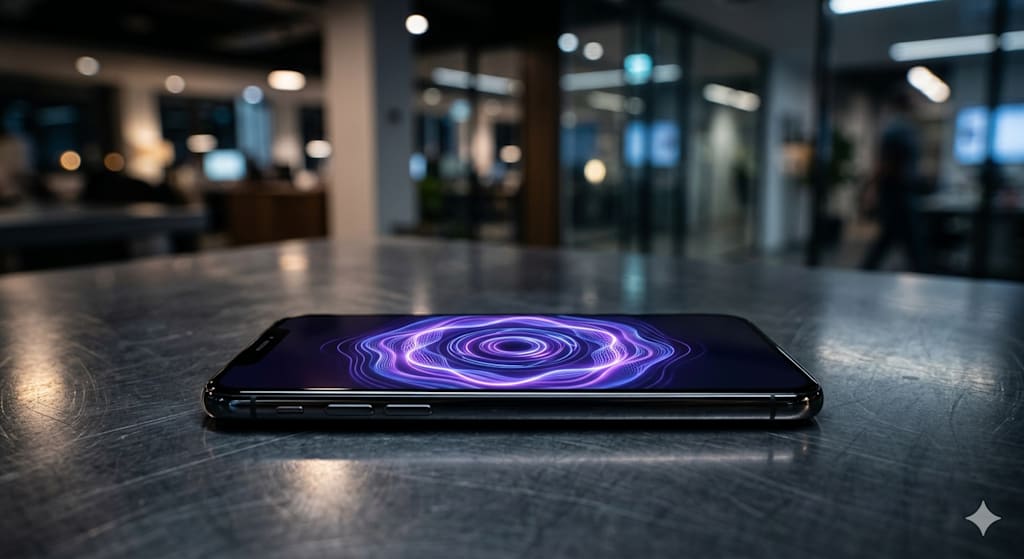
The technology industry has spent the last few years conditioning the global public to interact with artificial intelligence through a highly unnatural interface: the text prompt box. For several seasons, consumers and enterprise users were forced to open a browser tab, log into a specific cloud platform, and type out hyper-specific sentences just to generate a simple email, analyze a dataset, or clean up a line of code. We accepted this high-friction workflow because the novelty of generative software masked its clear practical limitations.
Yet, as we close out the first full week of June 2026, the international market is staging a massive, uncoordinated rebellion against the web-wrapper architecture.
The world is rapidly pivoting toward seamless, OS-level ambient computing. This transition is violently highlighted by a staggering 800% explosion in global search interest for native integrations like Siri AI, alongside a sharp 50% rise in regional hardware equivalents such as Russia's Alisa II. When viewed alongside the parallel 30% emergence of "Agentic AI" frameworks and a strong 30% push in Copilot ecosystems, the structural reality becomes undeniable. The consumer market is completely exhausted by standalone applications. True power has officially returned to the companies that own the physical devices in your pocket and on your desk.
The Death of the Standalone App Ecosystem
To understand the scale of this hardware realignment, one must examine why lightweight software wrappers are facing a quiet economic collapse. Over the past few quarters, global consumer data indicates a severe drop-off in active user retention for standalone generative web platforms. Users are discovering that leaving an ongoing workflow to prompt a third-party application breaks their cognitive focus, introduces data privacy vulnerabilities, and slows down operational execution.
This friction explains why the market is aggressively pivoting toward native system intelligence. When an algorithm is woven directly into the silicon of an operating system, it doesn't wait for a user to type a formal command.
By utilizing Agentic AI frameworks, these next-generation systems operate in the background—auditing your screen, understanding local context, and managing cross-application data flows instantly. A standalone website can write an essay, but it cannot independently coordinate with your calendar, verify an encrypted local file, and draft a response to a client through your native mail client in milliseconds without manual intervention. The 800% surge in native operating system queries represents the official dawn of zero-click automation.
The Non-English Horizon and the Fight for Skills
As the interface shifts to background hardware, the global market is experiencing a massive democratization of access, reshaping corporate demands across multiple languages:
- The Multilingual Explosion: The rapid 20% to 40% climb in global queries using terms like "ia," "claude ia," and "gemini ia" reveals that the integration of localized operating systems is quickly moving past English-speaking bubbles and dominating Latin American and European tech corridors.
- The New Enterprise Literacy: The sustained 30% momentum behind professional benchmarks like the Microsoft AI Skills Fest 2026 demonstrates that corporations are frantically trying to retrain employees to manage these background automated "agents" rather than teaching them basic prompting tricks.
The Silicon Final Frontier
We are witnessing a profound structural correction within the technological landscape. The initial venture capital dream that an independent web startup could disrupt the tech landscape with a clever web-based interface is hitting a massive wall of physical reality.
The long-term value and absolute economic dominance of this technical era will not be held by the firms building the largest abstract cloud models, but by the legacy ecosystems that control the underlying operating systems and local hardware chips. As autonomous background agents become the default method of human-computer interaction, the standalone app bubble will cool down completely, proving that in the digital economy, the ultimate interface is the one you can't even see.
Have you started using native assistant features on your phone or computer more frequently than opening web-based chatbots? Do you think independent AI companies can survive once big tech embeds advanced "agents" directly into every device? Let's break down the computational metrics and share your thoughts in the comment section below.
Fascinated by this unpolished, data-backed deep dive into the hardware wars? If you are determined to stay miles ahead of the crowd on the corporate power struggles, code revolutions, and market corrections re-engineering our global economy this week, show your support by leaving a Like, Sharing this piece with your technical network, and hitting Follow for more urgent, unfiltered intelligence!
About the Creator
AI Lens
Exploring the profound intersection of human nature, philosophy, and the future of artificial intelligence. Writing about our evolving digital world.
Enjoyed the story? Support the Creator.
Subscribe for free to receive all their stories in your feed.
Comments
There are no comments for this story
Be the first to respond and start the conversation.