
The Humanize AI Paradox: Why We Are Forcing Machines to Mimic the Soul
As the demand for an "AI Humanizer" skyrockets, humanity finds itself caught in a bizarre digital loop: using tech to write, and then using more tech to prove we are still human.
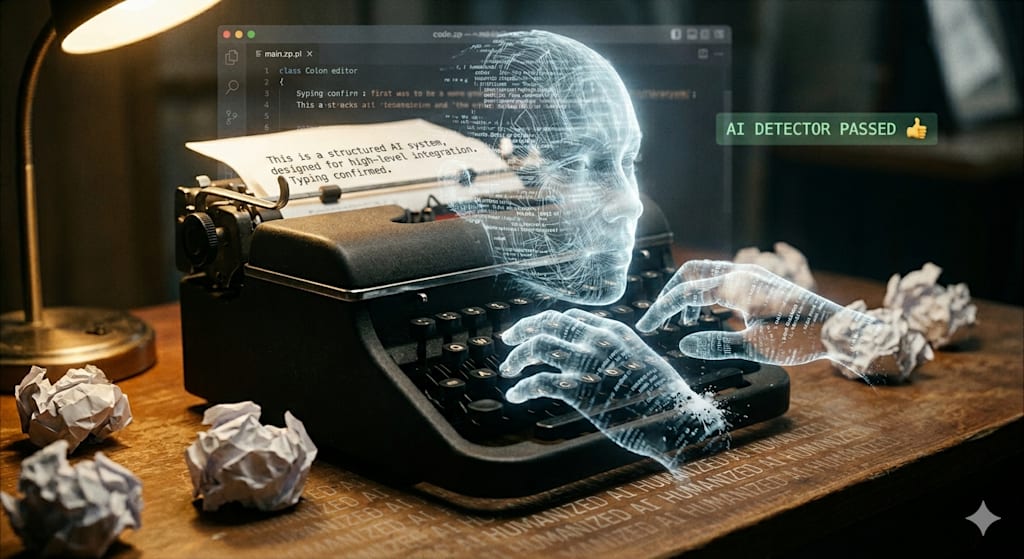
We live in a world haunted by an entirely new kind of ghost—one made of algorithms, neural networks, and statistical probabilities. Over the past year, generative technology has advanced to a point where it can replicate almost any written style. Yet, this sudden efficiency has birthed a fascinating, almost poetic crisis. If you look closely at recent global search metrics, a strange trend is exploding: people are no longer just looking for answers from machines; they are actively searching for a way to achieve a reliable ai humanizer effect.
The paradox is deeply cultural. We rushed to automate our thoughts, our essays, and our creative expressions using artificial intelligence. But the moment the text left the machine, a cold realization hit us: it lacked a pulse. Now, creators, writers, and students worldwide are caught in a desperate cycle—employing tools designed to humanize ai text, simply to escape the rigid gaze of an ai detector. We are using technology to hide the technology, creating a digital masquerade where everyone is wearing a mask of artificial intimacy.
The Rise of the AI Humanizer: A Symptom of Alienation
The growing obsession with terms like humanize ai isn't just about bypassing administrative filters or academic algorithms. It is a symptom of a much deeper, subconscious human need. When a machine writes, it operates on a structure of perfect predictability. It selects the next word based on mathematical probability, choosing the path of least resistance.
But true human writing is chaotic. It is shaped by our flaws, our pauses, our sudden diversions, and the invisible weight of our personal memories. A human writer remembers the exact bitter taste of their morning coffee or the specific sting of a past disappointment, and that subtext bleeds into their prose. When we use software to smooth out machine-generated text, we are essentially trying to inject "calculated flaws" back into the matrix. We are forcing the machine to pretend it has a soul.
The Battle of the Bots: Deception vs. Detection
This dynamic has triggered a quiet war in the digital landscape. On one side, we have an ever-evolving ai checker ecosystem built by tech companies to flag anything that sounds remotely synthetic. On the other side, millions of users are feeding those exact flags back into an ai humanizer to find the perfect disguise.
What does this tell us about the future of human connection? It proves that while we crave the speed of automation, we still deeply fear losing our distinct identity. If a text feels too polished, too sterile, our intuition rejects it. We don't just read words; we read the human presence behind them. The moment a reader senses that a paragraph was born from an automated prompt rather than a living mind, the bridge of empathy collapses.
Beyond the Matrix: Protecting the Authentic Mind
Ultimately, the rush to "humanize" artificial prose is a losing game. You can tweak the sentence structures, vary the vocabulary, and randomize the pacing, but you cannot automate intent. True creativity does not come from a database; it comes from consciousness—the lived experience of being alive, feeling pain, experiencing joy, and navigating the profound ambiguity of the universe.
The lesson for creators moving forward is clear. Tools like advanced text engines or an open AI Studio are spectacular for brainstorming and structuring raw data. But the final, breathing essence of your work must belong to you. Do not let the machine do your feeling for you. In an internet increasingly crowded by synthetic voices begging to sound real, the most revolutionary thing you can do is remain unapologetically, flawlessly human.
What is your take on this digital masquerade? Have you ever had to tweak an article just to make it sound "more like you" after using a digital assistant? Let’s talk about the future of writing in the comments below! If this reflection touched a nerve, please hit the like button, share it with fellow writers, and follow my profile for our upcoming deep dive into the world of Agentic AI!
About the Creator
AI Lens
Exploring the profound intersection of human nature, philosophy, and the future of artificial intelligence. Writing about our evolving digital world.
Enjoyed the story? Support the Creator.
Subscribe for free to receive all their stories in your feed.
Comments
There are no comments for this story
Be the first to respond and start the conversation.