
The Hidden Vacuum Tech Driving the NEG Pumps Market Boom
From particle accelerators to chip fabs, non-evaporable getter pumps are becoming critical industrial infrastructure.
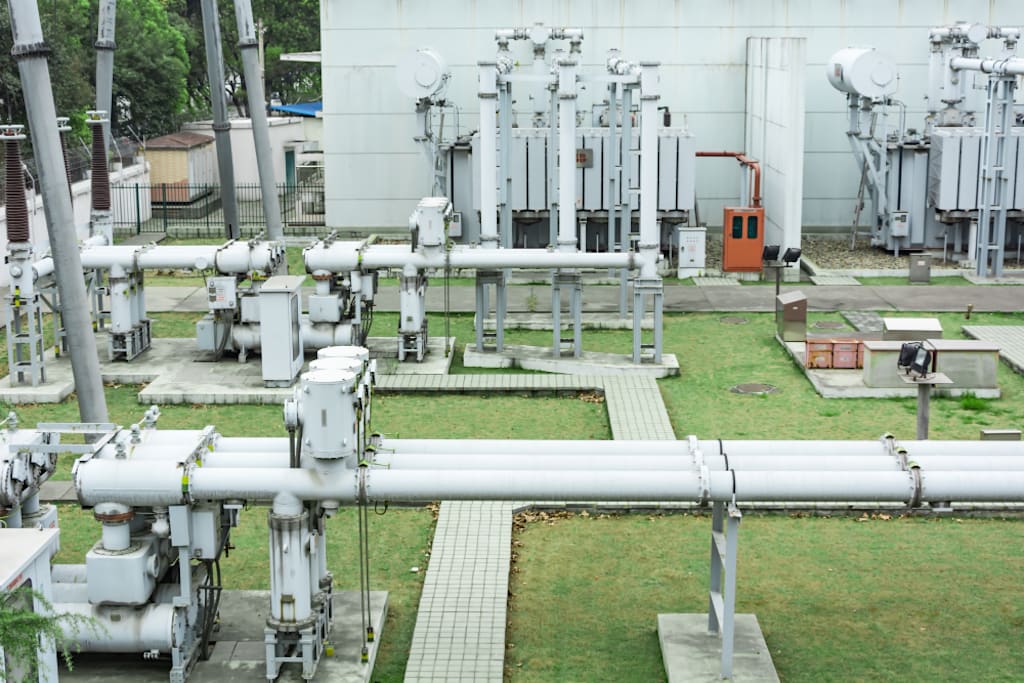
The Pump That Helped Build CERN Is Now Heading for Your Smartphone Factory
Walk the tunnel of the Large Hadron Collider at CERN and you are surrounded by a vacuum so complete it rivals the pressure of outer space. The technology holding that emptiness intact is not glamorous — it is a small metallic cartridge packed with zirconium alloy, quietly absorbing stray gas molecules without a single moving part. That device is a non-evaporable getter pump, and the Non-Evaporable Getter (NEG) Pumps Market is about to grow from an $87.1 billion industry in 2025 to $134.2 billion by 2035. A detailed breakdown of the segment structure, regional distribution, and key players is available in this NEG pumps industry and technology overview.
For decades, NEG technology was almost exclusively the territory of particle physicists. The alloys — combinations of zirconium, vanadium, titanium, and aluminium — were developed for facilities where pressure must drop below 10⁻¹² mbar, a level of vacuum that conventional mechanical pumps simply cannot reach. The appeal is obvious to anyone who has tried to run precision instruments near contamination: NEG pumps produce no vibration, require no oil, and have no electrical connections inside the vacuum chamber. They sorb active gas molecules directly onto their metallic surface. Clean, silent, and maintenance-light.
When Semiconductor Fabs Discovered Getters
The shift happened gradually, then all at once. Chipmakers chasing sub-3-nanometer process nodes realized that trace contamination in deposition chambers was quietly destroying yields. Turbomolecular pumps, while effective, introduce vibration and back-streaming oil vapor that can degrade sensitive thin films. NEG-based solutions offered an alternative that fit cleanly into chamber walls without competing with the process inside.
Asia Pacific is now the dominant regional market, holding a 40.5% share valued at approximately $35.2 billion. The driver is obvious: South Korea's Samsung and SK Hynix, Taiwan's TSMC, and China's rapidly expanding domestic foundry sector are all scaling up advanced node production simultaneously. Every new wafer fabrication line brings fresh demand for ultra-high vacuum infrastructure, and cartridge NEG pumps — which account for 50.8% of the product type segment — slot into that infrastructure with minimal redesign. Japan and South Korea are also investing heavily in flat panel display manufacturing, another application where contamination-free vacuum is non-negotiable.
Fusion Energy Is Writing Larger Orders
Semiconductor demand is steady, but fusion energy is where the order books get interesting. Fusion reactors require NEG pump arrays capable of handling hydrogen at pumping speeds measured in thousands of cubic meters per second. The quantities involved dwarf what any single semiconductor fab requires.
Europe is at the center of this push. CERN's ongoing facility upgrades, France's ITER project, and the UK's commitment to fusion energy research following Brexit have all created sustained procurement pipelines for modular NEG pump systems. The European Union's clean energy funding mechanisms are directing record levels of capital toward these programs. Meanwhile in North America, national laboratories including Fermilab and Oak Ridge are running parallel programs that combine particle physics infrastructure with early-stage fusion research, creating double-sided demand on NEG manufacturers.
The market data on Non-Evaporable Getter (NEG) Pumps Market share shows ultra-high vacuum pumps capturing 60.5% of the pressure range segment — a figure that reflects how thoroughly scientific research applications still anchor the overall market, even as industrial use cases multiply.
The Alloy Question No One Talks About
There is a supply chain tension running underneath the growth narrative. The alloys that make NEG pumps function — St 707, which contains 70% zirconium, and St 101, containing 84% zirconium alongside aluminium — depend on zirconium and vanadium, metals with geopolitically concentrated supply chains. Price volatility in these materials has already pushed manufacturers toward new alloy development. The ZAO formulation developed by SAES Getters, the Milan-based global market leader, is one response: it activates at lower temperatures and demonstrates greater resistance to the degradation that comes with repeated reactivation cycles.
SAES Getters reinforced its position in April 2024 by acquiring FMB Berlin, a specialist in components for synchrotrons and particle accelerators that had been operating since 1990. The move consolidated technical expertise and customer relationships in exactly the accelerator sector that is expanding most aggressively.
What the Next Decade Builds
Quantum computing may end up being the application that surprises the industry most. Quantum processors require cryogenic ultra-high vacuum environments where even minimal gas molecule interference causes decoherence. In March 2026, a new NEG pump geometry validated through Monte Carlo simulations was developed specifically to exploit the topological enhancement effect — a design applicable to fusion reactors, synchrotrons, and extreme ultraviolet photolithography systems where pumping efficiency has historically been constrained by chamber geometry. As quantum hardware scales from laboratory prototypes to rack-mounted commercial systems, the vacuum infrastructure supporting each unit will need to be compact, reliable, and capable of maintaining pressure levels that only getter technology can consistently deliver.
About the Creator
Mark K. Belton
I’m Mark K. Belton, 26 years old, currently working as a Digital Marketing Intern. I have a strong interest in digital marketing and have been developing my skills in SEO, social media marketing, content creation, and online campaign
Enjoyed the story? Support the Creator.
Subscribe for free to receive all their stories in your feed.
Comments
There are no comments for this story
Be the first to respond and start the conversation.