
The Hidden Infrastructure Behind Every Modern City
From skyscrapers and airports to shopping centers and hospitals, elevators and escalators keep the world moving efficiently and safely.

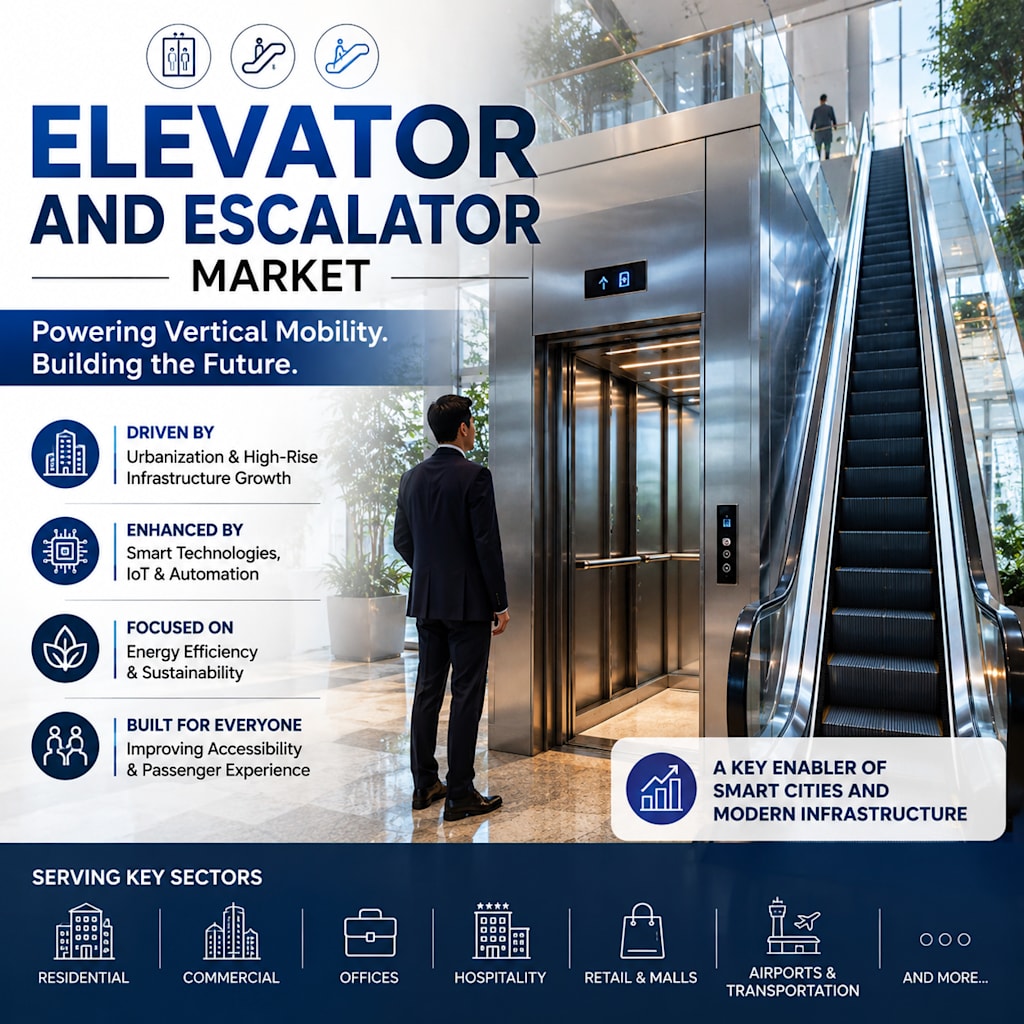
The Elevator & Escalator Industry Isn’t Just Moving People Up; It’s Raising Standards, Creating a Future As Key as Ever
Every day, we ascend and descend buildings of all kinds - shopping malls, office buildings, airports, residential apartments, healthcare facilities. They are often unnoticed amenities, silently transporting people across multiple floors. Yet the industry that makes this movement possible is undergoing an immense transformation, moving well beyond being just a component of a structure and emerging as a critical piece of the urban puzzle.
In our increasingly vertical cities, where development pushes skyward not outward, elevators and escalators have transcended their role as mere conveniences to become vital pieces of infrastructure. They are now central to urban mobility, accessibility, sustainable urban development, and the very concept of a “smart city.”
This elevated importance is reflected clearly in the market itself: The global elevator and escalator market size was pegged at around USD 169.2 billion in 2025, projected to expand to a formidable nearly USD 258.8 billion by 2034. Although the growth appears steady, the factors driving it are profound and fundamentally altering the urban experience.
Our Urban Landscapes Are Going Up
A key factor propelling the elevator and escalator sector is the undeniable reality that cities are running out of horizontal space. With ever-increasing urban populations, especially in emerging economies, the limited availability of land has driven construction ever skyward. High-rise residential towers, corporate headquarters, sprawling commercial complexes, and mixed-use developments have become the norm, all of which rely heavily on sophisticated and reliable vertical transportation.
Without efficient elevator systems, the upper floors of a skyscraper would be all but inaccessible.
Similarly, airports, public transit hubs, large hospitals, and department stores depend on escalators and moving walkways to handle the relentless flow of people. The higher we build, the more indispensable the elevator. This is particularly evident across Asia, home to some of the world’s most rapidly growing urban centers.
The Center of the Action: Asia Leads the Way
Currently, the Asia-Pacific region holds the largest share of the global elevator and escalator market. Countries like China, India, Japan, and South Korea are at the forefront of urban development, characterized by a burgeoning demand for efficient vertical mobility solutions. From new residential complexes and business districts to transport terminals and smart city initiatives, the rapid pace of urbanization in these regions necessitates smarter infrastructure. As populations concentrate in cities, managing vertical density requires innovative solutions that not only efficiently move people but do so comfortably and accessibly.
Smarter Elevators Are Revolutionizing Mobility
Today’s elevator and escalator systems are no longer merely mechanical contrivances. They have evolved into intelligent, networked solutions powered by cutting-edge technology including artificial intelligence (AI), the Internet of Things (IoT), predictive maintenance software, contactless controls, and real-time monitoring. These advancements allow elevators to proactively identify and address potential maintenance issues before they cause disruptions, minimizing downtime and enhancing passenger safety. Predictive maintenance not only contributes to passenger well-being but also significantly lowers operational costs for building owners over the long term, a factor of immense importance for large commercial properties.
The Pursuit of Sustainability and Green Living
As sustainability becomes an ever-critical consideration for modern buildings, reducing energy consumption is a top priority. The elevator industry has responded by developing highly energy-efficient systems. Key innovations include regenerative drives that recapture energy during operation, LED lighting systems, smart standby modes that conserve power when inactive, the use of lightweight materials to reduce energy draw, and advanced destination dispatch systems to optimize traffic flow and minimize wait times.
These advancements help property owners lower their operating expenses while also meeting sustainability targets and compliance requirements.
The growing demand for green building solutions is expected to be a significant driver of future growth.
Ensuring Accessibility for All
Accessibility has also emerged as a major priority, with greater emphasis being placed on creating environments that cater to the needs of everyone, regardless of ability. This includes not only people with disabilities but also the elderly, young children, and individuals recuperating from injuries. Modern elevators are equipped with a range of accessibility features, such as voice guidance systems, braille controls, advanced emergency communication, and wheelchair-accessible cabin designs, ensuring that everyone can navigate buildings safely and independently. As awareness and regulations regarding accessibility continue to grow, this sector of the industry will only become more critical.
The Ageing Demographic Creates a Growing Need
Another crucial demographic shift influencing the industry’s trajectory is the rapidly ageing global population, particularly in more developed economies. As people age, mobility challenges are often encountered, and stairs that were once manageable can become formidable obstacles. Elevators and escalators therefore play a vital role in helping older adults maintain independence and continue to participate fully in their communities and access essential services. This is driving demand for elevator solutions in retirement communities, hospitals, healthcare facilities, and residential buildings.
The Power of Modernization
While new construction projects tend to capture public attention, the elevator and escalator industry is also experiencing significant growth driven by modernization. Many of the elevators installed over the past few decades are reaching the end of their useful lifespan and need upgrading or replacing. Modernization offers an attractive alternative to complete replacement, providing opportunities for upgrading control systems, installing more energy-efficient motors, enhancing safety features, improving passenger experience, and implementing digital monitoring capabilities. These projects not only prolong the lifespan of equipment but also enhance performance, reliability, and reduce ongoing maintenance costs.
Building the Smart City: Where Connectivity is Key
As cities evolve into “smart cities,” elevators and escalators are integrating into a broader network of interconnected systems. Future vertical transportation is envisioned to seamlessly communicate with building management systems, security infrastructure, energy grids, and transportation networks. The ultimate goal is to create an intuitive and efficient mobility experience where an elevator can automatically determine a passenger’s destination, manage traffic flow to minimize delays, and optimize energy consumption. Many of these concepts are already in development, paving the way for smarter and more integrated urban movement.
The Elevating Future
The scope and importance of the elevator and escalator industry have expanded dramatically. Beyond the basic function of vertical transport, these systems are now indispensable to the functioning of modern, dense urban environments. As populations continue to rise, buildings grow taller, and sustainability imperatives become more pressing, the elevators and escalators of tomorrow will be smarter, safer, more sustainable, and more interconnected than ever before.
Far from being mere mechanical mechanisms, they are fast becoming sophisticated technological platforms critical for accessibility, urban sustainability, and overall livability.
By 2034, a nearly USD 260 billion market will clearly indicate how central vertical transportation will be to our cities’ futures.
About the Creator
Robert
Senior Market Researcher at IMARC Group, specializing in global market analysis, industry trends, and data-driven insights across diverse sectors.
Enjoyed the story? Support the Creator.
Subscribe for free to receive all their stories in your feed.
Comments
There are no comments for this story
Be the first to respond and start the conversation.