
The Global Superfood Market Is Growing as Consumers Prioritize Health and Preventive Nutrition
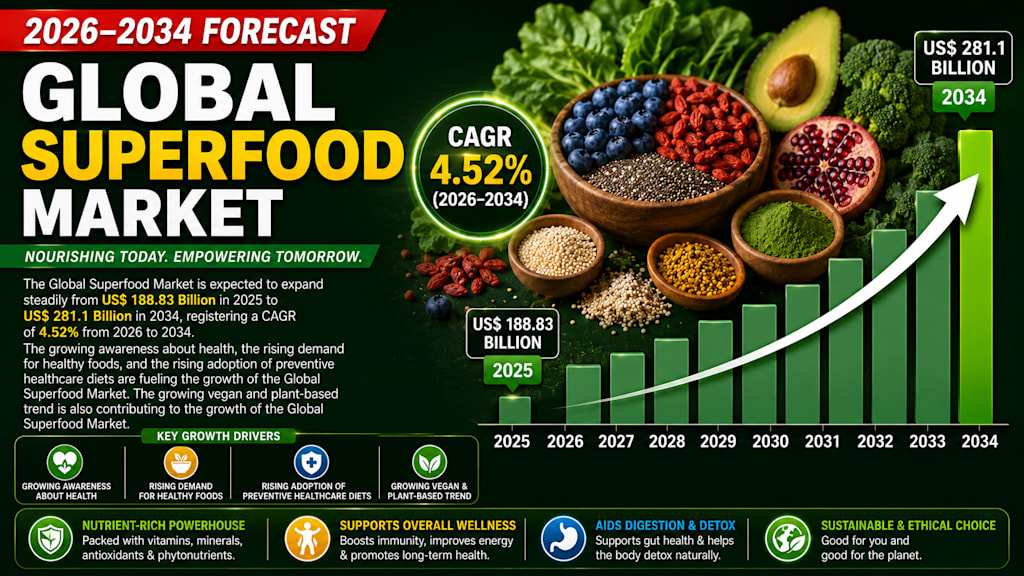
Rising health awareness, plant-based eating habits, and growing interest in preventive healthcare are driving steady growth in the global superfood industry. According to Renub Research, the market is expected to increase from US$ 188.83 Billion in 2025 to US$ 281.1 Billion in 2034, expanding at a CAGR of 4.52% from 2026 to 2034.

Superfoods Are Becoming Part of Everyday Nutrition
Over the last decade, consumer attitudes toward food have changed dramatically. People are no longer focused only on taste and convenience. Increasingly, food choices are being influenced by health benefits, nutritional value, and long-term wellness goals. This shift is helping drive strong demand for superfoods around the world.
Superfoods are commonly described as foods rich in vitamins, antioxidants, minerals, fiber, and other nutrients that support overall health and wellness. Popular examples include berries, quinoa, chia seeds, kale, spirulina, nuts, seeds, and whole grains. While “superfood” is primarily a marketing term rather than a scientific classification, consumers widely associate these foods with benefits such as stronger immunity, improved digestion, increased energy, and disease prevention.
According to Renub Research, the global superfood market is projected to expand from US$ 188.83 Billion in 2025 to US$ 281.1 Billion in 2034, growing at a compound annual growth rate of 4.52% between 2026 and 2034.
The market’s growth reflects a broader global movement toward healthier lifestyles, preventive healthcare, clean-label eating, and plant-based nutrition.
Health Awareness Is Driving Demand Worldwide
One of the strongest growth drivers for the superfood market is rising awareness about the connection between diet and long-term health. Consumers are becoming increasingly proactive about preventing lifestyle-related diseases through nutrition and healthier eating habits.
The increasing prevalence of obesity, diabetes, cardiovascular disease, and digestive disorders has encouraged many people to adopt nutrient-rich diets focused on immunity, heart health, weight management, and overall wellness. Superfoods are viewed as convenient natural sources of antioxidants, vitamins, and functional nutrients that support these goals.
Healthcare professionals, nutrition experts, fitness influencers, and wellness platforms have also played a major role in popularizing superfoods globally. Social media and digital wellness culture continue to increase awareness, making superfoods more visible and more mainstream than ever before.
The report also highlights how companies are embracing personalized nutrition. In April 2024, Nestlé Health Science launched an AI-powered personalized nutrition platform using genetic, microbiome, and lifestyle data to provide customized meal and supplement recommendations in North America and Europe.
Plant-Based Diets Are Expanding the Market
The rise of vegan, vegetarian, flexitarian, and plant-based eating patterns is another major reason the superfood market continues to expand. Consumers are increasingly choosing foods that are natural, minimally processed, and free from artificial additives or preservatives.
Many superfoods naturally align with these preferences. Seeds, grains, fruits, vegetables, algae-based foods, and plant proteins fit perfectly into clean-label and plant-focused diets. Ethical concerns related to sustainability, animal welfare, and environmental impact are also influencing consumer choices, further supporting demand for plant-based superfoods.
Food companies are responding by incorporating superfoods into snacks, beverages, supplements, breakfast foods, and ready-to-eat meals. This integration is helping superfoods move beyond specialty stores into mainstream grocery shelves and everyday diets.
In January 2026, Laird Superfood introduced Protein Coffee with Lion’s Mane Mushroom, reflecting the growing consumer interest in functional beverages that combine nutrition, convenience, and wellness benefits.
Innovation Is Making Superfoods More Accessible
Product innovation is playing a critical role in expanding the global superfood market. Companies are developing superfood products in a wide variety of formats, including powders, protein bars, capsules, beverages, cereals, baked goods, and fortified snacks.
These innovations are helping brands overcome one of the traditional barriers associated with some superfoods: taste and convenience. By incorporating superfoods into familiar products, companies are making them easier for consumers to adopt regularly.
Distribution channels have also expanded significantly. Superfoods are now widely available through supermarkets, hypermarkets, health food stores, pharmacies, and e-commerce platforms. Online sales have played a particularly important role in educating consumers and improving global product accessibility.
The report notes that Horlicks repositioned itself in December 2025 as a health-focused brand emphasizing superfoods and zero-added-sugar products, reflecting changing consumer preferences toward functional and wellness-oriented nutrition.
High Prices Remain a Challenge
Despite growing popularity, affordability remains one of the biggest challenges for the superfood industry. Many superfoods are relatively expensive because of limited growing regions, organic farming methods, complex harvesting processes, and international shipping costs.
Imported superfoods such as quinoa, acai, chia seeds, and spirulina often carry higher transportation and customs costs, making them less affordable for price-sensitive consumers, especially in emerging markets.
Climate change and supply chain disruptions can also affect pricing stability, further influencing market accessibility. Because of these factors, some consumers still perceive superfoods as premium or luxury products rather than everyday dietary staples.
Regulatory Scrutiny Is Increasing
Another important challenge for the industry is regulatory oversight and concerns regarding misleading health claims. Since the term “superfood” does not have a universal scientific definition, companies must be careful about the nutritional and health-related claims used in marketing.
Regulatory authorities in many countries closely monitor product labeling to ensure that health claims are supported by scientific evidence. Failure to comply can result in fines, product recalls, or reputational damage.
As consumers become more informed, transparency and evidence-based marketing are expected to become increasingly important for long-term brand credibility and growth.
Fruit-Based Superfoods Continue to Lead
The fruits superfood segment remains one of the largest and fastest-growing categories within the market. Berries, avocados, pomegranates, acai, and citrus fruits are widely recognized for their antioxidant properties, fiber content, and health benefits.
Consumers increasingly use fruit-based superfoods in smoothies, cereals, juices, snacks, and functional beverages. Advances in freezing, drying, and packaging technologies have also improved product availability and shelf life, supporting wider market growth.
The growing global focus on natural nutrition and preventive healthcare continues to strengthen demand for fruit-based superfoods across both developed and emerging markets.
Vegetable Superfoods Are Gaining Momentum
Vegetable-based superfoods are also becoming increasingly popular as consumers embrace plant-based and clean-eating lifestyles. Kale, spinach, broccoli, beetroot, and seaweed are among the most recognized vegetable superfoods because of their high vitamin, mineral, and phytonutrient content.
These ingredients are widely used in juices, soups, meal replacements, powders, supplements, and healthy snacks. Growing awareness about detoxification, gut health, immunity, and overall wellness is encouraging consumers to integrate more vegetable superfoods into daily diets.
The expansion of vegan and flexitarian diets is also contributing strongly to this category’s growth.
Superfood Bakery and Beauty Products Are Expanding
The superfood trend is no longer limited to food and beverages. Superfoods are increasingly being incorporated into bakery products, snacks, and cosmetic formulations.
Bakery companies are adding ingredients such as chia seeds, quinoa, flaxseeds, oats, berries, and nuts into breads, cookies, muffins, and snack bars to improve nutritional value. Consumers are showing strong interest in products that combine indulgence with health benefits.
Meanwhile, the cosmetics industry is using superfoods such as avocado, green tea, aloe vera, turmeric, berries, and seaweed in skincare and beauty products. These ingredients are valued for their antioxidant, moisturizing, and anti-aging properties.
The clean beauty movement and growing preference for natural ingredients are helping drive this segment’s rapid expansion.
Supermarkets and Online Platforms Are Driving Mass Adoption
Large retail chains and e-commerce platforms are playing a major role in bringing superfoods into mainstream consumer markets. Hypermarkets and supermarkets provide visibility, competitive pricing, and convenient access to a wide variety of superfood products.
Dedicated health food sections within retail stores are also improving consumer awareness and encouraging trial purchases. At the same time, online sales channels allow brands to reach consumers globally while educating them about nutritional benefits and product usage.
As organized retail and digital commerce continue expanding, distribution accessibility is expected to remain a major growth driver for the industry.
Regional Markets Continue to Expand
The United States remains one of the most mature superfood markets globally, supported by strong health consciousness, preventive wellness culture, and high demand for functional foods. Superfoods are already deeply integrated into snacks, beverages, supplements, and ready-to-eat meals across the country.
The United Kingdom market is growing steadily as plant-based diets and clean eating become more popular among consumers. Demand for seeds, grains, berries, and leafy vegetable superfoods continues to increase across retail channels.
India is emerging as one of the fastest-growing superfood markets due to rising disposable incomes, preventive healthcare awareness, and growing interest in traditional nutrient-rich foods such as turmeric, moringa, millet, and amla. International superfoods like chia seeds and quinoa are also gaining traction.
The report highlights that Supreem Pharmaceuticals Mysore launched Supreem Superfoods in India with more than 30 products targeting wellness-focused consumers.
The Future of the Superfood Market Looks Strong
The superfood industry is benefiting from several long-term consumer trends that show no signs of slowing down. Health consciousness, preventive nutrition, plant-based eating, fitness culture, and demand for natural products are all expected to continue shaping food consumption patterns globally.
Technology and innovation are also helping brands create more convenient, appealing, and accessible superfood products. As product variety expands and awareness increases, superfoods are likely to become even more integrated into everyday diets worldwide.
Final Thoughts
The global superfood market is evolving from a niche wellness category into a mainstream part of the global food and health industry. According to Renub Research, the market is expected to grow from US$ 188.83 Billion in 2025 to US$ 281.1 Billion by 2034, reflecting strong and sustained consumer interest in healthier lifestyles and preventive nutrition.
Although challenges such as affordability and regulatory scrutiny remain, the long-term outlook for the industry remains highly positive. Consumers are increasingly seeking foods that support immunity, energy, digestion, and overall wellness, and superfoods are well positioned to meet those demands.
About the Creator
Enjoyed the story? Support the Creator.
Subscribe for free to receive all their stories in your feed.
Comments
There are no comments for this story
Be the first to respond and start the conversation.