
The Global Rice Market’s Next Chapter: Feeding a Growing World in an Era of Change
From population growth and food security concerns to agricultural innovation and international trade, the global rice industry is entering a transformative decade worth over $405 billion.

Rice is much more than a simple grain. For billions of people around the world, it is the foundation of daily life, a symbol of cultural identity, and one of the most important sources of nutrition. From bustling cities in Asia to rural communities in Africa and Latin America, rice remains a staple food that connects economies, traditions, and food systems across continents.
As the world's population continues to rise and concerns about food security become more urgent, the importance of rice is growing alongside demand. Governments, farmers, food manufacturers, and international organizations are increasingly focused on ensuring a stable supply of this essential crop while adapting to challenges such as climate change, rising production costs, and evolving consumer preferences.
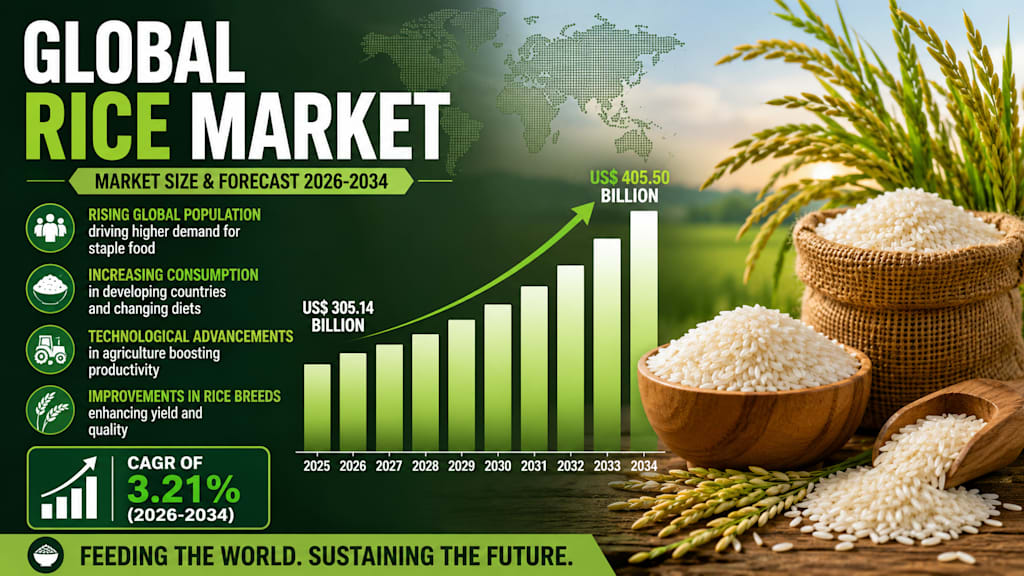
The economic significance of the industry is reflected in its future outlook. According to Renub Research, the Global Rice Market is expected to grow from US$305.14 billion in 2025 to US$405.50 billion by 2034, expanding at a compound annual growth rate (CAGR) of 3.21% between 2026 and 2034. The growth is being driven by population expansion, increasing food demand, technological advancements in agriculture, rising consumption in developing economies, and continuous improvements in rice varieties.
Behind these impressive figures lies a story of innovation, resilience, and the ongoing effort to feed a rapidly changing world.
Why Rice Remains One of the World's Most Important Crops
Rice is derived primarily from the species Oryza sativa and Oryza glaberrima. It is one of the most widely consumed grains globally and serves as a primary source of carbohydrates for billions of people.
Its popularity stems from several key advantages.
First, rice is versatile. It can be boiled, steamed, fried, baked, or incorporated into processed foods. It is also used in products such as rice flour, rice milk, snacks, desserts, and beverages.
Second, rice is relatively affordable compared to many other food staples. This affordability makes it especially important in developing economies where household food budgets remain limited.
Finally, rice can be cultivated across diverse geographical regions and climates, making it accessible to countries with varying agricultural conditions.
Because of these factors, rice continues to play a crucial role in global food security and remains one of the most strategically important agricultural commodities worldwide.
Population Growth Is Fueling Demand
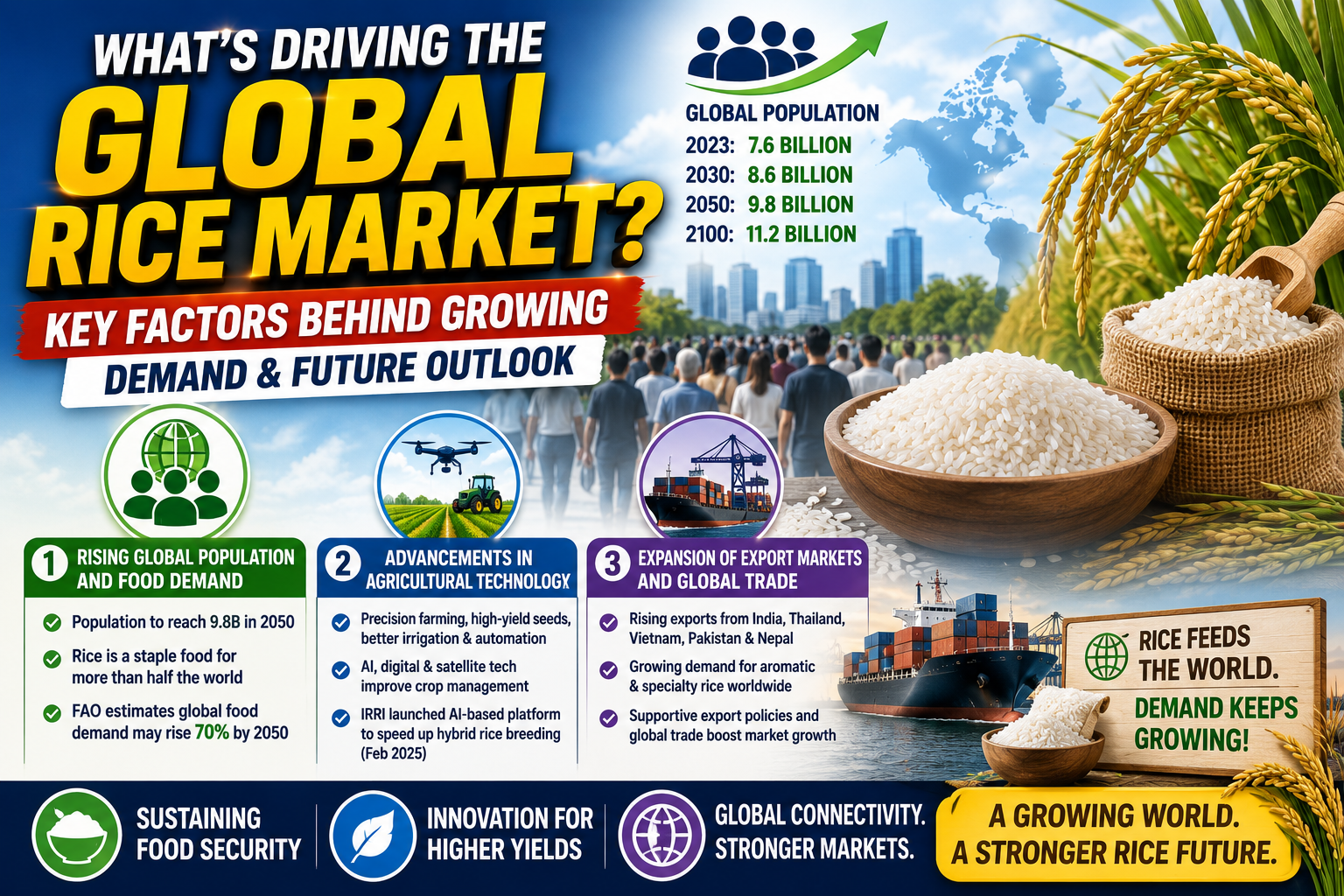
One of the strongest drivers of the global rice market is population growth.
As the world's population expands, demand for staple foods naturally increases. Rice occupies a unique position because it already serves as a dietary cornerstone for more than half of the global population.
According to projections highlighted by international organizations, global population growth is expected to continue for decades. As more people require reliable and affordable food sources, rice consumption is expected to rise accordingly.
This trend is particularly evident in developing regions throughout Asia and Africa, where population growth rates remain relatively high.
Urbanization is also influencing consumption patterns. As cities expand and lifestyles become increasingly fast-paced, consumers often seek affordable and convenient food options. Rice fits these requirements exceptionally well, making it a preferred staple across many demographics.
Additionally, rising incomes in emerging markets are encouraging consumers to explore premium rice varieties such as basmati and jasmine rice, creating opportunities for market diversification and value-added growth.
Governments worldwide recognize the importance of maintaining food security and are investing heavily in agricultural infrastructure, irrigation systems, and farming support programs to ensure adequate rice production for future generations.
Technology Is Transforming Rice Farming
Agriculture is no longer solely dependent on traditional farming practices.
Technological innovation is rapidly reshaping how rice is grown, harvested, and distributed across the globe.
Modern farming techniques now include precision agriculture, advanced irrigation systems, automated machinery, drone monitoring, satellite imaging, and data-driven crop management tools. These innovations help farmers improve productivity while reducing waste and resource consumption.
One particularly significant development involves the creation of high-yield and climate-resilient rice varieties. Researchers are developing strains capable of withstanding drought, floods, extreme temperatures, and other environmental stresses.
Such innovations are becoming increasingly important as climate variability affects agricultural productivity in many regions.
Artificial intelligence is also beginning to play a role. Advanced digital platforms are helping researchers accelerate breeding programs and identify rice varieties capable of meeting future food demands more efficiently.
By combining traditional agricultural expertise with modern technology, the rice industry is improving both production efficiency and long-term sustainability.
International Trade Continues to Expand
Global trade remains another major force driving the rice market forward.
Countries such as India, Thailand, Vietnam, and Pakistan have established themselves as leading rice exporters, supplying consumers across Europe, the Middle East, North America, and other regions.
Growing globalization has simplified trade relationships and improved access to international markets. This has allowed rice producers to reach new customers while encouraging competition and innovation throughout the industry.
Demand for specialty rice varieties has increased significantly in recent years. Consumers around the world are becoming more interested in premium products such as aromatic basmati rice, jasmine rice, and other region-specific varieties.
This growing demand has encouraged producers to improve quality standards and adopt advanced processing methods to remain competitive.
Export-oriented growth has become especially important for developing nations where agriculture represents a significant contributor to economic activity and employment.
As international trade networks continue expanding, rice producers are likely to discover even more opportunities in global markets.
Climate Change Presents a Serious Challenge
Despite its promising outlook, the rice industry faces several significant obstacles.
Among them, climate change stands out as perhaps the most pressing concern.
Rice cultivation depends heavily on stable weather patterns and reliable water supplies. Extreme weather events—including droughts, floods, heatwaves, and irregular rainfall—can dramatically affect crop yields and disrupt production cycles.
Many rice-growing regions are already experiencing the effects of climate variability, creating uncertainty for farmers and food supply chains alike.
Water scarcity presents another challenge.
Rice farming traditionally requires substantial water resources, and increasing competition for water among agricultural, industrial, and residential users may place additional pressure on production systems.
Environmental sustainability has also become a major topic of discussion. Traditional rice cultivation methods can generate methane emissions, contributing to greenhouse gas accumulation.
Researchers and policymakers are actively working to develop more sustainable farming practices, but widespread adoption remains an ongoing challenge.
Balancing production growth with environmental responsibility will be one of the industry's defining priorities over the coming decade.
Price Volatility Remains a Concern
Rice markets are also vulnerable to price fluctuations.
Weather-related production disruptions, export restrictions, trade policies, and geopolitical developments can all influence supply and demand dynamics.
When major producing countries impose export controls or experience poor harvests, international prices can rise rapidly.
At the same time, farmers face increasing costs related to fertilizer, fuel, labor, and transportation. These expenses can reduce profitability and contribute to higher consumer prices.
Supply chain inefficiencies present additional difficulties.
In many developing countries, inadequate transportation infrastructure and limited storage facilities result in significant post-harvest losses. Improving logistics and distribution systems will be critical for maintaining market stability and reducing waste.
Addressing these challenges will require collaboration among governments, agricultural organizations, and private-sector stakeholders.
Regular Rice Continues to Dominate Consumption
Although specialty varieties receive growing attention, regular rice remains the largest segment of the global market.
Traditional white rice continues to serve as the primary staple food in many countries due to its affordability, availability, and versatility.
Households, restaurants, schools, and foodservice operators rely heavily on regular rice as an everyday ingredient.
Government support programs often prioritize regular rice production because of its direct relationship with food security objectives.
Advancements in milling technology and storage systems have also improved quality and shelf life, helping maintain the segment's dominance despite increasing interest in premium alternatives.
For billions of consumers, regular rice remains the most practical and accessible option.
Premium and Specialty Rice Are Gaining Popularity
While regular rice dominates volume, specialty rice varieties are experiencing strong growth.
Arborio Rice
Known for its creamy texture and high starch content, Arborio rice is a key ingredient in dishes such as risotto.
Growing interest in international cuisines and home cooking has increased demand for Arborio rice beyond its traditional European markets.
Consumers seeking restaurant-quality dining experiences at home are contributing to this segment's expansion.
Brown Rice
Health-conscious consumers are driving increased demand for brown rice.
Unlike white rice, brown rice retains its bran and germ layers, providing higher levels of fiber, vitamins, and minerals.
Nutrition-focused consumers often choose brown rice because of its potential benefits for digestion, weight management, and overall wellness.
The rise of plant-based diets and whole-food nutrition trends has further strengthened demand.
Although brown rice is typically more expensive and has a shorter shelf life than white rice, many consumers view its nutritional advantages as worth the additional cost.
Regional Markets Are Shaping Industry Growth
Different countries contribute to the global rice market in unique ways.
India
India remains one of the world's largest rice producers and exporters.
Strong domestic demand, growing exports, and continued agricultural modernization are supporting market growth. Premium varieties such as basmati rice continue attracting international buyers, strengthening India's position within global trade networks.
United States
The U.S. rice market continues expanding due to changing dietary preferences, increasing multicultural food consumption, and growing demand for healthier rice varieties.
Innovations in climate-resistant rice cultivation are helping improve productivity while addressing environmental challenges.
Germany
Germany relies heavily on rice imports to meet consumer demand.
Growing interest in multicultural cuisines, organic products, and whole grains is contributing to steady market expansion throughout the country.
United Arab Emirates
The UAE remains highly dependent on imported rice due to limited local agricultural capacity.
A diverse population and strong demand for premium rice varieties continue supporting market growth, particularly for basmati rice products.
Together, these regional markets demonstrate the global nature of rice consumption and trade.
Looking Ahead
The future of the global rice industry appears both promising and complex.
Population growth, rising food demand, technological innovation, and expanding international trade will continue creating opportunities for producers and exporters.
At the same time, challenges related to climate change, sustainability, water management, and supply chain resilience cannot be ignored.
Success in the coming decade will depend on the industry's ability to embrace innovation while maintaining environmental responsibility and ensuring food security for a growing population.
The rice market's projected growth to more than US$405 billion by 2034 reflects not only economic opportunity but also the critical role this crop plays in supporting global well-being.
Final Thoughts
Rice has fed civilizations for thousands of years, and its importance shows no signs of diminishing. As the world confronts population growth, urbanization, and evolving dietary patterns, rice will remain at the center of global food systems.
With the Global Rice Market expected to rise from US$305.14 billion in 2025 to US$405.50 billion by 2034, the industry is entering a period of significant transformation and opportunity.
About the Creator
Enjoyed the story? Support the Creator.
Subscribe for free to receive all their stories in your feed.
Comments
There are no comments for this story
Be the first to respond and start the conversation.