
The Global Bakery Boom: Why Bakery Products Are Becoming a Bigger Part of Everyday Life
From Traditional Bread to Premium Pastries, the Bakery Industry Is Rising on the Back of Convenience, Innovation, and Changing Consumer Tastes

Walk into any supermarket, convenience store, café, or online grocery platform today, and one thing becomes immediately clear—bakery products are everywhere. From freshly baked bread and buttery croissants to cookies, cakes, and healthy snack bars, bakery products have become an essential part of modern diets across the globe.
What was once a simple industry focused on staple bread products has evolved into a dynamic and innovative market offering everything from gluten-free muffins and organic biscuits to premium artisan pastries and fortified breakfast goods. Consumer lifestyles, dietary habits, urbanization, and the growing need for convenience are reshaping the future of bakery consumption.
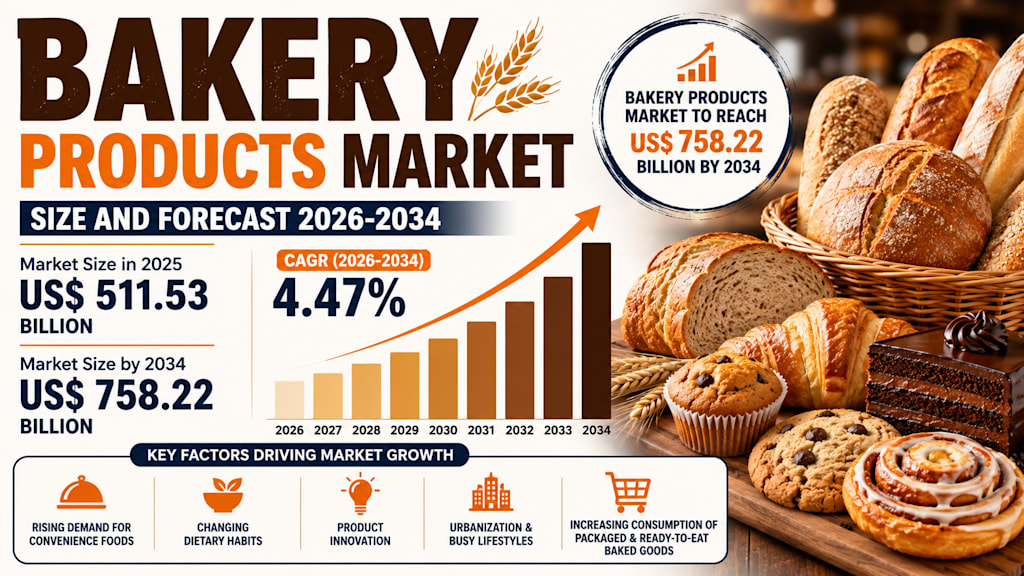
According to Renub Research, the Global Bakery Products Market is projected to grow from US$ 511.53 billion in 2025 to US$ 758.22 billion by 2034, expanding at a CAGR of 4.47% between 2026 and 2034. This growth highlights the increasing importance of bakery products in both developed and emerging economies.
As consumer preferences continue to evolve, bakery manufacturers are investing heavily in innovation, healthier ingredients, premium offerings, and sustainable production practices to remain competitive in a rapidly changing market.

The Evolution of the Bakery Industry
Bakery products have long been a cornerstone of food consumption worldwide. Bread remains one of the oldest and most widely consumed foods in human history. However, today's bakery industry extends far beyond traditional bread.
The sector now includes cakes and pastries, biscuits and cookies, bread and rolls, morning goods, specialty baked snacks, premium artisanal products, and functional and health-focused bakery offerings.
Advancements in food processing, packaging technologies, and large-scale production have transformed bakery manufacturing. Products now enjoy longer shelf life, improved freshness, and wider availability than ever before.
At the same time, consumers increasingly seek variety, convenience, and nutritional value, encouraging bakeries and food companies to diversify their product portfolios.
Convenience Is Driving Market Expansion
One of the strongest forces behind bakery market growth is the growing demand for convenience foods.
Modern consumers often lead busy lives filled with work commitments, commuting, education, and family responsibilities. As a result, foods that require little or no preparation continue to gain popularity.
Bakery products naturally fit this demand because they are ready to eat, easy to transport, affordable, available in multiple serving sizes, and suitable for both meals and snacks.
Packaged bread, muffins, biscuits, croissants, and snack cakes provide quick meal solutions for consumers who value speed and convenience.
Urbanization is accelerating this trend. As more people move into cities and adopt fast-paced lifestyles, demand for portable and convenient food options continues to rise.
Manufacturers are responding by introducing innovative packaging formats that improve portability while maintaining freshness and quality.
Health-Conscious Consumers Are Reshaping Bakery Products
While convenience remains important, health and wellness are becoming equally influential in purchasing decisions.
Consumers are increasingly paying attention to sugar content, fat levels, ingredient transparency, nutritional value, food allergies, and special dietary requirements.
This shift has encouraged bakery manufacturers to create healthier alternatives that align with modern nutritional preferences.
Popular innovations include whole grain products, gluten-free bakery items, reduced-sugar products, organic and natural ingredients, and functional bakery products.
Whole grain breads and baked goods offer higher fiber content and improved nutritional profiles, making them attractive to health-conscious buyers. Gluten-free products continue to expand due to increasing awareness of gluten sensitivities and changing dietary choices. Reduced-sugar recipes are helping brands appeal to consumers seeking healthier indulgences.
Manufacturers are also introducing products enriched with proteins, vitamins, minerals, and probiotics to provide additional nutritional value while maintaining the familiar appeal of bakery foods.
Premium and Artisanal Bakery Trends Gain Momentum
Another major development within the bakery industry is the growing popularity of premium and artisanal products.
Consumers increasingly seek artisan breads, specialty pastries, gourmet cookies, premium cakes, and customized baked goods that deliver unique experiences and superior quality.
The rise of café culture across many countries has further strengthened demand for premium bakery offerings.
Consumers are often willing to pay higher prices for products perceived as freshly baked, locally sourced, handmade, organic, and premium quality.
As a result, both independent bakeries and multinational food companies are expanding their premium product portfolios to capture this growing market segment.
Retail Expansion Is Making Bakery Products More Accessible
Distribution channels play a critical role in bakery market growth.
Today, consumers can purchase bakery products through supermarkets and hypermarkets, convenience stores, specialty stores, and online retail platforms.
Large retail chains continue to dominate sales due to their broad product selections and competitive pricing. Convenience stores remain popular among consumers looking for quick purchases, while specialty bakeries cater to customers seeking premium and artisanal experiences.
The rapid growth of e-commerce has also transformed bakery retailing. Online grocery shopping and food delivery services allow consumers to purchase bakery products from the comfort of their homes, significantly expanding market reach.
Improved logistics and supply chain management systems help ensure freshness, quality, and timely delivery, supporting continued growth in online bakery sales.
Sustainability Is Becoming a Competitive Advantage
Environmental awareness is increasingly influencing consumer purchasing decisions.
Consumers want greater transparency regarding ingredient sourcing, production methods, packaging materials, and corporate sustainability practices.
As a result, bakery manufacturers are implementing sustainability initiatives that include eco-friendly packaging, responsible sourcing programs, waste reduction efforts, and energy-efficient production systems.
Many companies are transitioning toward recyclable and biodegradable packaging solutions to reduce environmental impact. Others are working closely with suppliers to ensure responsible sourcing of wheat, sugar, oils, and other essential ingredients.
Businesses that successfully integrate sustainability into their operations often enjoy stronger consumer trust and improved brand loyalty.
Challenges Facing the Bakery Products Industry
Despite strong growth prospects, the bakery products market faces several important challenges.
One major issue is the fluctuation of raw material prices. Bakery production depends heavily on ingredients such as wheat, sugar, dairy products, and vegetable oils. Price volatility caused by weather conditions, supply chain disruptions, transportation costs, and global demand shifts can significantly impact profitability.
Manufacturers must balance rising costs while maintaining product quality and affordability.
Another challenge comes from changing dietary preferences. Growing interest in low-carb diets, keto lifestyles, gluten-free eating, and plant-based nutrition can reduce demand for certain traditional bakery products.
To remain competitive, manufacturers must continually innovate and adapt recipes to meet evolving consumer expectations without sacrificing taste or product quality.
Regional Market Insights
United States
The United States remains one of the world's largest bakery markets. Strong consumer demand for convenience foods, packaged snacks, and ready-to-eat meals continues to support industry growth. Organic breads, gluten-free products, and premium artisanal bakery offerings are gaining popularity among health-conscious consumers.
United Kingdom
The United Kingdom bakery sector benefits from strong demand for traditional baked goods alongside modern convenience products. Consumers increasingly seek whole grain options, low-sugar products, and organic bakery items. Online grocery services and private-label products continue to support market expansion.
China
China represents one of the fastest-growing bakery markets globally. Urbanization, rising disposable incomes, and increasing exposure to Western food culture have accelerated demand for bread, cakes, pastries, and packaged bakery products. The country's growing middle class continues to drive premium bakery consumption.
Saudi Arabia
Saudi Arabia's bakery market is experiencing steady growth due to urbanization, changing dietary habits, and increasing demand for convenient food products. The expansion of modern retail infrastructure and the growing influence of café culture continue to boost bakery consumption across the country.
Industry Consolidation and Recent Developments
The bakery industry is witnessing increased consolidation through mergers, acquisitions, and strategic partnerships.
In April 2025, Vandemoortele and Délifrance announced plans to merge, creating a major global leader in frozen bakery products with an expected combined turnover of approximately €2.4 billion.
In the same month, Commercial Bakeries Corp. acquired Hollandia Bakeries Ltd. and Good Food Company Inc., strengthening its bakery network and enhancing its position in the North American private-label cookie market.
Earlier, in May 2024, Commercial Bakeries Corp. acquired Imagine Baking, a company specializing in gluten-free and organic baked products, further expanding its healthier product offerings.
These developments demonstrate the industry's ongoing commitment to innovation, expansion, and long-term competitiveness.
Leading Companies Shaping the Market
Several major companies continue to influence the future of the bakery industry, including Finsbury Food Group Plc., Grupo Bimbo SAB de CV, Associated British Foods Plc., Mondelēz International Inc., General Mills Inc., Kellogg Company, Britannia Industries Ltd., Walker's Shortbread Ltd., Yıldız Holding, and McKee Foods Corporation.
These organizations continue investing in product innovation, digital transformation, sustainability initiatives, and global expansion strategies.
Final Thoughts
The global bakery products market is entering an exciting phase of growth driven by convenience, innovation, premiumization, and changing consumer lifestyles.
As health awareness increases, bakery manufacturers are moving beyond traditional offerings and embracing products that combine taste, nutrition, functionality, and sustainability. At the same time, the expansion of retail networks, online platforms, and premium bakery experiences continues to broaden consumer access and choice.
With the market expected to grow from US$ 511.53 billion in 2025 to US$ 758.22 billion by 2034, the future of the bakery industry looks exceptionally promising.
Companies that successfully balance convenience, health, sustainability, affordability, and innovation will be best positioned to thrive in this increasingly competitive marketplace. As consumer preferences continue to evolve, bakery products will remain a vital and growing segment of the global food industry, serving not only as everyday staples but also as symbols of innovation, indulgence, and changing lifestyles.
About the Creator
Enjoyed the story? Support the Creator.
Subscribe for free to receive all their stories in your feed.
Comments
There are no comments for this story
Be the first to respond and start the conversation.