
The Future of Comfort Food: Why the United States Soup Market Is Quietly Booming
Health trends, convenience culture, and changing lifestyles are transforming soup into one of America’s fastest-evolving food categories.

Soup has always held a special place in American households. Whether it’s a bowl of chicken noodle soup during winter, tomato soup paired with grilled cheese, or hearty chili on game day, soup has long been associated with comfort, warmth, and simplicity.
But today, soup is becoming much more than a traditional comfort food.
Across the United States, the soup industry is experiencing a remarkable transformation fueled by changing consumer habits, rising health awareness, growing demand for convenient meals, and innovation in flavors and packaging. What was once viewed as a pantry staple is now emerging as a modern, health-conscious, and globally inspired food category attracting consumers of all ages.
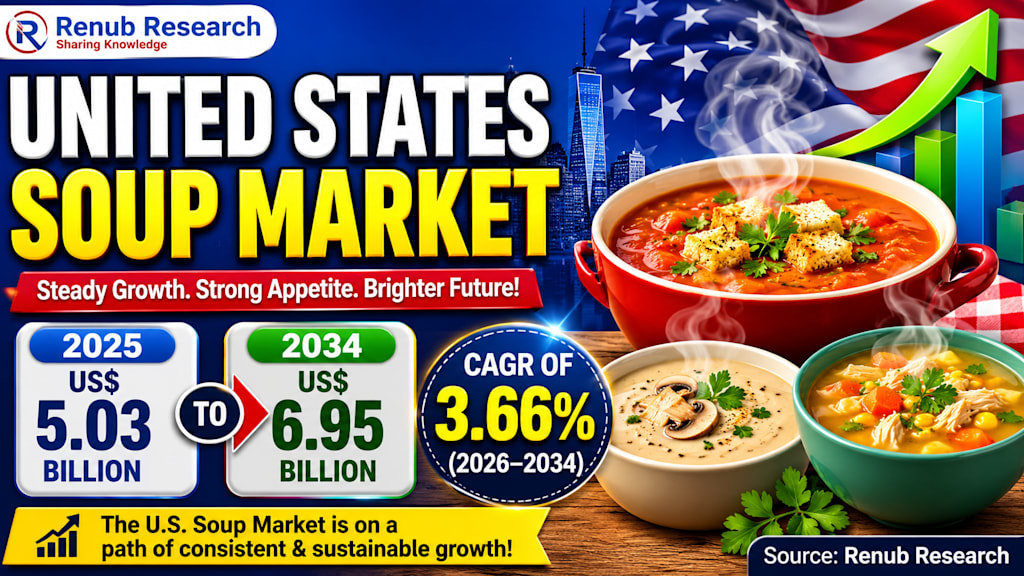
According to Renub Research, the United States Soup Market is expected to grow from US$ 5.03 billion in 2025 to US$ 6.95 billion by 2034, expanding at a CAGR of 3.66% from 2026 to 2034. The report highlights that increasing demand for nutritious, ready-to-eat meals and growing interest in low-sodium and diverse soup varieties are among the major drivers behind this market expansion.
The future of soup in America is no longer limited to canned shelves in grocery stores. It now includes premium refrigerated soups, organic broths, plant-based recipes, ethnic flavors, and restaurant-style ready meals designed for busy modern consumers.
Why Soup Is Becoming Popular Again
One of the biggest reasons behind the growth of the soup market is the dramatic shift in modern lifestyles.
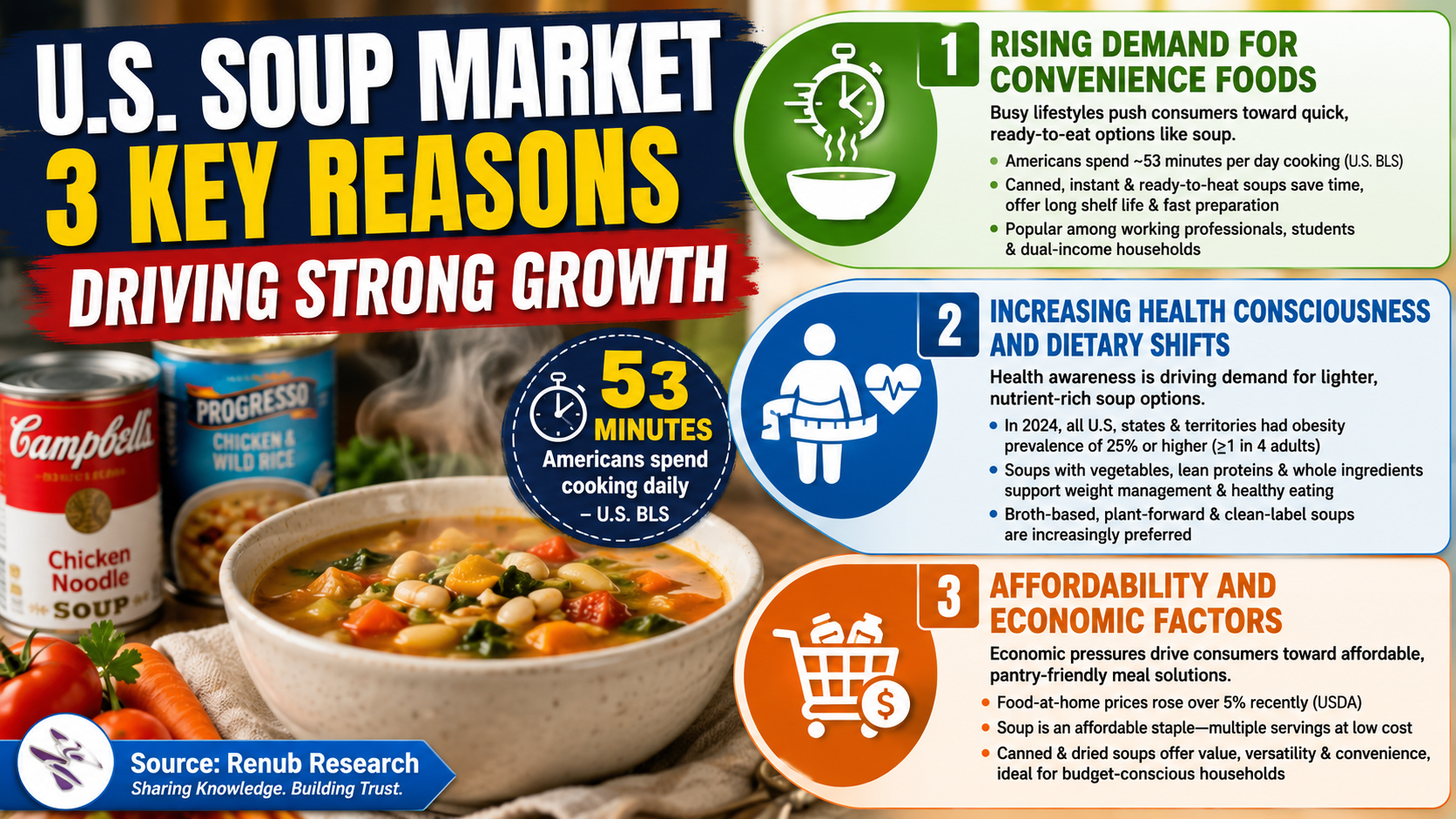
Americans today live increasingly busy lives. Between work schedules, commuting, parenting responsibilities, and digital distractions, many consumers no longer have the time or energy to prepare elaborate meals every day. Convenience has become one of the most important factors influencing food purchases.
Soup fits perfectly into this lifestyle.
It is easy to prepare, widely available, affordable, and can often be consumed within minutes. Ready-to-eat soup cups, microwaveable containers, frozen soup bowls, and heat-and-serve pouches are making meal preparation faster and easier than ever before.
Single-person households are also contributing to rising demand. According to data mentioned in the Renub Research report, nearly 30% of U.S. households are single-person homes, increasing reliance on portion-controlled and convenient food products like soup.
For consumers living alone, soups provide a practical meal solution without the hassle of extensive cooking or food waste.
College students, office workers, remote employees, and elderly consumers are especially embracing soup because it combines convenience with comfort.
Health-Conscious Consumers Are Reshaping the Market
Another major factor driving the soup market is the growing awareness around health and nutrition.
Consumers today are paying closer attention to ingredients, calorie counts, sodium levels, and overall food quality. Many Americans are actively searching for meals that support healthier lifestyles without sacrificing flavor or convenience.
Soup manufacturers are responding quickly to these changing expectations.
Traditional canned soups are now being joined by healthier alternatives featuring organic vegetables, lean proteins, whole grains, and plant-based ingredients. Low-sodium soups, high-protein broths, gluten-free recipes, and vegan-friendly varieties are becoming increasingly popular among health-conscious shoppers.
This shift reflects a broader movement toward preventive wellness and balanced eating habits.
The rise in obesity and lifestyle-related health concerns across the United States has encouraged consumers to seek lighter and more nutritious meal options. Broth-based soups and vegetable-rich recipes are often viewed as healthier alternatives to fried fast food or highly processed frozen meals.
Consumers are also becoming more aware of ingredient transparency.
The clean-label movement has pushed food companies to simplify recipes and remove artificial preservatives, flavor enhancers, and unnecessary additives. Today’s shoppers want recognizable ingredients that sound natural and trustworthy.
As a result, soup brands are reformulating products to align with evolving consumer expectations.
This transformation is helping soup move beyond its outdated reputation and reposition itself as a modern wellness-oriented food category.
Convenience Remains a Powerful Growth Driver
Even as health awareness grows, convenience remains one of the strongest forces supporting the soup market.
Modern consumers want food that is easy to purchase, easy to store, and easy to prepare. Soup satisfies all three requirements.
Whether sold in cans, cartons, pouches, frozen containers, or refrigerated packaging, soup products offer flexibility that few meal categories can match.
Busy professionals often rely on soup for quick office lunches. Parents appreciate fast dinner solutions for hectic evenings. Students use microwaveable soups as low-cost meal options. Older adults value soups because they are easy to digest and simple to prepare.
Soup also benefits from long shelf life, making it attractive during periods of economic uncertainty.
As grocery prices continue rising across the United States, consumers are becoming more careful with food spending. Soup is widely considered an affordable meal option that provides comfort and nutrition without a high price tag.
This affordability becomes especially important during inflationary periods when households are searching for cost-effective meal solutions.
Canned and dried soups, in particular, continue attracting price-sensitive consumers because they remain inexpensive while offering multiple servings and easy storage.
Global Flavors Are Expanding Consumer Interest
One of the most interesting developments in the U.S. soup market is the growing popularity of international flavors.
American consumers are becoming increasingly adventurous with food choices. Traditional soups remain popular, but many shoppers are now exploring globally inspired recipes influenced by Asian, Latin American, Mediterranean, and Middle Eastern cuisines.
Thai coconut soups, ramen-style broths, tortilla soups, spicy chili blends, and Mediterranean lentil soups are all becoming more common across retail shelves and restaurant menus.
This trend is especially visible in culturally diverse states such as California, Texas, New York, and Florida, where multicultural populations strongly influence food preferences.
Consumers today want restaurant-quality experiences at home, and soup manufacturers are responding with premium and globally inspired product lines.
In November 2024, Amy’s Kitchen expanded its soup portfolio by introducing five new varieties that combined global flavors with Southern American influences using organic ingredients and whole grains.
Similarly, Panera Bread introduced seasonal offerings like Hearty Fireside Chili and Rustic Baked Potato Soup during Autumn 2024 to capitalize on rising consumer demand for warm comfort foods.
These developments highlight how innovation is becoming central to competition within the soup industry.
Ready-to-Eat Soups Are Leading Market Growth
Among all product categories, ready-to-eat wet soups are emerging as one of the strongest-performing segments.
Consumers increasingly prefer meals that require little or no preparation. Heat-and-serve soups perfectly align with fast-paced lifestyles while still offering warmth, flavor, and nutrition.
Manufacturers are heavily investing in premium ready-to-eat products that feel fresher and more satisfying than traditional canned soups.
Packaging innovation is playing a major role in this transformation.
Single-serve soup cups appeal to office workers and students seeking quick meals. Portable pouches offer convenience for consumers on the go. Refrigerated soup containers create a fresher, more premium image compared to shelf-stable alternatives.
Retailers are also expanding refrigerated and ready-meal sections to meet rising demand for healthier convenience foods.
Brands are increasingly focusing on chef-inspired recipes, organic ingredients, reduced-sodium formulations, and premium textures to differentiate products in a crowded market.
The result is a category that feels more modern, upscale, and adaptable to changing consumer lifestyles.
Foodservice Industry Is Supporting Demand
The soup market’s growth is not limited to retail stores.
Restaurants, cafes, hospitals, schools, cafeterias, and fast-casual dining chains are all contributing to rising soup consumption across the foodservice sector.
Soup remains one of the most versatile menu items available to foodservice operators.
It can be served as an appetizer, side dish, light meal, or seasonal specialty. It also offers relatively low preparation costs and can easily adapt to changing flavor trends and dietary demands.
Healthcare facilities and institutional kitchens especially value soup because it is easy to prepare in large quantities while remaining nutritious and digestible.
Fast-casual restaurants are also using soups to strengthen healthier menu offerings and attract consumers looking for comfort foods with nutritional value.
Manufacturers continue supporting foodservice operators by offering frozen soup bases, condensed products, and ready-to-use commercial formulations that simplify kitchen operations.
The emotional appeal of soup also contributes to its resilience.
During periods of stress, cold weather, or economic uncertainty, consumers often gravitate toward familiar and comforting foods. Soup naturally fits that emotional connection, making it a dependable product category across economic cycles.
Challenges Facing the Soup Industry
Despite strong growth potential, the U.S. soup market still faces several important challenges.
One of the biggest concerns involves sodium content.
Many packaged soups contain high levels of sodium, sometimes reaching 600–900 mg per serving. Health experts continue warning consumers about excessive sodium intake due to its connection with hypertension, cardiovascular disease, and kidney-related health risks.
As health awareness increases, consumers are becoming more cautious about purchasing heavily salted products.
This puts pressure on manufacturers to reformulate recipes while maintaining flavor and shelf stability. However, producing lower-sodium soups often increases manufacturing complexity and ingredient costs.
Another growing challenge involves consumer resistance toward ultra-processed foods.
Many traditional canned soups are associated with preservatives, artificial ingredients, and long shelf-life processing methods. Health-conscious consumers increasingly prefer refrigerated, organic, and minimally processed alternatives instead.
To remain competitive, legacy soup brands must modernize product formulations and improve ingredient transparency.
Competition is also intensifying across the convenience-food industry.
Soup no longer competes only with other soups. It now competes with frozen meals, meal kits, protein shakes, ready-made salads, and food delivery services.
Continuous innovation will therefore be essential for maintaining long-term market relevance.
Regional Markets Show Diverse Consumer Preferences
Different U.S. states are shaping the soup market in unique ways.
California remains one of the strongest markets due to its health-conscious population and strong interest in plant-based and clean-label foods. Consumers there also show high demand for globally inspired flavors.
Texas combines convenience-driven eating habits with growing interest in healthier meals. Tex-Mex-inspired soups and chili varieties remain especially popular.
New York’s fast-paced urban environment supports strong demand for portable, single-serve soup products. Cold winters additionally strengthen soup consumption as a comfort food.
Florida benefits from its large aging population. Many older consumers prefer soups because they are nutritious, easy to prepare, and easy to digest. Seasonal residents and tourism also contribute to foodservice demand across the state.
These regional variations demonstrate the flexibility of the soup market and the importance of localized product strategies.
Final Thoughts
The United States soup market is entering a new era defined by convenience, wellness, innovation, and evolving consumer expectations.
What was once considered a simple pantry staple has transformed into a dynamic and highly competitive food category capable of adapting to modern lifestyles.
According to Renub Research, the market is expected to approach US$ 7 billion by 2034, reflecting strong long-term growth potential supported by health-conscious consumers and rising demand for ready-to-eat meals.
Soup’s greatest strength lies in its versatility.
It can be affordable or premium, traditional or globally inspired, indulgent or healthy. Few food categories offer the same flexibility across age groups, dietary preferences, and consumption occasions.
As consumers continue prioritizing convenience without sacrificing nutrition or flavor, soup appears well-positioned to remain a major part of America’s evolving food culture.
And in a world where food trends constantly change, that adaptability may be the industry’s biggest advantage of all.
About the Creator
Enjoyed the story? Support the Creator.
Subscribe for free to receive all their stories in your feed.
Comments
There are no comments for this story
Be the first to respond and start the conversation.