
The Exhaust Aftertreatments System Market Nobody Talks About
Emission standards are getting stricter globally — and the technology keeping engines legal is becoming a serious business.

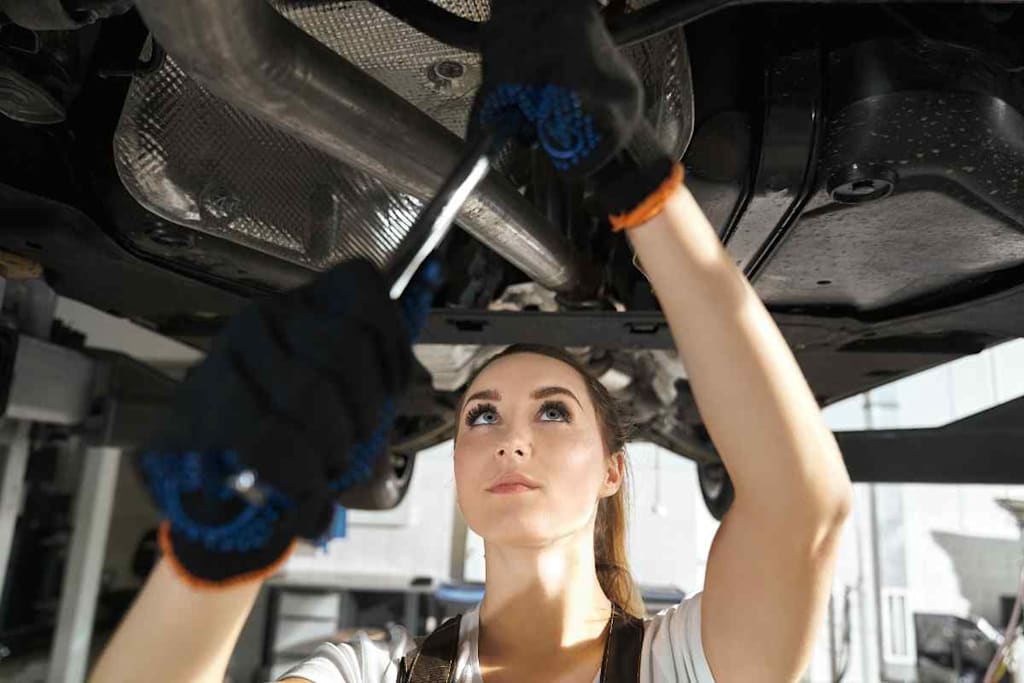
The Invisible Technology Making Modern Engines Legal to Drive
Most drivers have never heard of selective catalytic reduction. Fewer still know what a diesel particulate filter does. Yet without these components — collectively called exhaust aftertreatment systems — the trucks delivering groceries, the buses running school routes, and the construction equipment building city infrastructure would all be illegal to operate in most of the world. The Exhaust Aftertreatments System Market is one of the least glamorous corners of the automotive industry, and one of the most consequential.
If you work in automotive supply chains, fleet management, or emissions compliance, the full dataset on this market is available here — the sample breaks down segments, regional trends, and forecast figures in detail.
Why Emission Rules Changed Everything
For decades, vehicle exhaust was largely an afterthought in engineering priorities. That changed fast. Euro 6 standards in Europe, the EPA's Tier 4 Final rules in the United States, and India's Bharat Stage VI norms collectively redrew the compliance map for anyone manufacturing or operating combustion engines commercially.
The numbers are stark. Euro 6 capped nitrogen oxide emissions from diesel passenger cars at 80 mg/km — roughly six times stricter than the Euro 3 limits set in 2000. Meeting those thresholds without aftertreatment hardware is, for most engine configurations, physically impossible.
What the Technology Actually Does
Exhaust aftertreatment isn't a single device — it's a system. A typical heavy-duty diesel setup chains together several components: a diesel oxidation catalyst that converts carbon monoxide and unburned hydrocarbons, a diesel particulate filter that traps soot, and a selective catalytic reduction unit that breaks nitrogen oxides down into harmless nitrogen and water using a urea-based fluid.
Each component has its own thermal requirements, sensor array, and failure mode. Managing them in real time, across varying loads, temperatures, and duty cycles, is where the engineering complexity lives — and where the value in the market increasingly concentrates.
Cummins, Tenneco, and Faurecia have all made significant R&D commitments here not because aftertreatment is exciting, but because their customers have no alternative path to market compliance.
Where the Market Is Heading
Analysis of the Exhaust Aftertreatments System Market reveals that commercial vehicles remain the dominant demand driver, but the growth story is more nuanced than that headline suggests.
Off-highway equipment — agriculture, mining, construction — is catching up fast. These machines often run in jurisdictions that lagged passenger vehicle standards by years, but are now tightening quickly. A combine harvester or a port crane faces the same regulatory trajectory that diesel trucks navigated a decade ago.
Emerging economies add another layer. India's BS-VI rollout, completed in 2020, effectively doubled the technical content required per vehicle overnight. Similar transitions are underway across Southeast Asia and Latin America. For aftertreatment suppliers, these aren't export markets — they're primary growth vectors.
Electrification complicates the forecast without eliminating it. Battery-electric commercial vehicles are growing, but the installed base of diesel equipment globally numbers in the hundreds of millions. Retrofit demand, replacement parts, and compliance upgrades on existing fleets will sustain this market well past the point when new combustion engine sales begin declining.
The Quiet Infrastructure of Clean Air
It would be a mistake to frame exhaust aftertreatment purely as a transitional technology waiting to be replaced by electrification. The systems being developed today — with embedded sensors, predictive diagnostics, and tighter integration with engine control units — represent genuine engineering progress, not a holding pattern.
Cleaner urban air in Delhi, São Paulo, and Los Angeles owes something to these components. That's not a small thing, even if it rarely makes headlines.
About the Creator
Enjoyed the story? Support the Creator.
Subscribe for free to receive all their stories in your feed.
Comments
There are no comments for this story
Be the first to respond and start the conversation.