
The Digital Servo Press Market Is Quietly Reshaping Manufacturing
A $1.6B industry driven by EV demand and energy efficiency is making hydraulic presses obsolete.
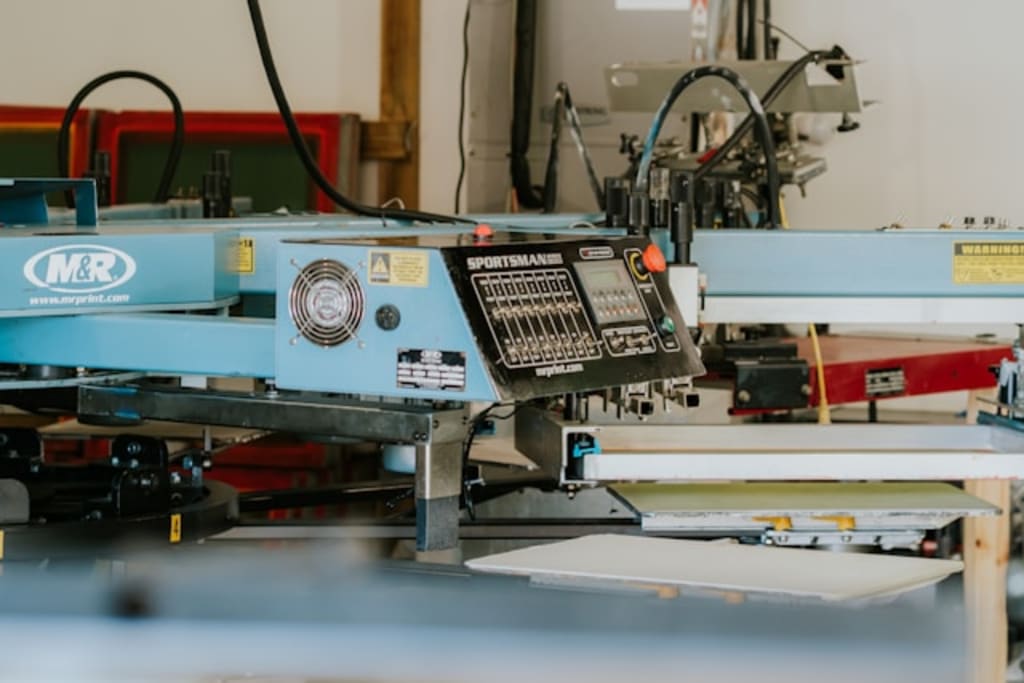
The Press That Thinks: Why Factories Are Ditching Hydraulics for Digital Servo Systems
Walk the floor of a modern EV battery plant and you'll notice something missing. There are no oil slicks, no drum barrels of hydraulic fluid stacked near the presses, no slow hiss of pressure building before metal meets metal. What you'll find instead are electric servo presses — machines that respond in milliseconds, remember every force curve they've ever applied, and consume a fraction of the energy their predecessors did. This is not a fringe phenomenon. The digital servo press market is already worth $1.6 billion in 2025, and the Digital Servo Press Market size and share data pointing toward $2.6 billion by 2035 reflect just how decisively manufacturers are rethinking their factory floors.
A segment breakdown, including capacity ranges, application verticals, and regional adoption curves, is available in this digital servo press industry overview.
Why Hydraulics Had a Good Run — and Why It's Ending
For decades, hydraulic presses were the workhorses of heavy manufacturing. They were powerful, relatively cheap, and widely understood. But they came with baggage: continuous pump operation that burned energy whether the machine was pressing anything or not, fluid leaks, contamination risks in cleanrooms, and maintenance schedules that could swallow an entire maintenance crew's week. Digital servo systems flip the model. Instead of a motor churning away at constant pressure, a servo press draws power only during the actual stroke cycle. Research cited by Controls Drives Automation puts the energy savings at up to 77% versus hydraulic systems and up to 90% versus pneumatic alternatives. Those aren't incremental improvements — they're the kind of numbers that rewrite capital expenditure plans.
The shift accelerated as manufacturers collided with new quality demands that hydraulics genuinely couldn't meet. Medical device assembly, for instance, requires validated, repeatable force application down to fractions of a millimeter, performed in environments where a single drop of hydraulic fluid can render an entire batch unsellable. Servo technology solves both problems at once.
The EV Factor
No industry is rewriting the demand curve for precision pressing quite like electric vehicle manufacturing. Europe produced roughly 2.5 million EVs in 2023, and the United States produced about 1.2 million. Each battery pack in those vehicles requires controlled joining operations — cells bonded to modules, modules bonded to packs — where uneven force application can cause micro-fractures invisible to the eye but catastrophic in performance. The same precision imperative applies to lightweight structural components made from advanced high-strength steels and aluminum alloys, materials that demand programmable force profiles rather than brute hydraulic pressure.
According to current Digital Servo Press Market size and share analysis, automotive and auto components already account for 45.1% of all servo press applications — the single largest segment by a wide margin. That dominance is not coincidental. It reflects years of EV platform development in which press technology had to evolve alongside battery chemistry and lightweighting strategies. The machines doing that work are overwhelmingly in the 100–200 kN capacity range, which holds 37.9% of the total market, precisely because that bracket covers the sweet spot between precision connectors and structural panel work.
Asia Leads, But the West Is Catching Up Fast
Asia Pacific holds 43.2% of the global market, valued at roughly $0.6 billion, driven by China's manufacturing scale, Japan's automation heritage, and South Korea's electronics export machine. That regional concentration makes sense given that the International Federation of Robotics recorded 70% of all new industrial robot installations in Asia in 2023. But the interesting story over the next decade may be what happens in North America and Europe.
In December 2024, Schuler — one of the sector's most established press manufacturers — announced a partnership with CEER Manufacturing Complex to install its first fully automatic press shop for the MENA region's automotive sector. A month earlier, in September, the company delivered an 800-ton Triton servo press to Austrian manufacturer Fulterer, complete with digital integration for Industry 4.0 connectivity. Bosch Rexroth, meanwhile, launched its Smart Function Kit Pressing in June 2024, embedding force-control software directly into servo joining systems to cut commissioning time for manufacturers who need faster installation without sacrificing process control.
What the Next Decade Actually Looks Like
The 4.9% CAGR forecast through 2035 sounds measured, but the underlying drivers suggest the market could surprise to the upside. Aging hydraulic infrastructure across global manufacturing is approaching end-of-life at scale. When that equipment fails, the replacement decision is no longer a question of servo versus hydraulic — it's increasingly a question of which servo platform integrates best with a facility's existing MES software and digital twin environment. Predictive maintenance through IoT-connected press systems and AI-driven force signature analysis are already live in leading factories, not pilot programs. As those capabilities become table stakes rather than premiums, smaller manufacturers who currently find the technology cost-prohibitive will face a narrowing window before their competitors' quality curves leave them behind.
About the Creator
Mark K. Belton
I’m Mark K. Belton, 26 years old, currently working as a Digital Marketing Intern. I have a strong interest in digital marketing and have been developing my skills in SEO, social media marketing, content creation, and online campaign
Enjoyed the story? Support the Creator.
Subscribe for free to receive all their stories in your feed.
Comments
There are no comments for this story
Be the first to respond and start the conversation.