
The Decanter Centrifuge Market Is Spinning Toward $3.8 Billion
A once-overlooked separation machine is becoming essential to energy, pharma, and water treatment worldwide.
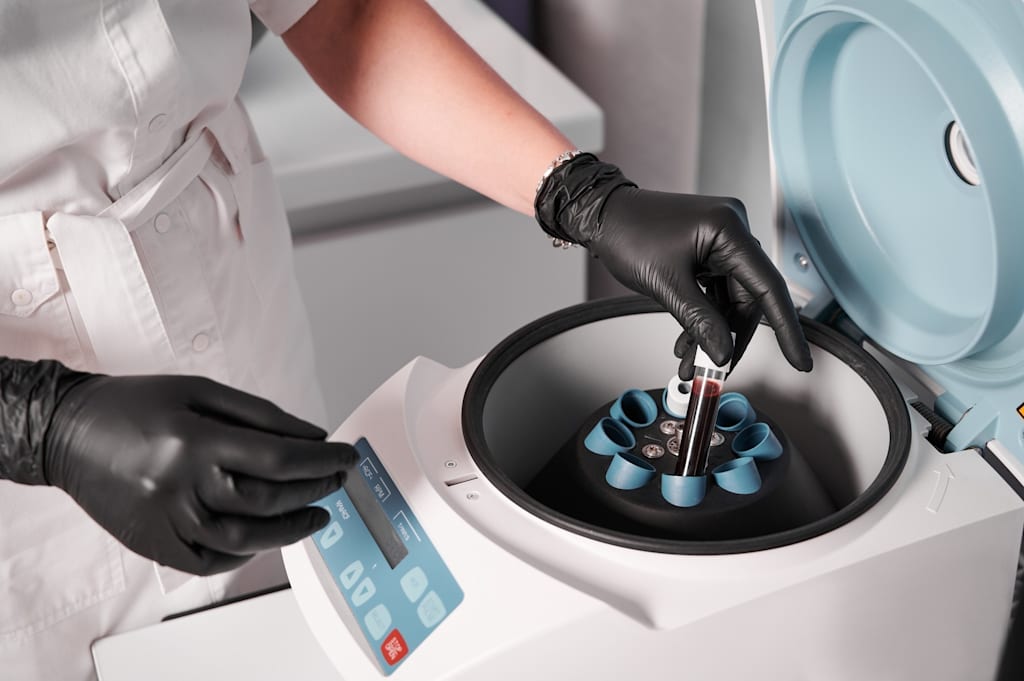
There's a piece of industrial equipment most people never think about, yet it quietly underpins how cities treat sewage, how refineries clean drilling fluid, and how pharmaceutical plants purify active ingredients. The decanter centrifuge market is now valued at roughly $2.2 billion in 2025, and forecasts put it at $3.8 billion by 2035, a steady 5.4% annual climb. That growth isn't happening in a vacuum. It's tied directly to tightening environmental rules and the unglamorous but urgent business of separating solids from liquids at scale.
For anyone tracking this space closely, the underlying data tells a more textured story than the headline number suggests, and a deeper breakdown of the segmentation is worth a look before drawing conclusions — those curious about the full methodology can request a complimentary sample of the underlying research to see how the figures were modeled.
A Machine Built to Never Stop
A decanter centrifuge spins at high speed to throw solids to the outer wall of a rotating bowl while liquid stays toward the center, eliminating the need for filters entirely. That continuous, uninterrupted operation is exactly why horizontal configurations dominate, holding close to 79% of the market. Two-phase systems, which separate solids from a single liquid stream, account for over half of all installations because they're simpler and cheaper to run than three-phase units, which handle two immiscible liquids at once for trickier jobs like petrochemical refining or olive oil extraction.
Regulation Is the Quiet Engine Behind the Numbers
Chemical processing currently leads end-use demand, but wastewater treatment is arguably the segment with the most political weight behind it. Municipalities and industrial operators are under growing pressure to cut sludge volume before disposal, and centrifuge dewatering can shrink that volume dramatically while pushing dry solids concentration well into the 15–35% range. That kind of efficiency translates directly into lower transportation and landfill costs, which is precisely the argument environmental regulators and plant managers have been making to justify the capital expense. As more countries adopt stricter effluent standards, this compliance-driven buying pattern is becoming less of a trend and more of a baseline expectation.
Real-World Momentum: Manufacturers Are Racing to Scale Up
The clearest sign that this is an active, evolving market — not a mature one coasting on legacy demand — is what equipment makers have been rolling out recently. In June 2025, Alfa Laval introduced its Prodec 72 Oil Plus, billed as its largest decanter centrifuge to date, aimed at high-volume oil-water separation. Months earlier, GEA debuted the Varipond C, a pond adjustment system designed to fine-tune separation efficiency on the fly. These aren't incremental tweaks; they reflect a broader push toward higher throughput and smarter, sensor-driven control, which is reshaping how the global decanter centrifuge market is segmented by capability rather than just by industry vertical. Meanwhile, investment activity, including Strive Equity Partners' backing of Sentrimax Centrifuges and Krones' acquisition of German separation specialist GHS Separationstechnik, suggests private capital sees durable upside in this niche.
Asia Pacific Is Setting the Pace
Geographically, Asia Pacific isn't just participating in this growth, it's leading it. The region holds roughly 38.5% of global share, worth about $0.8 billion in 2025, driven by rapid industrialization in China, India, and Japan alongside aggressive wastewater infrastructure buildouts. North America and Europe remain steady contributors, propped up by mature regulatory frameworks, while Latin America and the Middle East are earlier in their adoption curves but expanding as oil and gas, mining, and food processing investment picks up.
Where This Goes From Here
What makes this market worth watching isn't the dollar figure alone, it's the convergence of forces pushing it forward. Environmental policy isn't loosening anywhere, industrial output keeps climbing in emerging economies, and manufacturers are layering in automation and predictive maintenance faster than in past equipment cycles. If that combination holds, decanter centrifuges won't just keep their footing in legacy sectors like oil and gas, they'll likely become a default fixture in circular-economy efforts spanning recycling, bioenergy, and resource recovery over the next decade.
About the Creator
Enjoyed the story? Support the Creator.
Subscribe for free to receive all their stories in your feed.
Comments
There are no comments for this story
Be the first to respond and start the conversation.