
The Death of the Human Voice? How AI Audio Cloning is Redefining Digital Identity
With tools like Suno AI dominating the charts, a new crisis is emerging: Who owns your voice when an AI can clone it in 60 seconds?

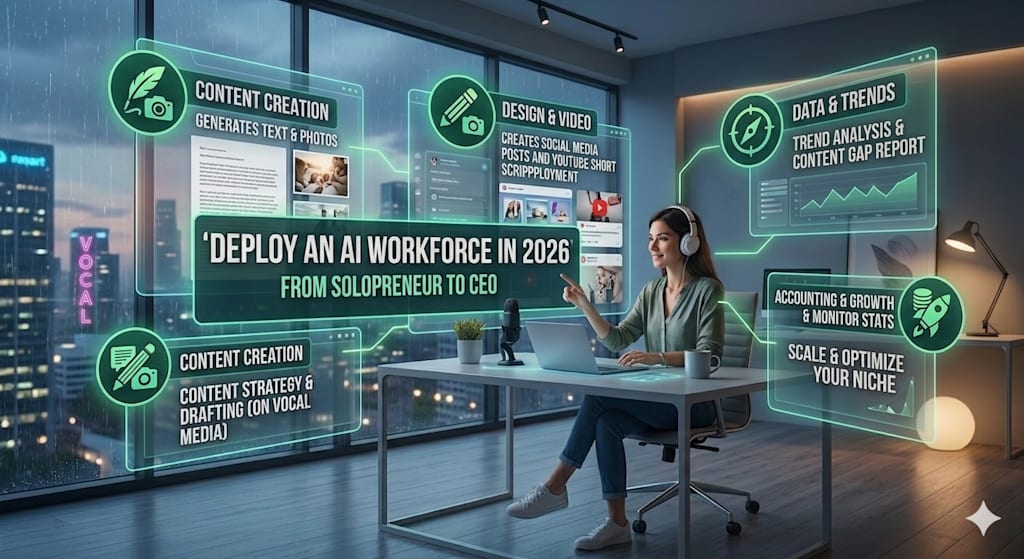
Walk into any modern digital creator's studio in 2026, and you’ll notice a paradigm shift. Writers are no longer just typing; they are "prompting" entire symphonies and cloning their own voices to narrate audiobooks, podcasts, and video scripts.
Data from global search trends shows a continuous, heavy reliance on next-generation music and voice generators like Suno AI. But as audio generation reaches flawless, human-like perfection, we are rushing toward a massive digital identity crisis. If an AI can replicate your exact tone, breath, and emotional cadence, where does the machine end and "you" begin?
The Precision Scale: From Text to Soul
A couple of years ago, text-to-speech tools sounded robotic. Today, the mathematical and algorithmic upgrades in generation models allow AI to capture the "soul" of a voice. It understands sarcasm, whispers, and micro-pauses.
Creators are using this to build passive income streams, launching full-scale audiobooks and podcast channels overnight without ever stepping in front of a microphone. But this sudden democratization of high-fidelity audio has triggered a cat-and-mouse game, causing a parallel spike in search interest for advanced AI Detectors capable of sniffing out synthetic speech.
The 3-Step Strategy to Leverage AI Audio (The Safe Way)
If you are a solopreneur or a content creator on platforms like Vocal, you cannot ignore audio. Here is how to navigate this landscape productively:
1. Establish Your Audio Signature
Don't just use generic AI voice models. The future belongs to creators who clone their own voices securely. By training a model on your unique voice, you can scale your content—converting your text articles into podcast episodes automatically—while keeping your authentic brand.
2. The Verification Protocol (Defeating the Detectors)
As platforms implement stricter filters, the key to surviving AI Detectors is hybrid creation. Use AI to generate the base audio track or background score, but manually edit the pacing and inject raw, unedited human commentary to keep the content safe and highly engaging.
3. Securing Your Digital Provenance
With voice-cloning theft on the rise, protection is critical. Forward-thinking creators are now using digital audio watermarking tools to inject unhearable metadata into their tracks, proving ownership before uploading them to the web.
The Impending Legal Battlefield
We are on the verge of a massive legal revolution regarding "Voice Rights." Under current traditional frameworks, copyright law protects written lyrics and recorded tracks, but it struggle to protect the abstract concept of a human vocal tone. Can you sue someone for cloning your voice if they didn't steal your actual audio files?
Legal experts and tech-lawyers are scrambling to draft new laws for the digital age, treating the human voice not just as an acoustic wave, but as biometric property.
Final Thoughts: The Infinite Soundtrack
Audio AI tools are not a threat to creative freedom; they are an extension of it. They allow a lone writer sitting in a bedroom to produce a Hollywood-level podcast or a professional music track without a studio budget.
The human voice isn’t dying; it’s becoming infinite. The creators who succeed in the coming years won't be those who fight the synthetic wave, but those who learn to sign their own name to it.
About the Creator
AI Lens
Exploring the profound intersection of human nature, philosophy, and the future of artificial intelligence. Writing about our evolving digital world.
Enjoyed the story? Support the Creator.
Subscribe for free to receive all their stories in your feed.
Comments
There are no comments for this story
Be the first to respond and start the conversation.