
The Creator Economy Is No Longer a Side Hustle — It's a $3 Trillion Future
Inside the Fastest-Growing Digital Economy — And Why It's Still Just Getting Started

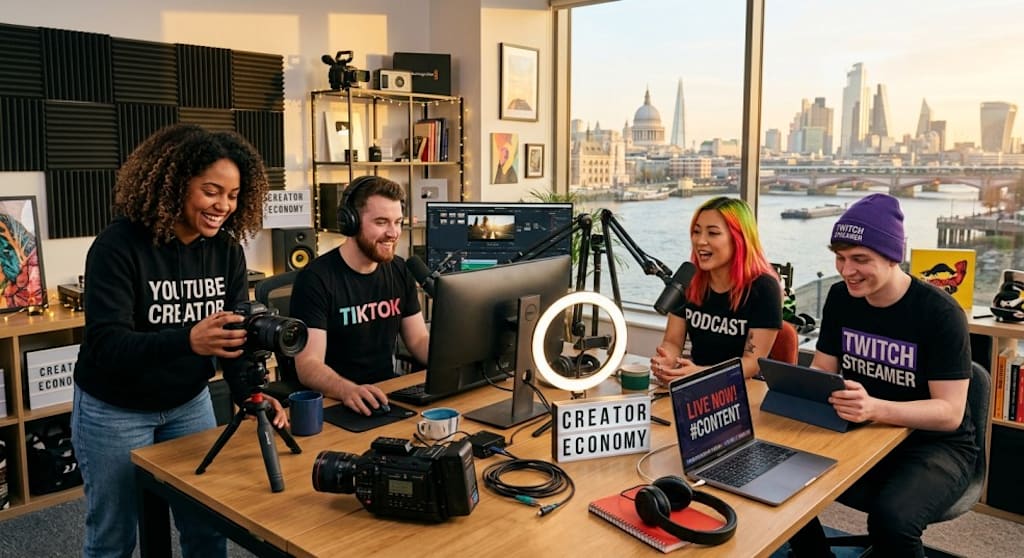
Not long ago, calling yourself a "content creator" would raise eyebrows at the dinner table. Today, it might just mean you're sitting on one of the fastest-growing industries the world has ever seen.
As a research analyst, I spend a lot of time digging through numbers. But every once in a while, a set of data stops me mid-scroll. The creator economy did exactly that.
According to the latest Creator Economy Market Report by Evolvance Market Research, the global creator economy is valued at USD 210.80 billion in 2025 and is projected to reach USD 3,043 billion by 2035 — growing at a remarkable CAGR of 30.6%. To put that in perspective, that's not just growth — that's a full-scale transformation.
What Is the Creator Economy? (And Why It Matters Now)
The creator economy is a fast-growing digital ecosystem where individuals build brands, share content, and earn money directly from their audience — without needing big studios or agencies. At its core, it's powered by people who use their skills, personality, or expertise to attract a community and monetize through advertising, brand deals, digital products, subscriptions, and more.
What makes it truly different from traditional media? Trust. Audiences increasingly prefer real-world voices over scripted, celebrity-driven content — making creators powerful partners for brands and a major influence on consumer decision-making.
Think about it this way — when was the last time a TV commercial made you buy something versus a creator you follow recommending it? That shift in influence is exactly what this market is built on.
Creator Economy Market Size & Growth: The Numbers That Surprised Even Me
When I broke down the data, a few insights really stood out.
📹 Video Content Dominates — But Music Is the Rocket Ship
Video content holds the largest market share at 28.5%, driven by its ability to deliver high-impact engagement across platforms like YouTube, TikTok, and Instagram Reels. Short-form videos, livestreams, and product demos have become the backbone of creator monetization.
But here's where it gets interesting — Music content is projected to grow at a CAGR of 32.2%, fuelled by integration into short-form video apps, gaming platforms, and digital concerts. Independent artists are now distributing globally without any traditional record label dependency.
🤝 Brand Collaborations Are the New Gold
Brand collaborations are the fastest-growing monetization method at a projected 35.4% CAGR. Brands are shifting from one-time sponsorships to long-term creator-brand ecosystems — where creators co-develop products and act as strategic business partners.
How Are Creators Actually Making Money? A Breakdown of Monetization Methods
This is the question I get asked most as an analyst — and the answer is more diverse than most people think. The creator economy isn't just about ad revenue anymore. Here's how the money actually flows:
1. Advertising Revenue — Still the largest slice at 25.6% market share. Platforms like YouTube, TikTok, and Instagram pay creators based on views and ad impressions. It's the default starting point for most creators.
2. Brand Collaborations — The fastest growing at 35.4% CAGR. Brands partner with creators for sponsored content, product placements, and ambassador deals. This is where serious creator income is being built today.
3. Subscriptions & Memberships — Platforms like Patreon and Substack allow creators to charge monthly fees for exclusive content. This builds predictable, recurring income — the holy grail for any creator.
4. Affiliate Marketing — Creators earn a commission every time their audience purchases through a unique link. Low effort, passive income that scales beautifully with audience size.
5. Merchandise & Digital Products — From T-shirts to online courses to e-books — creators are building full product businesses on top of their audience trust.
6. Donations & Tips — Live streaming platforms like Twitch have normalized real-time tipping, making it a significant income stream especially for gaming creators.
The most successful creators in 2025 don't rely on just one of these — they stack multiple streams. That's the real business model of the modern creator economy.
The Underdog Winning the Creator Economy
Here's what I found most fascinating as a researcher: amateur creators — everyday individuals producing content from smartphones and basic editing apps — dominate the market with a staggering 66.7% share. Not professional studios. Not celebrity influencers. Regular people.
Platforms like TikTok, Instagram, and YouTube Shorts have completely democratized content creation, enabling anyone to gain traction overnight. Brands have noticed — and they're now investing heavily in micro-influencers who deliver higher trust and stronger ROI than big-name celebrity endorsements ever could.
The Big Players Powering the Creator Economy
No story about the creator economy is complete without looking at the companies building the infrastructure behind it. These are the platforms that creators live and work on every day:
Alphabet / YouTube — The undisputed home of long-form creator content. YouTube's ad monetization, channel memberships, Super Chats, and Shorts ecosystem make it the most complete creator platform in the world.
Meta / Instagram & Facebook — With Reels, branded content tools, and a massive global advertiser base, Meta remains a core platform for creator discovery and brand partnerships.
ByteDance / TikTok — The algorithm king. TikTok's viral discovery engine has launched more overnight creator careers than any other platform. Its commerce integrations are rapidly growing too.
Patreon — The go-to platform for subscription-based creator income. Patreon has paid out billions to independent creators across podcasting, art, writing, and video.
Substack — The rising star for written creators and newsletter publishers. Substack has made it possible for writers to build paid audiences without a traditional media company behind them.
Together, these platforms form the backbone of a $210 billion ecosystem — and they're all competing to attract and retain the best creators.
Regional Breakdown: Where Is Creator Economy Growth Coming From?
North America currently leads the global creator economy with a 38.5% market share, driven by advanced monetization infrastructure and the headquarters of platforms like YouTube, Instagram, and Patreon.
But the real story is in the East. Asia Pacific is the fastest-growing region, expected to expand at a CAGR of 36.8%, powered by the world's largest internet user base, mobile-first culture, and platforms like Bilibili and Kuaishou that offer live gifting, virtual goods, and deep commerce integrations.
Key Creator Economy Trends to Watch (2025–2035)
Based on the research data, here are the top trends shaping the next decade:
AI-assisted content tools are compressing production time and raising output quality for creators at every level
5G-enabled live streaming is unlocking new formats for real-time commerce and interactive shows
Creator commerce — embedded storefronts and white-label merchandise — is reducing friction between content and purchase
Subscription & community monetization is replacing one-off income with predictable recurring revenue
Regionalization of influencer markets means local creators are capturing culturally relevant audiences like never before
FAQ: Creator Economy Questions I Get Asked as an Analyst
Q: Is it too late to enter the creator economy in 2025? Absolutely not. With the market projected to grow 14x by 2035, we are still in the early innings. The platforms, tools, and monetization options available today are more accessible than ever before. The best time to start was yesterday — the second best time is right now.
Q: Which content type should a new creator focus on? Video is the dominant format and the safest bet for reach. But if you have a passion for music, podcasting, or writing — the data shows strong growth across all content types. Pick the format that matches your strengths, not just the trend.
Q: How much can creators realistically earn? It varies enormously. Micro-creators with 10,000–50,000 followers can earn anywhere from a few hundred to several thousand dollars monthly through a mix of brand deals, affiliate marketing, and subscriptions. The ceiling for top creators is unlimited — but the foundation is always a loyal, engaged audience.
Final Thoughts: Are You In It?
The creator economy isn't just growing. It's restructuring how content is made, how brands communicate, and how people build careers.
As a research analyst, I track markets for a living. And I'll say this plainly — I haven't seen a growth curve like this in a long time. The data doesn't lie. The opportunity is real, it's massive, and it's still wide open.
The question isn't whether the creator economy is real. The question is — are you in it?
— Suge Kun | Research Analyst Data Source: Creator Economy Market Size, Share & Forecast 2025–2035 — Evolvance Market Research
About the Creator
Suge kun
Research Analyst passionate about data & market insights. I turn complex information into clear, actionable strategies. Detail-driven & results-focused — helping businesses make smarter decisions. — Suge Kun
Enjoyed the story? Support the Creator.
Subscribe for free to receive all their stories in your feed.
Comments
There are no comments for this story
Be the first to respond and start the conversation.