
The Color Revolution: How Natural Food Colors Are Transforming the Global Food Industry
Driven by clean-label trends, health-conscious consumers, plant-based innovation, and stricter regulations on artificial additives, natural food colors are becoming a key ingredient in the future of food and beverages.

Color plays a powerful role in the way consumers experience food. Before a product is tasted or even smelled, its appearance creates expectations about flavor, freshness, quality, and overall appeal.
For decades, food manufacturers relied heavily on synthetic dyes to create vibrant and consistent colors. However, growing concerns about artificial ingredients and increasing consumer demand for transparency are reshaping the food industry.
Today, natural food colors are emerging as the preferred alternative.
Derived from fruits, vegetables, plants, minerals, and microorganisms, natural food colors offer manufacturers the ability to create visually appealing products while aligning with consumer preferences for cleaner, healthier, and more sustainable ingredients.
As clean-label products continue gaining momentum worldwide, the natural food colors industry is experiencing significant growth.
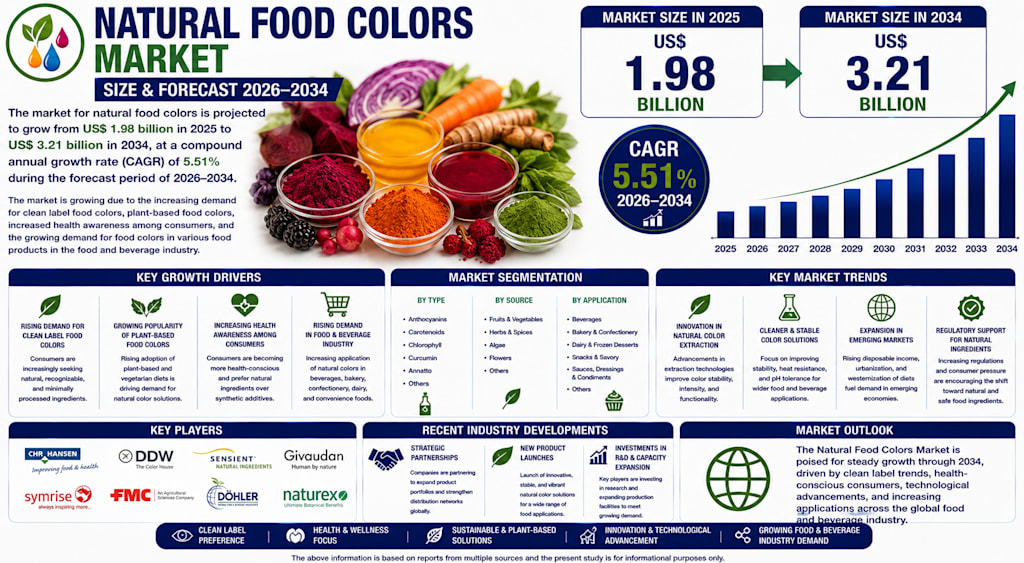
According to Renub Research, the Global Natural Food Colors Market is projected to grow from US$ 1.98 billion in 2025 to US$ 3.21 billion by 2034, expanding at a compound annual growth rate (CAGR) of 5.51% between 2026 and 2034. Rising demand for clean-label foods, growing health awareness, increased use of plant-based ingredients, and expanding applications across the food and beverage industry are among the primary factors driving market growth.
As consumers increasingly seek products with recognizable ingredients and natural origins, food manufacturers are embracing a colorful transformation.
What Are Natural Food Colors?
Natural food colors are pigments extracted from naturally occurring sources such as fruits, vegetables, plants, minerals, and microorganisms.
Unlike synthetic dyes produced through chemical processes, natural colors are derived from ingredients consumers often recognize and trust.
Some of the most widely used natural colorants include:
Carotenoids from carrots and tomatoes, anthocyanins from berries and grapes, chlorophyll from green plants, curcumin from turmeric, paprika extracts, beetroot pigments, annatto, spirulina, and lycopene.
These ingredients are used to enhance, restore, or standardize the appearance of food and beverages.
Natural food colors can be found in:
Soft drinks, juices, confectionery, dairy products, bakery products, snacks, meat products, plant-based foods, frozen desserts, and functional beverages.
Their growing popularity reflects a broader shift toward transparency and healthier food choices.
Clean-Label Demand Is Reshaping the Industry
Perhaps the strongest driver of market growth is the global clean-label movement.
Modern consumers are paying closer attention to ingredient lists than ever before.
Many shoppers actively seek products free from artificial additives, preservatives, and synthetic coloring agents.
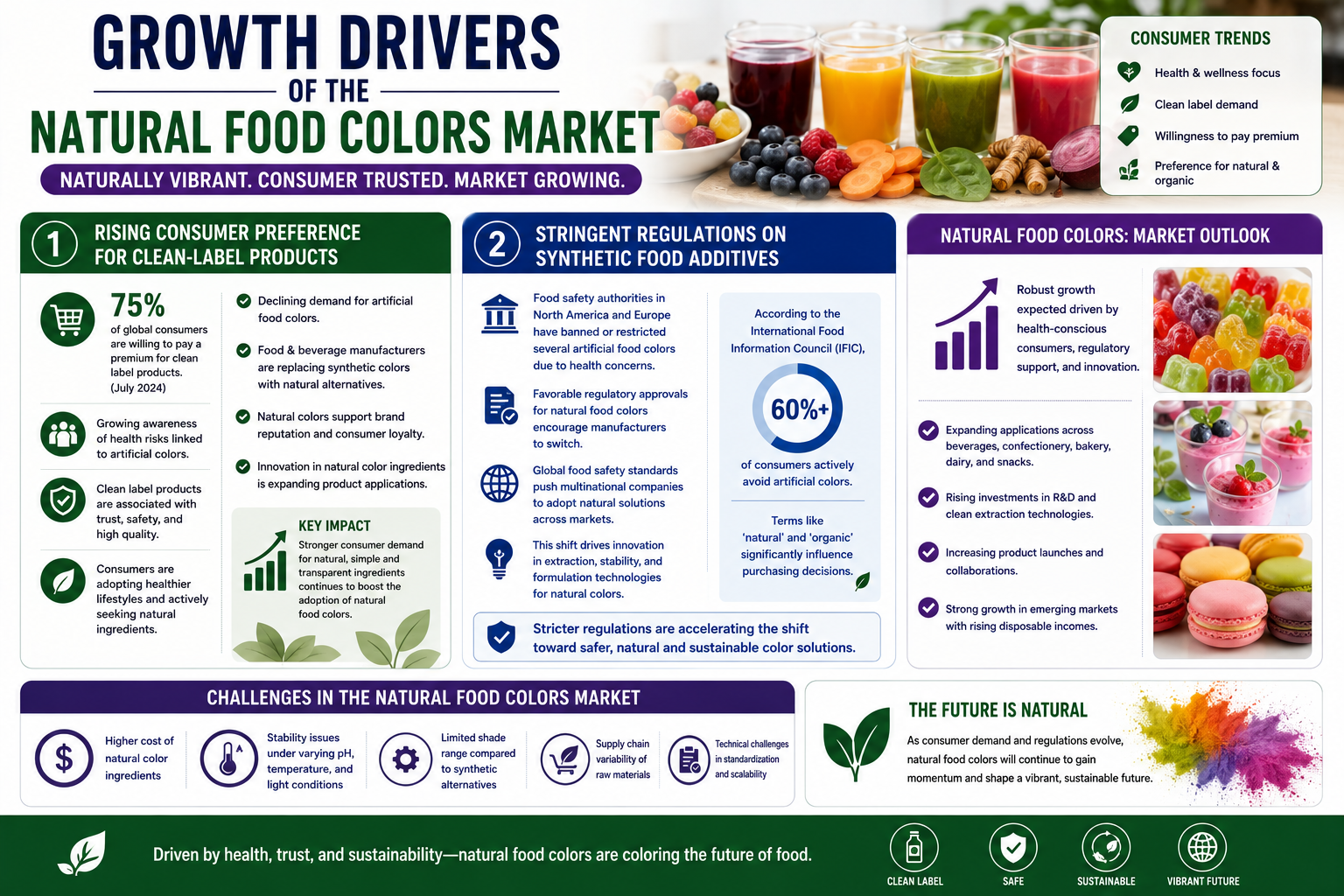
According to market data cited in the report, approximately 75% of global consumers are willing to pay a premium for clean-label products, including foods that do not contain artificial colors.
This shift has encouraged food manufacturers to reformulate products using naturally sourced ingredients.
Consumers increasingly associate natural ingredients with:
Safety, quality, transparency, authenticity, and overall wellness.
As a result, brands are using natural food colors not only to improve product appeal but also to strengthen consumer trust.
The clean-label movement continues influencing product development strategies across virtually every category within the food and beverage industry.
Health Awareness Is Accelerating Adoption
Growing awareness regarding nutrition and health is another major factor driving demand.
Consumers today are more informed about potential concerns associated with artificial food additives.
Many individuals actively seek products perceived as healthier and more natural.
Natural food colors benefit from a positive perception because they originate from recognizable food sources.
In some cases, these ingredients also provide additional nutritional value.
For example:
Lycopene, beta-carotene, and anthocyanins are associated with antioxidant properties that may support overall health.
Although color remains the primary function, these added benefits further enhance consumer interest.
As health-conscious lifestyles continue gaining popularity, manufacturers are increasingly incorporating natural colors into product formulations.
Regulations Are Pushing Manufacturers Toward Natural Alternatives
Government agencies and food safety organizations around the world are placing increasing scrutiny on synthetic food additives.
Several countries have implemented stricter regulations governing the use of artificial food colors.
This regulatory environment has encouraged manufacturers to seek safer and more widely accepted alternatives.
According to the report, more than 60% of consumers actively avoid artificial colors, and terms such as "natural" and "organic" significantly influence purchasing decisions.
For multinational food companies, adopting natural colors also helps simplify compliance with evolving international regulations.
As food safety standards become increasingly stringent, natural color solutions are expected to gain even greater importance.
Food and Beverage Innovation Is Creating New Opportunities
The rapid expansion of the global food and beverage industry continues supporting market growth.
Urbanization, rising disposable incomes, and changing dietary preferences have increased demand for packaged and processed foods.
Visual appeal remains a critical factor influencing purchasing decisions.
Consumers often associate vibrant colors with freshness, flavor, and product quality.
Natural food colors are now widely used across numerous categories, including:
Beverages, confectionery products, dairy items, bakery goods, snacks, sauces, frozen foods, and plant-based alternatives.
The rise of functional foods and beverages has further expanded opportunities.
Products containing vitamins, antioxidants, and wellness-focused ingredients frequently utilize natural colors to reinforce their health-oriented positioning.
In February 2025, Oterra inaugurated a new color blending and application center in Kochi, India, aimed at supporting increasing demand for natural colors across India, Asia-Pacific, and the Middle East.
Such investments demonstrate the industry's confidence in future growth.
Lycopene Is Emerging as a Popular Ingredient
Among the various natural coloring ingredients available, lycopene has gained significant attention.
Derived primarily from tomatoes and other red fruits, lycopene provides vibrant red coloration while offering potential health benefits.
The ingredient is increasingly used in:
Beverages, sauces, dairy products, and functional foods.
Consumer awareness regarding antioxidants and preventive health measures has contributed to growing demand.
Lycopene's dual role as both a coloring agent and a nutritionally appealing ingredient makes it particularly attractive for modern product formulations.
As plant-based ingredients continue gaining popularity, lycopene is expected to remain an important segment of the market.
Beverage Applications Continue Expanding
The beverage industry represents one of the largest application segments for natural food colors.
Manufacturers increasingly seek natural alternatives capable of delivering appealing colors while supporting clean-label claims.
Natural food colors are commonly used in:
Fruit juices, soft drinks, energy beverages, sports drinks, flavored waters, alcoholic beverages, and functional wellness products.
Consumer demand for healthier beverage options has accelerated the transition away from artificial colors.
Advancements in formulation technology have also improved color stability across varying pH levels, making natural solutions more practical for beverage applications.
As the global beverage industry continues evolving, natural colors are expected to play an increasingly prominent role.
Bakery and Confectionery Products Drive Strong Demand
Natural food colors are becoming increasingly important within bakery and confectionery applications.
Manufacturers use these ingredients to enhance the visual appeal of:
Cakes, pastries, cookies, candies, chocolates, frostings, and decorative products.
Consumers increasingly seek premium baked goods and customized confectionery products featuring attractive appearances and natural ingredients.
Special occasions, themed celebrations, and artisanal product trends further support demand.
While heat stability remains a challenge in some baking applications, ongoing innovation is improving performance.
Manufacturers continue developing heat-resistant natural colors capable of maintaining vibrancy throughout production processes.
Plant-Based Foods Are Creating New Growth Avenues
The rapid expansion of plant-based foods has become another important growth driver.
Consumers seeking vegetarian, vegan, and flexitarian diets often prefer products formulated entirely from plant-derived ingredients.
Natural food colors align perfectly with these preferences.
Plant-based meat alternatives, dairy substitutes, and vegan confectionery products increasingly rely on ingredients such as beetroot, paprika, spirulina, and turmeric to achieve desired appearances.
As plant-based eating becomes more mainstream, demand for compatible coloring solutions is expected to increase substantially.
This trend presents significant opportunities for ingredient manufacturers and food processors alike.
United States Leads Market Adoption
The United States remains one of the largest markets for natural food colors.
Several factors contribute to this leadership position.
Consumers demonstrate strong interest in health, wellness, clean-label products, and organic foods.
At the same time, regulatory scrutiny of artificial additives encourages manufacturers to adopt natural alternatives.
Natural colors are widely used across:
Beverages, dairy products, confectionery, bakery items, and functional foods.
In December 2024, Oterra opened a 155,000-square-foot innovation, collaboration, manufacturing, and logistics facility in Wisconsin designed to support growing demand for natural food colors in the United States.
Such investments highlight the strategic importance of the U.S. market.
India Emerges as a High-Growth Opportunity
India's natural food colors market is expanding rapidly due to increasing health awareness, urbanization, and growing demand for processed foods.
Consumers are becoming more conscious of ingredient quality and increasingly favor products containing plant-based components.
Traditional Indian ingredients such as:
Turmeric, beetroot, spinach, and paprika provide a strong foundation for natural color applications.
Government efforts to strengthen food safety standards and support food processing industries further contribute to market growth.
As disposable incomes rise and consumer preferences evolve, India is expected to remain a key growth market for natural food colors.
Challenges Continue to Affect Market Expansion
Despite strong growth prospects, the industry faces several challenges.
One of the most significant is stability.
Natural food colors are generally more sensitive to environmental factors such as heat, light, oxygen, and pH variations.
Exposure to these conditions can cause fading or color changes, creating formulation challenges for manufacturers. Additional processing technologies are often required to improve stability, increasing production complexity.
Cost is another important concern.
Natural colors are typically more expensive than synthetic alternatives.
Extraction, cultivation, harvesting, purification, and supply-chain management contribute to higher production costs.
Seasonal variations, climate conditions, and agricultural limitations can also affect raw material availability. These factors create pricing pressures, particularly for smaller manufacturers.
Addressing these challenges will be essential for sustaining long-term market growth.
Final Thoughts
The natural food colors market is becoming a powerful example of how consumer preferences can reshape entire industries.
Driven by health awareness, clean-label demand, regulatory changes, and expanding food and beverage applications, natural colors are steadily replacing synthetic alternatives across global markets.
Manufacturers are investing heavily in innovation, sustainability, and formulation technologies to improve performance while meeting consumer expectations.
With the market projected to grow from US$ 1.98 billion in 2025 to US$ 3.21 billion by 2034, opportunities for growth remain substantial.
As consumers continue prioritizing transparency, wellness, and natural ingredients, natural food colors will play an increasingly important role in shaping the future of food—adding vibrant appeal while supporting a healthier and more sustainable global food system.
About the Creator
Enjoyed the story? Support the Creator.
Subscribe for free to receive all their stories in your feed.
Comments
There are no comments for this story
Be the first to respond and start the conversation.