
The Car That Nobody Talks About Is Outselling Every Other Powertrain in Europe
Hybrids just became the most popular car type in the EU — ahead of petrol, diesel, and pure electric combined. Here is the story behind that number

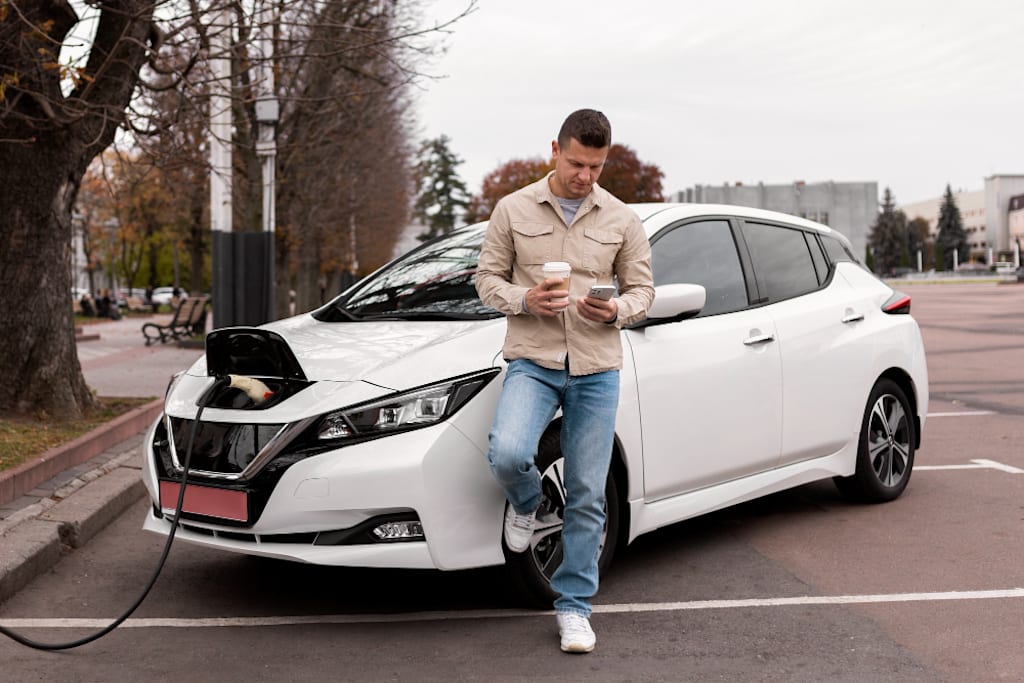
There is a car technology that has been around since 1997, never generates breathless headlines, never gets a celebrity investor announcement, and never trends on social media. It just quietly sells — in larger and larger numbers, year after year, in every major market on the planet.
In 2025, hybrid-electric vehicles captured 34.5% of all new car registrations in the European Union. That made them the single most popular powertrain type — ahead of petrol, ahead of diesel, ahead of pure battery electric. In the United States, the share of new vehicle registrations for hybrids grew from 3.1% in Q2 2020 to 16.3% in Q2 2025 — nearly a fivefold increase in five years.
The hybrid is not a transitional technology waiting to be replaced. For the majority of car buyers on the planet right now, it is the answer.
A Market Crossing One Trillion Dollars
The global hybrid vehicle market size was valued at USD 341.46 billion in 2025 and is projected to reach USD 1,099.01 billion by 2035, growing at a CAGR of 12.4%. That trajectory — from roughly a third of a trillion to over a trillion dollars in a decade — reflects something important: this is not a market being propped up by subsidies or mandates alone. It is being driven by buyers making practical choices about what actually works for their lives.
According to Deloitte, 26% of US consumers intend to purchase a hybrid as their next vehicle — up five percentage points from the prior year. Meanwhile, pure EV purchase intent sits at just 5%. That gap tells you almost everything you need to know about where the mainstream automotive market actually is versus where the conversation tends to focus.
The full analytical picture — covering powertrain types, components, propulsion systems, vehicle categories, and regional forecasts through 2035 — is documented in research available through Evolvance Market Research's hybrid vehicle market report.
Why Hybrids Win the Practical Argument Every Time
The honest reason hybrids are surging is not idealism. It is pragmatism.
A standard hybrid charges its own battery through regenerative braking and engine operation. No charging cable. No range anxiety. No hunting for a fast charger on a road trip. For buyers who commute in cities, occasionally make longer journeys, and want meaningfully lower fuel bills without changing a single daily habit, a hybrid delivers most of the benefit of electrification with virtually none of the inconvenience.
This practical appeal shows up clearly in propulsion market share. Hybrid Electric Vehicles — the kind that need no external charging at all — hold a 79.5% share of the hybrid propulsion segment. The message is clear: most mainstream buyers are not yet ready to reorganize their lives around charging infrastructure. The hybrid meets them exactly where they are.
Plug-in Hybrids add external charging capability for 30 to 50 miles of electric-only range. They appeal to buyers who can charge at home or at work and want to run electric for daily commuting while retaining petrol backup for longer trips. Their share will grow as residential and workplace charging expands. For now, the simpler self-charging hybrid dominates the volume game convincingly.
Asia Pacific Leads — Because of Japan
Asia Pacific commands the hybrid market with a 45.6% share valued at USD 155.67 billion in 2025, and the reason traces directly to a single company in a single country. Toyota pioneered mass-market hybrid technology with the original Prius in 1997 and has spent nearly three decades refining it. Japan's domestic market has the highest hybrid penetration of any major economy, with Toyota's RAV4 Hybrid and Prius consistently among its best-selling vehicles year after year.
China treats hybrids as a bridge technology — useful while EV infrastructure catches up — and local automakers have launched a wave of competitive hybrid models targeting middle-class urban buyers who want efficiency without the charging question.
North America's trajectory is the one showing the most dramatic acceleration. Ford's strategic decision in late 2025 to shift significant resources away from pure electric development and toward hybrid trucks is perhaps the clearest single signal yet that the American auto industry has recalibrated around where mainstream buyers actually are, rather than where analysts predicted they would be.
Three Tiers of Hybrid — and Why It Matters
The hybrid market is not one technology. It is a spectrum, and understanding the differences helps explain the market dynamics.
Full hybrids — holding a 48.9% share — can operate on the electric motor alone, the combustion engine alone, or both simultaneously. This flexibility delivers the best fuel economy in mixed driving, particularly in stop-and-go urban conditions where the electric motor handles low-speed movement and regenerative braking captures energy that would otherwise be wasted entirely.
Mild hybrids add an electric motor-generator that assists the combustion engine during acceleration and enables engine-off coasting, but cannot drive the vehicle on electric power alone. They deliver roughly 70% of the fuel savings of a full hybrid at significantly lower cost. European automakers have embraced mild hybrid architecture enthusiastically across their lineups.
Micro hybrids represent the most basic tier — essentially a sophisticated start-stop system. Fuel savings are modest, around 5 to 10% in urban driving, but so is the cost. They function as affordable entry points into electrification for price-sensitive markets where even small fuel savings compound meaningfully across high-mileage fleets.
Commercial Vehicles Are the Hidden Growth Story
While passenger cars lead with an 89.2% share, the commercial vehicle segment tells a particularly compelling story. Hybrid delivery vans, urban trucks, and buses are being adopted rapidly by fleet operators running high-mileage urban routes — exactly the conditions where hybrid systems deliver maximum fuel savings with minimum operational disruption.
US hybrid commercial vehicle registrations grew from 13,000 units in 2019 to 163,000 units in 2024 — a more than tenfold increase in five years. Fleet managers running delivery operations report fuel savings that generate payback periods short enough to make the investment straightforward rather than aspirational.
The Sales Charts Tell the Real Story
The headlines in automotive news tend to favor the fully electric future. Announcements about new battery technology, new EV models, and new charging networks dominate coverage. That coverage is not wrong — the electric future is real and it is coming.
But the sales charts, right now, belong to the hybrid. One in three new cars in Europe. Nearly one in five in the United States and growing fast. A market crossing USD 1 trillion by 2035.
The car that nobody talks about is the one that most people are actually buying.
About the Creator
Suge kun
Research Analyst passionate about data & market insights. I turn complex information into clear, actionable strategies. Detail-driven & results-focused — helping businesses make smarter decisions. — Suge Kun
Enjoyed the story? Support the Creator.
Subscribe for free to receive all their stories in your feed.
Comments
There are no comments for this story
Be the first to respond and start the conversation.