
The AI Job Apocalypse That Never Was: Why Sam Altman Admits He Was Wrong About Human Consciousness
As the OpenAI CEO backtracks on his bleak predictions for the human workforce, a deeper truth emerges: why algorithms fail to replicate the ghost in our biological machine.
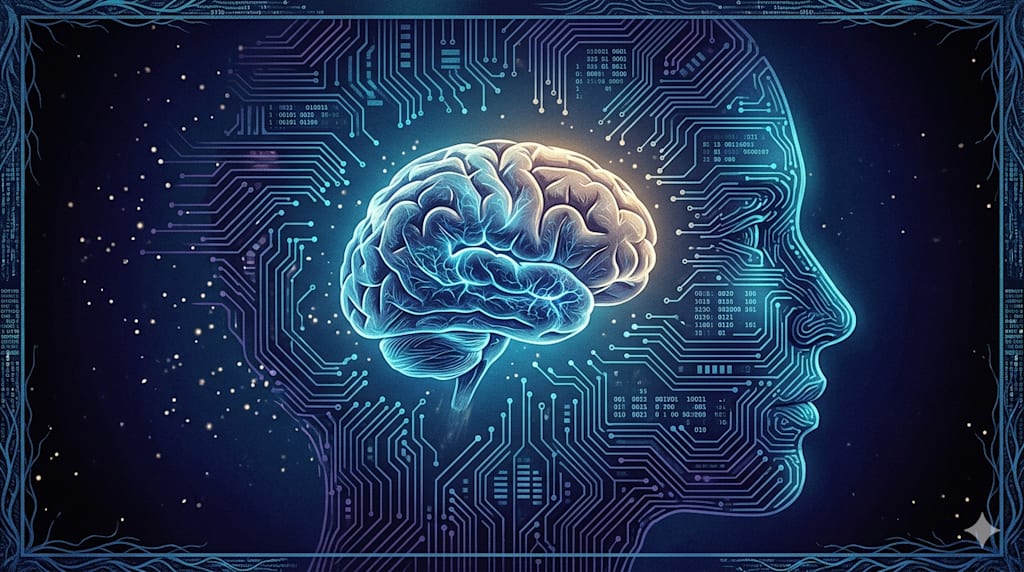
Between the mechanical whirring of neural networks and the silent depths of human cognition lies an ancient, unresolved mystery: human consciousness. For the past few years, a shadow of existential dread has hung over the global workforce. Tech leaders warned us that the rise of Artificial Intelligence would inevitable lead to a swift "jobs apocalypse," rendering human writers, programmers, and creators obsolete.
Yet, in a dramatic and historic turn of events, OpenAI CEO Sam Altman recently backtracked on these bleak predictions. In a candid admission that sent shockwaves through Silicon Valley, Altman confessed that while the technological leaps were accurate, the predicted socio-economic collapse was wrong. "I am very glad to be proven wrong," he implied, acknowledging that the human element remains stubbornly irreplaceable.
The Fall of the AI Apocalypse: Why the Predictions Failed
The sudden surge in global interest surrounding the Sam Altman AI job impact highlights a crucial shift in how we perceive our digital future. Early models predicted that because an AI could process data thousands of times faster than a human brain, it would naturally replace us. However, this assumption mistook "data processing" for "understanding."
What algorithms do is emulate; what humans do is experience. When we write, design, or solve a corporate crisis, we are not just rearranging statistical probabilities. We are injecting a lifetime of subtext, emotion, and situational awareness into our work. This is precisely why industries that rushed to fully automate their customer relations and creative processes are now quietly reinstating human supervisors. The cold efficiency of a chatbot cannot replicate the warmth of human empathy.
Consciousness vs. Emulation: The Unbridgeable Chasm
The core reason AI cannot completely displace human professionals returns to the philosophy of mind. A generative model can generate a beautifully descriptive text about the bitterness of coffee or the sting of heartbreak, but it has never tasted coffee, nor has it ever wept. It operates strictly within a syntax, completely devoid of semantics.
This unbridgeable chasm is why the fear of total displacement is fading, giving way to a more mature concept: Human-AI Collaboration. The trend data proves that the world is no longer looking for tools that replace the mind, but rather environments like AI Studio and advanced video platforms that augment human creativity. The machine handles the mundane execution, while the human spirit provides the spark, the intent, and the ultimate meaning.
The Future of Work: Augmentation Over Extinction
So, what is the ultimate takeaway for creators and professionals navigating this shift? The threat is not that AI will take your job. The real paradigm shift is that professionals who master AI will inevitably replace those who resist it.
Sam Altman’s historic backtrack serves as a powerful validation for the human spirit. It is a reminder that our consciousness is not a code that can be easily reverse-engineered or deleted with a keystroke. The future does not belong to the machines alone; it belongs to the humans who use them to elevate what makes us uniquely human in the first place.
What about you? Do you believe Sam Altman is right to back down, or are we just celebrating a temporary delay before the machines truly take over? If this analysis resonated with your thoughts on the future of humanity, please leave a comment below with your perspective, hit the like button, and follow for more deep tech insights. Let's keep this vital conversation alive!
About the Creator
AI Lens
Exploring the profound intersection of human nature, philosophy, and the future of artificial intelligence. Writing about our evolving digital world.
Enjoyed the story? Support the Creator.
Subscribe for free to receive all their stories in your feed.
Comments
There are no comments for this story
Be the first to respond and start the conversation.