
The $75 Billion Industry Keeping Commercial Aircraft in the Sky
Why aging fleets, delivery backlogs, and Asia's aviation boom are reshaping the Commercial Aircraft Aftermarket Parts Market.
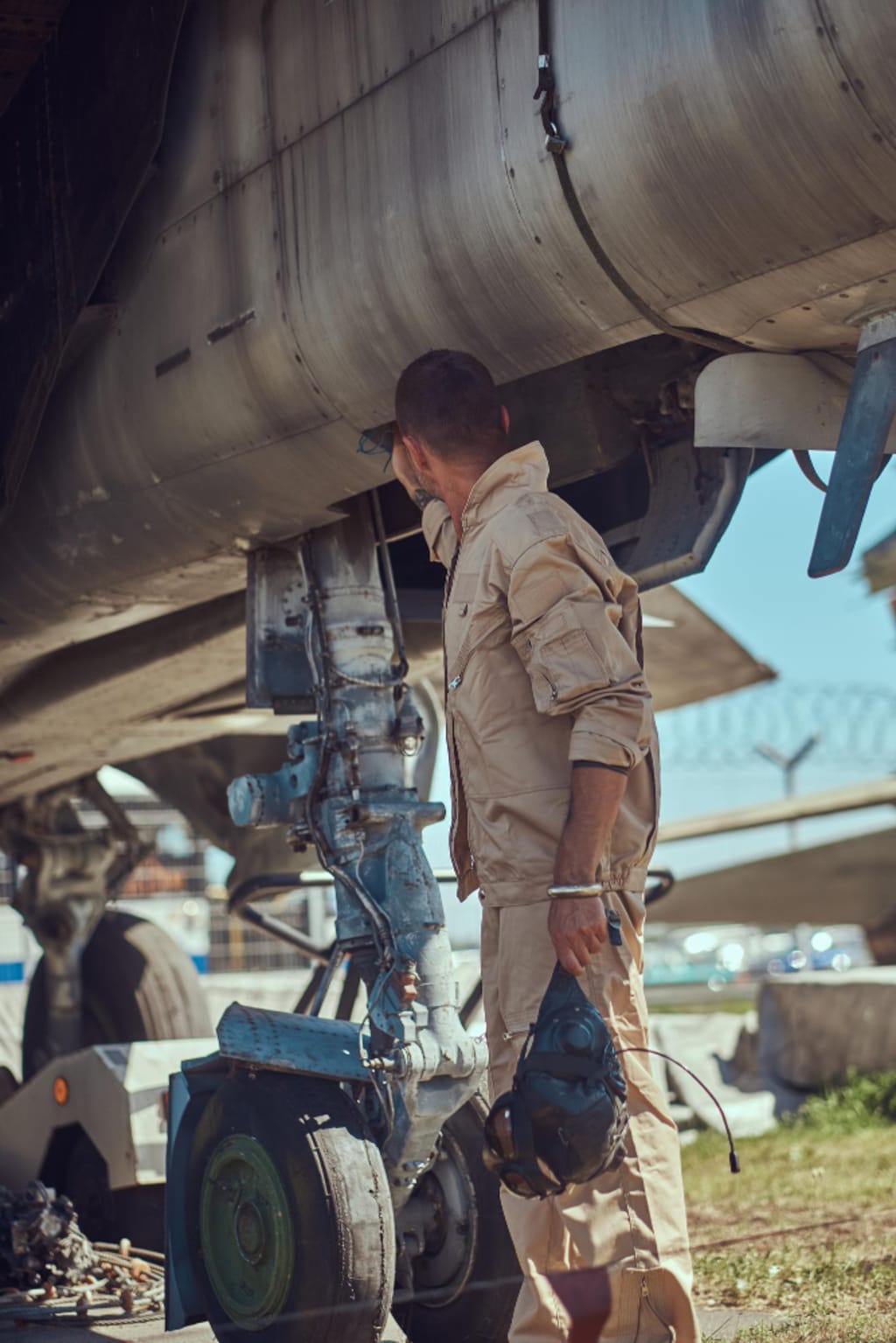
The Quiet Billions Behind Every Flight You Take
Every time a plane pushes back from the gate, most passengers are thinking about legroom, not landing gear bolts. But somewhere in a climate-controlled warehouse in Singapore, Dallas, or Amsterdam, a small army of engineers and logistics managers is making sure that aircraft stays airworthy — and that work costs an extraordinary amount of money. The commercial aircraft aftermarket parts market sits at roughly $45.9 billion in 2025, a figure that tends to surprise people who assume aviation's real money is in building new jets. Detailed figures on segment breakdowns and regional splits are available in this commercial aircraft aftermarket parts industry overview. The story of how that number is projected to reach $75.8 billion by 2035 is less about flashy new aircraft orders and more about the grinding, unglamorous reality of keeping old ones flying.
Why Aging Fleets Are Actually Good for Business
Here's the counterintuitive part: a supply crunch in new aircraft is one of the biggest tailwinds driving aftermarket demand right now. Boeing's 737 MAX production delays and Airbus's own backlog problems — Airbus delivered only around 766 aircraft in 2024 against a backlog stretching into the early 2030s — mean airlines are holding onto existing jets far longer than they planned. An aircraft that might have been retired at 20 years old is now flying into its mid-twenties. Older airframes need more maintenance, more replacement parts, and more frequent inspections. The aftermarket doesn't just benefit from new planes entering the fleet; it feasts when new planes fail to arrive on schedule.
This dynamic has been particularly visible in the narrow-body segment, which covers the Airbus A320 and Boeing 737 families. These are the workhorses of short-haul travel, running multiple cycles per day in dense domestic markets. High cycle counts translate directly into accelerated component wear — engines, landing gear, avionics, cabin interiors — and all of it eventually needs replacing or overhauling.
Asia-Pacific: The Region Quietly Reshaping the Supply Chain
North America still dominates, accounting for roughly 36.54% of the commercial aircraft aftermarket parts market in 2025, underpinned by a dense network of FAA-approved MRO facilities and the sheer scale of American carriers. But the more interesting story is happening further east. Asia-Pacific is projected to grow at a 7.10% CAGR through 2031, the fastest among all regions, driven by fleet expansion in India, Vietnam, and Indonesia — markets where domestic air travel is growing faster than infrastructure can keep pace with. Mordor IntelligenceMordor Intelligence
Airlines in these markets are outsourcing MRO at higher rates than their Western counterparts, partly because building proprietary maintenance capability is expensive and time-consuming. That outsourcing trend feeds directly into the aftermarket parts ecosystem. Companies like Singapore's ST Engineering — one of the largest independent MRO providers in the world — have been expanding their parts trading and component repair divisions precisely to capture this demand. The math isn't complicated: more planes flying more routes in regions with younger aviation industries means a sustained structural need for parts supply chains that didn't need to exist a decade ago.
Used Serviceable Materials and the Economics of Resourcefulness
One development that doesn't get enough attention is the growing legitimacy of the used serviceable material (USM) market. When older aircraft are retired — and Airbus estimates the global passenger fleet will roughly double from 21,000 aircraft in 2019 to 45,000 by 2035, meaning a significant number of current jets will be cycled out — their components don't disappear. Certified, traceable parts are harvested, tested, and re-entered into the supply chain at significant discounts to new OEM pricing. For budget carriers operating on thin margins, a serviceable used engine component at 40–60% of new-part cost can make or break a maintenance budget. Fortune Business Insights
The Commercial Aircraft Aftermarket Parts Market growth trajectory reflects this shift. USM is no longer a grey-market workaround; it's a recognized, regulated segment that major players like AAR Corp. and Aviall (a Boeing subsidiary) have formalized into structured product lines with full documentation chains and airworthiness certification.
What the Next Decade Actually Looks Like
Predictive maintenance is the technology that most industry observers point to as the next structural shift. Airlines like Lufthansa Technik and Air France Industries KLM Engineering & Maintenance are already deploying sensor-driven analytics to anticipate component failures before they happen — moving from reactive replacement to planned intervention. The practical effect on the aftermarket is nuanced: fewer unplanned AOG (aircraft on ground) events, but more scheduled parts procurement, which actually improves inventory planning and order volumes for suppliers. The market doesn't shrink; it gets more predictable and, arguably, more defensible for established players. What's less clear is how smaller independent parts traders will compete in a world where airlines and their analytics platforms can increasingly forecast their own needs months in advance, reducing their dependence on spot-market sourcing. That tension between data-driven OEM ecosystems and independent distributors will likely define the competitive shape of aftermarket aviation well into the 2030s.
About the Creator
Mark K. Belton
I’m Mark K. Belton, 26 years old, currently working as a Digital Marketing Intern. I have a strong interest in digital marketing and have been developing my skills in SEO, social media marketing, content creation, and online campaign
Enjoyed the story? Support the Creator.
Subscribe for free to receive all their stories in your feed.
Comments
There are no comments for this story
Be the first to respond and start the conversation.