
The $7.7 Billion Market You’ve Never Heard of in Agriculture
Why agro textiles are quietly becoming essential for food security and sustainable farming worldwide.

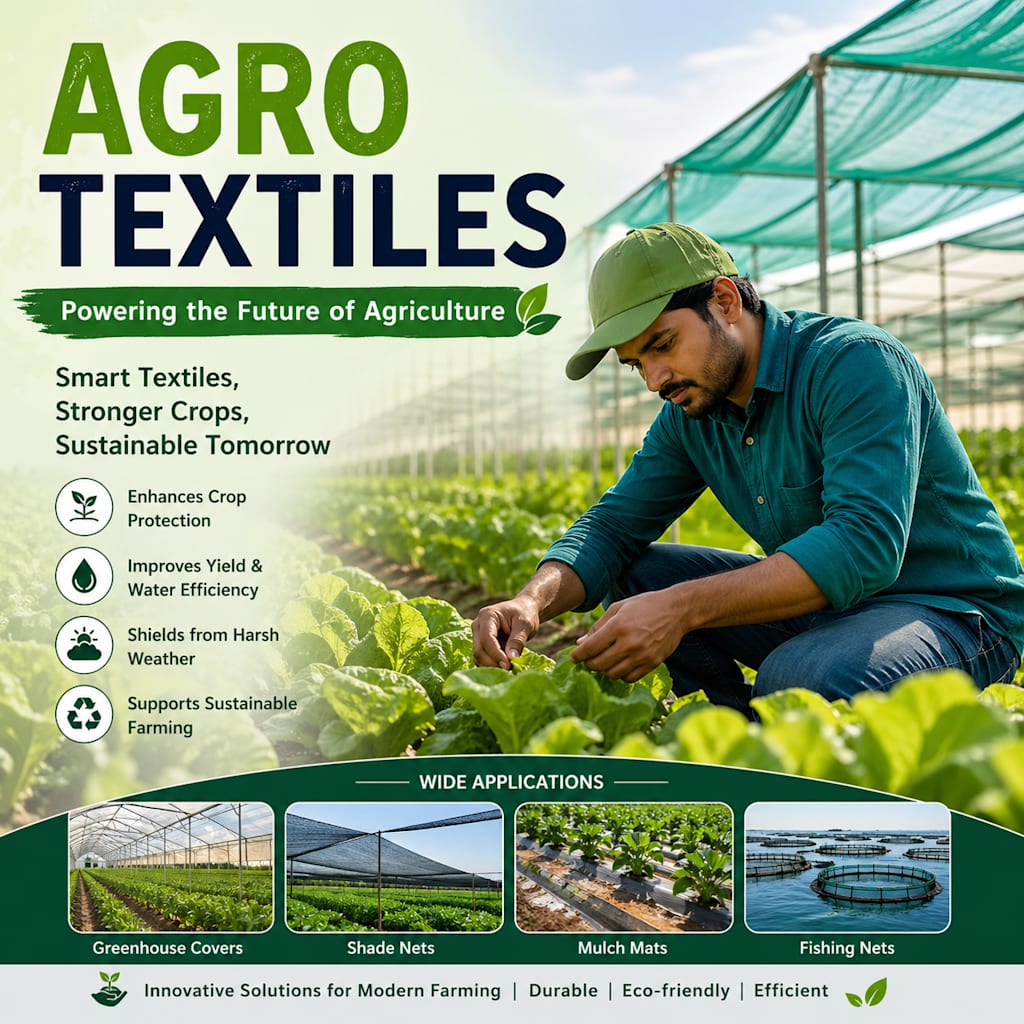
Agriculture is no longer just the planting of crops in soil and the watering of them with seasonal rains․ The agricultural landscape is changing globally as climate change‚ food demand and sustainability push the agenda․
One answer to these issues‚ quietly insinuating itself into the scene‚ is agro textiles․
Such crop protection‚ soil improvement and environmental control fabrics can help farmers meet growing production demands and cope with variable growing conditions․
Though often considered a niche‚ this is increasing in importance for the modern day agriculture․
A Market Growing Alongside Global Food Demand
The agro textiles market size worldwide was valued at approximately USD 5․3 billion in 2025 and is forecast to reach nearly USD 7․7 billion by 2034‚ with an annual growth rate of approximately 4%․
It also reflects a larger transition in agriculture․
As the world population rises‚ there is increasing incentive to produce more food with fewer resources․ Farmers are adopting precision agriculture technologies to increase their crop yields‚ reduce the waste from pests and diseases‚ and otherwise improve efficiency․
Agro textiles are one option that may be suitable․
The Challenge of Feeding a Growing World
One of the biggest drivers of agro textile usage is the growing demand for food․
With billions of people to feed‚ conventional farming practices can't keep up with population growth‚ and farmers need ways to protect crops from threats‚ reduce soil conditions‚ and increase productivity without expanding farmland․
Agro textiles can help to meet these challenges:
- Protection from pests and environmental stress
- The soil's ability to retain moisture
- It aids plant temperature regulation
- Improved overall crop yield
These benefits make agro textiles useful and appealing to both large and small-scale agents of agriculture․
Climate Change Is Reshaping Agriculture
Unpredictable weather patterns are becoming one of the biggest threats to agriculture․
Around the world‚ farmers are struggling to maintain crop yields as they deal with heat waves‚ too much or too little rain‚ and stronger winds․
Agro textiles are critical in this context․
Shade nets‚ windbreaks‚ and other protective coverings have been proven to assist plant growth by allowing them the necessary conditions for growth in an environment that would otherwise be harmful․
As climate risks increase‚ demand for these and other protective measures is expected to increase rapidly․
The Rise of Greenhouse and Vertical Farming
Modern farming is moving away from open fields․
Greenhouse systems are used for high productivity from limited space‚ and vertical farming is more widely used in cities or areas with less land available to farm․ Greenhouses need climate-controlled conditions: agro textiles are essential․
Specialized fabrics are used to:
- Regulate temperature and humidity
- Filter sunlight
- Prevent pest intrusion
- Support efficient water usage
The rise in the global use of these farm-based growing methods is also creating new agro textile opportunities․
Innovation in Materials Is Driving the Market Forward
Among the most exciting aspects of the agro textiles industry are the rapid technological advances․
Many manufacturers are developing advanced materials and production techniques․
- More durable due to UV resistance
- Biodegradable for reduced environmental impact
- Lightweight yet sturdy for ease of use
- Smart-enabled‚ it would be able to monitor crop condition․
These innovations make agro textiles more efficient and sustainable‚ usable in many different geographic and climatic conditions․
Smart textiles containing sensors may prove to be useful in giving real-time data on soil quality‚ moisture‚ and crop conditions․
Accelerated by government support․
Governments worldwide are increasingly endorsing sustainable agriculture practices․
Many governments around the world have implemented subsidies‚ grants and policy incentives to encourage farmers to adopt more efficient and less polluting technologies․
Agro textiles are also part of this․
Their ability to save water‚ reduce chemical needs‚ and raise land productivity makes them consistent with international sustainable development goals․
As a result government schemes are increasingly playing an important role in the spread of agro textiles worldwide․
Where Growth Is Happening Fastest
Use of agro textiles varies between regions․
The Asia-Pacific region holds the largest share of the market due to agricultural production‚ growing agri-tech investments‚ and consistent government initiatives for modernization of agricultural practices and infrastructure․
Countries like India and China are investing in the agriculture sector which increases the demand for agro textiles․
Meanwhile‚ in North America‚ its use is growing due to sustainable farming practices and agricultural technology․
In Europe‚ the use of agro textiles to support environmentally friendly sustainable agriculture is becoming more common․
Other areas such as Latin America and the Middle East are gradually adopting agro textiles in line with the modernization of their agriculture․
Aquaculture and Fishing Nets are a key growth segment․
Aquaculture is one of the largest segments of agro textiles‚ especially nets for fishing․
Aquaculture is rapidly growing to meet the global demand for seafood․ Fishing nets‚ the largest category in the Fishing nets market‚ are used in various aquaculture systems throughout the world․
The net segment has also been driven by the increased use of biodegradable materials and more durable nets․
Agro textiles are extensively used in horticulture‚ floriculture‚ and conventional agriculture․
A Competitive and Innovation-Driven Industry
The agro textiles market is moderately fragmented and includes global players as well as regional and local players․
Companies are focusing on:
- Developing eco-friendly materials
- Improving product durability and efficiency
- Expanding to include other farm systems
- Investing in research and innovation
We are now able to run our businesses more effectively and efficiently through planned alliances․
Challenges that could influence the future
The agro textiles market has growth potential but also has various operational challenges․
One of the major drawbacks of customary plastic-based materials is their negative impact on the environment‚ requiring the need for biodegradability․
However‚ the cost of these machines may be prohibitive for small‚ developing-country farmers․
However‚ these challenges can also spur innovation‚ leading to the development of sustainable‚ cost-effective‚ and efficient technologies․
Looking Ahead
The future of agriculture is expected to be technologically advanced‚ efficient‚ and sustainable․
Agro textiles are expected to play an important role in this development․
As climate impacts worsen and as the demand for food increases‚ farmers will increasingly rely on solutions that help them produce more with less․
With constant innovation‚ favorable government policies and growing applications‚ agro textiles market is expected to grow in the coming years․
The market is projected to reach close to USD 7․7 billion by the year 2034․
Final Thoughts
Agro textiles‚ although not an immediately obvious aspect of agriculture‚ play a major role․
These materials can protect crops from weather events‚ allow for complex growing processes‚ and are changing where‚ and how‚ food is grown worldwide․
In the future of agriculture‚ it is expected that agro textiles will become an integral part of agriculture‚ instead of just supporting․
About the Creator
Robert
Senior Market Researcher at IMARC Group, specializing in global market analysis, industry trends, and data-driven insights across diverse sectors.
Enjoyed the story? Support the Creator.
Subscribe for free to receive all their stories in your feed.
Comments
There are no comments for this story
Be the first to respond and start the conversation.