
The 650,000-Pilot Gap That's Quietly Reshaping Aviation
Flight training was once an afterthought. Now it's the industry's most urgent infrastructure problem.
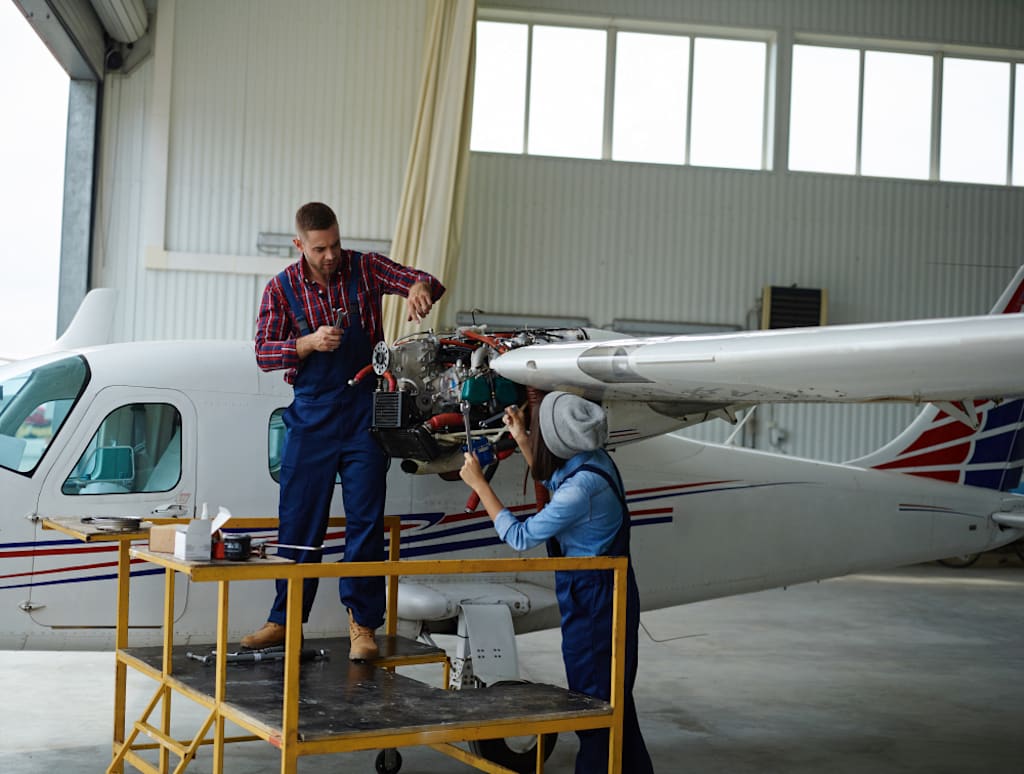
The Aviation Industry Has a Pilot Problem Nobody Wants to Talk About
Walk through any mid-sized airport on a Tuesday afternoon and it looks like business as usual. Gates, delays, the usual chaos of carry-ons. What you don't see is the quiet math problem running underneath all of it — a global shortfall in trained commercial pilots that airlines have been managing around for years and will struggle to hide much longer. Boeing estimates the industry needs to bring more than 649,000 new pilots into service by 2042. That figure, when you sit with it, is staggering. And it explains why the civil aviation flight training market share is being carved up faster than most people outside the industry realize.
Understanding the scale of this shift starts with looking at what analysts have been tracking across simulators, cadet programs, and an EdTech layer that barely existed a decade ago — a detailed breakdown is available in this civil aviation flight training industry overview for those who want the full picture early.
Regional Carriers Are Already Feeling It
The shortage isn't theoretical. Mesa Air flagged pilot attrition as a core operational risk in regulatory filings. SkyWest has done the same. Dozens of thin regional routes across the American Midwest have been quietly discontinued — not because demand dried up, but because there weren't enough qualified crew to fly them.
Europe isn't insulated. Ryanair has aggressively locked in cadet pipeline agreements with training academies across the continent, not because it's philanthropic about pilot development, but because their operations teams saw the math years ago. When a low-cost carrier starts investing heavily in training infrastructure, that's a signal worth taking seriously.
What Actually Changed in the Classroom
The training model itself has shifted in ways that don't get nearly enough coverage. For most of aviation's modern history, building flight hours meant sitting in an actual aircraft — expensive, weather-dependent, and geographically limiting. That started changing when the FAA and EASA expanded the simulator hours eligible for commercial licensing credit.
CAE Inc., which manufactures a significant share of the world's advanced full-flight simulators, posted record order numbers in 2023. Academies that once needed proximity to major airports with open airspace discovered they could scale operations in secondary cities, train more candidates simultaneously, and reduce early washout rates by letting students build competency in simulators before ever handling a live aircraft. The economics changed. So did the geography of where serious training programs could exist.
Hybrid ground school has followed a similar arc. Programs that blend digital instruction with in-person flight hours have opened the door to candidates who would have been priced or geographically locked out a generation ago. That's not a small thing for an industry that has historically skewed its talent pipeline toward a narrow demographic.
India as a Preview of the Broader Market
No country illustrates the current moment better than India. The DGCA has been approving new Flying Training Organizations at an unusual pace, responding to projections that the country will need upward of 10,000 new pilots before 2030. IndiGo's 500-aircraft order makes even that figure feel like an undercount.
What's telling is the international response. Lufthansa Aviation Training, CAE, Oxford Aviation Academy — serious players with no obligation to enter a complicated regulatory market — all moved into India through local partnerships. They looked at the demand trajectory and made a calculated bet. Researchers studying the Civil Aviation Flight Training Market Size have noted how Asia-Pacific's regional share has shifted meaningfully as this buildout accelerated. Most of the rest of the world is five to eight years behind that curve.
Technology Is an Accelerant, Not a Shortcut
Virtual reality cockpit familiarization, AI performance analytics, adaptive curriculum platforms — these tools are real and they're being deployed in serious programs. ATP Flight School in the U.S. has built a hybrid model with genuine reach. Some Gulf-based academies are running remarkably sophisticated simulation-first curricula.
But there's a ceiling that the honest voices in the industry acknowledge: you cannot fully replicate the cognitive weight of managing a real aircraft in deteriorating conditions through any screen. Simulation compresses the early learning curve meaningfully. It doesn't replace the deeper judgment that only accumulates through actual flight time. The programs getting results understand that distinction and structure accordingly.
A Long Runway Ahead
What's happening in civil aviation training is starting to look less like an education market and more like an infrastructure buildout. Airlines are acquiring stakes in academies. Gulf states are treating pilot pipelines as national strategic assets. Private capital has noticed the recurring revenue profile of subscription-style cadet programs.
The schools, simulator manufacturers, and hybrid curriculum platforms that moved early are holding strong positions. The consolidation that typically follows a growth phase like this one is already beginning among smaller academies that can't afford modern simulator fleets.
The classroom, for a long time the unglamorous back end of a glamorous industry, is becoming the part that everyone actually needs to get right.
About the Creator
Mark K. Belton
I’m Mark K. Belton, 26 years old, currently working as a Digital Marketing Intern. I have a strong interest in digital marketing and have been developing my skills in SEO, social media marketing, content creation, and online campaign
Enjoyed the story? Support the Creator.
Subscribe for free to receive all their stories in your feed.
Comments
There are no comments for this story
Be the first to respond and start the conversation.