
The 3D Printing Market Is Quietly Redrawing Manufacturing
From aerospace parts to housing builds, additive manufacturing is moving from novelty to necessity.

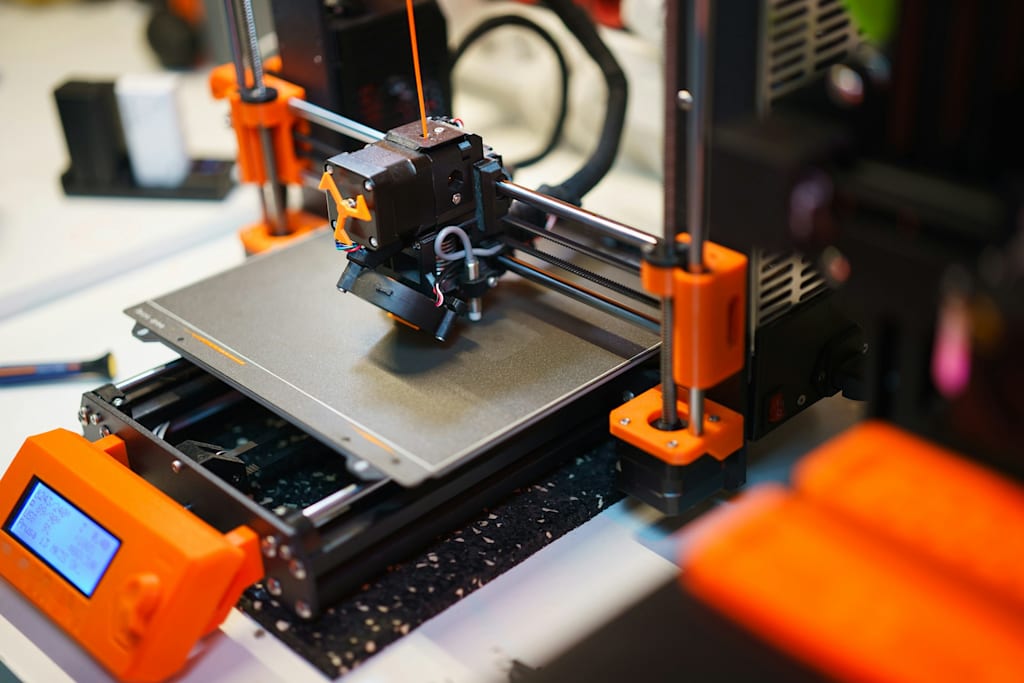
A few decades ago, 3D printing was mostly a curiosity for hobbyists and prototyping labs. Today, the 3D Printing Market is one of the fastest-expanding segments in global manufacturing, with analysts projecting growth from roughly $19.8 billion in 2023 to an estimated $135.4 billion by 2033. That's not incremental growth — it's a near sevenfold expansion in a decade, driven by industries that once viewed additive manufacturing as experimental and now treat it as essential infrastructure.
For anyone tracking where this growth is concentrated and which sectors are pulling ahead, the underlying research breaks the numbers down by region, material type, and end-use industry, and you can request the full dataset to see how those segments stack up against each other.
Why Manufacturers Are Rethinking Production
The appeal of additive manufacturing isn't just about novelty parts anymore. Traditional manufacturing relies on subtractive processes — cutting, molding, machining — that generate waste and require expensive tooling for every design change. 3D printing flips that model. Objects are built layer by layer directly from digital files, which means manufacturers can iterate on designs without retooling an entire production line.
This matters most in industries where customization and speed outweigh the cost of unit-by-unit production. Aerospace companies, for instance, use additive manufacturing to produce lightweight interior components and complex geometries that would be difficult or impossible to machine conventionally. NASA has applied similar techniques to build components for rocket engines and satellites — practical proof that the technology has moved well past prototyping into mission-critical applications.
Where the Real Growth Is Happening
Hardware still dominates the revenue mix, accounting for more than 60% of global 3D printing revenue, but the more interesting story is in materials and services. The market for 3D printing materials — polymers, metals, resins, and composites — was valued at around $3.2 billion in 2024 and is expected to nearly quadruple by 2033. That shift reflects an industry maturing beyond plastic prototypes into metal parts capable of standing up to industrial stress.
Services are following a similar trajectory. Rapid prototyping and on-demand printing services in the U.S. alone are projected to be worth $4.3 billion in 2025, a sign that companies are increasingly outsourcing production runs rather than buying and maintaining their own equipment. It's a subtle but important shift — businesses don't need to own the technology to benefit from it.
A Sector Built on Consolidation and Surprising Use Cases
Recent activity in the space tells its own story. Stratasys and Desktop Metal moved forward with a merger valued at roughly $1.8 billion, while 3D Systems absorbed Xerox's Elem Additive metal printing technology to strengthen its industrial offerings. These aren't speculative bets — they're established players consolidating to capture demand that's already here.
Some of the most striking applications are happening outside traditional manufacturing altogether. In South Africa, a government-backed pilot project used 3D printing to construct around two dozen houses, addressing housing shortages with a build method that's faster and cheaper than conventional construction. Reports also suggest the construction sector alone could see annual savings approaching $20 billion as additive techniques scale, and roughly 82% of businesses already using 3D printing report measurable cost reductions. These aren't projections plucked from thin air — they're outcomes already showing up in early adopters' bottom lines.
What This Means Going Forward
The trajectory here isn't subtle: 3D printing is shifting from a tool for prototypes into a genuine production method for end-use parts, houses, vehicle components, and medical devices. As materials improve and metal printing becomes more accessible, the line between "additive manufacturing" and "manufacturing" itself is likely to blur further. The companies treating this as a fringe technology today may find themselves playing catch-up within the next five years, while those investing now — in materials, software, and production-grade hardware — are positioning themselves at the center of how things get built.
About the Creator
Hazel Williams
Building, learning, and growing every day.
Enjoyed the story? Support the Creator.
Subscribe for free to receive all their stories in your feed.
Comments
There are no comments for this story
Be the first to respond and start the conversation.