
Textile Winding Machine Market Size Set to Hit $2.2B by 2035
Automation, synthetic fiber growth, and IoT integration are reshaping the global textile winding sector.
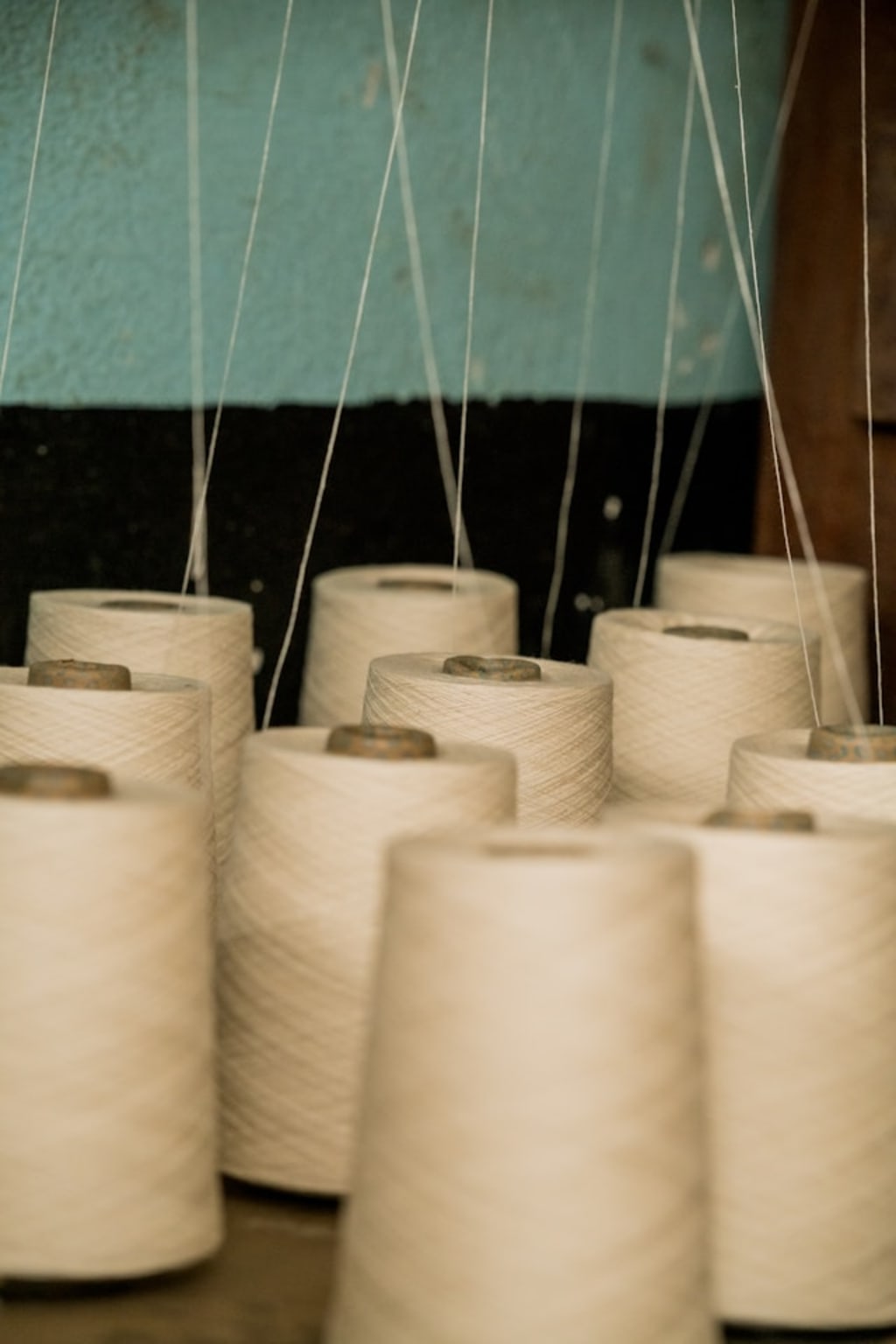
The Quiet Machine Behind Every Spool of Thread
Walk through any large spinning mill — in Surat, in Shanghai, in the Carolinas — and the loudest machines are rarely the most important ones. The winding machines occupy their own section of the floor, banks of spinning spindles transferring yarn from bobbins onto uniform cones, tension sensors scanning for the faintest defect. They are unglamorous, industrial, and absolutely essential. And right now, the industry building them is on a decade-long growth curve. Textile Winding Machine Market Size projections put the global sector at $2.2 billion by 2035, up from $1.4 billion in 2025 — a compound annual growth rate of 4.4%. A segmented look at the categories driving that expansion, along with regional breakdowns, is available in this textile winding machine industry overview.
Why Automation Is No Longer Optional
The shift from semi-automatic to fully automatic winding systems isn't being driven by ambition. It's being driven by arithmetic. Labor costs in major textile-manufacturing hubs — Bangladesh, Vietnam, India — have risen steadily over the past decade. Mills that once relied on workers to monitor bobbin feeds and manually catch yarn breaks now find that a single high-speed automatic winder can do the work of multiple operators across multiple shifts, with lower defect rates and no downtime between rotations. Automatic systems currently hold a 49.2% share of the market by operation mode, a figure that tells its own story.
The productivity math became visible in July 2024, when Rieter — the Swiss textile machinery giant — secured orders for more than 700 of its Autoconer X6 machines from Shanghai Digital Intelligence World Industrial Technology Group. It was one of the largest single winding machine orders in recent memory, and it pointed unmistakably toward where Asia's textile infrastructure is headed: away from manual supervision and toward round-the-clock automated production.
The Synthetic Fiber Connection
Polyester and nylon now account for 34.6% of yarn type demand in the winding machine market, and the reasons are partly structural. Synthetic fibers tolerate high-speed winding better than natural ones do — they're stronger, more uniform, and less sensitive to tension variation. That makes them a natural fit for the fully automated systems that mills are investing in. Technical textiles have also pushed synthetic yarn production upward, as automotive interiors, industrial filters, and protective gear all require polyester and nylon variants wound to precise specifications.
Precision winders, which incorporate electronic yarn clearers capable of detecting slubs and weak spots in real time, hold the largest share among machine types at 38.8%. Export-oriented spinning mills in particular treat these machines as a baseline requirement — international buyers in fast fashion and home textiles have little tolerance for defect-laden consignments that slow downstream production.
Digital Threads: IoT Finds Its Way Into the Mill
In September 2025, Savio showcased its Proxima Smartconer® at ITMA Asia + CITME in Singapore — a winding system designed around IoT integration and cloud-connected monitoring. It was an illustration of a shift that had been building quietly for several years. Mills are no longer just buying machines; they're buying data infrastructure. Predictive maintenance alerts, real-time spindle utilization dashboards, remote quality diagnostics — the capabilities that once existed only in semiconductor fabs are now arriving on the textile floor.
This is where the textile winding machine market growth story gets genuinely interesting. It isn't just about replacing old equipment with faster versions. It's about connecting winding machines into a broader factory intelligence layer, one where a quality anomaly detected at 2 a.m. doesn't wait until morning to trigger a maintenance response. Rieter reinforced this direction in December 2025, completing regulatory approvals for its acquisition of the Barmag filament machinery business from OC Oerlikon — expanding its footprint in man-made fiber equipment precisely as demand for those fibers is accelerating.
Looking Ahead
The next decade in textile winding won't be defined by one breakthrough technology or one dominant market. It will be shaped by an accumulation of smaller pressures: mills in Asia upgrading aging equipment that no longer meets export quality standards, sustainability mandates pushing manufacturers toward energy-efficient models, and specialty yarn categories — carbon fiber, recycled blends, glass fiber — demanding machines built around their specific tensile properties. The infrastructure for smarter, faster, more connected yarn production is already being installed. The spool is turning.
About the Creator
Mark K. Belton
I’m Mark K. Belton, 26 years old, currently working as a Digital Marketing Intern. I have a strong interest in digital marketing and have been developing my skills in SEO, social media marketing, content creation, and online campaign
Enjoyed the story? Support the Creator.
Subscribe for free to receive all their stories in your feed.
Comments
There are no comments for this story
Be the first to respond and start the conversation.