
Targeted Protein Degradation: The $3.4B Bet on Destroying Disease
A new class of drugs doesn't block rogue proteins — it erases them entirely, and the first FDA decision arrives in 2026.
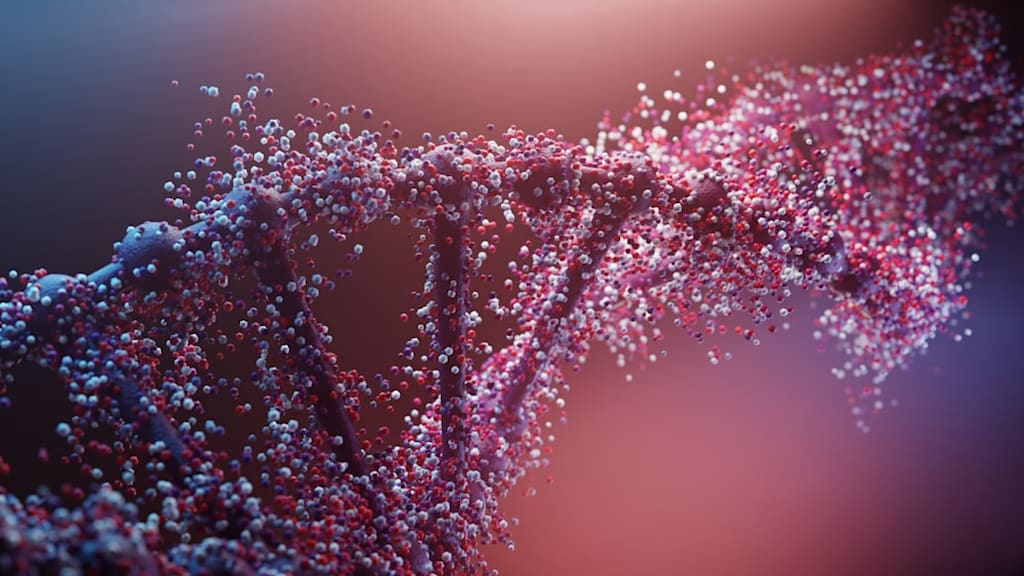
The Drug That Deletes Disease: Inside the $3.4 Billion Race to Destroy Bad Proteins
Medicine spent decades trying to block rogue proteins. A growing number of scientists think that was always the wrong instinct.
The number that tends to stop people is 80 percent. That's roughly the share of disease-causing proteins in the human body that conventional drugs simply cannot touch — too slippery, too structurally awkward, too devoid of the pockets and grooves that small molecules need to latch onto. For years, oncologists and neurologists quietly accepted this limitation as the ceiling of what pharmacology could do. Then came targeted protein degradation, and suddenly the ceiling moved.
The concept sounds almost too elegant to be real. Rather than designing a drug that binds a harmful protein and blocks its function, researchers are engineering molecules that recruit the body's own waste-disposal machinery — the ubiquitin-proteasome system — to tag the offending protein and destroy it entirely. The difference between inhibiting something and eliminating it turns out to matter enormously. A comprehensive breakdown of where this field stands commercially is available in this targeted protein degradation industry and market overview, which tracks growth projections from $415.3 million in 2025 to an estimated $3.4 billion by 2035.
The Mechanism That Changes the Math
The leading technology class within this space is called PROTACs — proteolysis-targeting chimeras. These are bifunctional molecules: one end grabs the target protein, the other end grabs an E3 ubiquitin ligase, and the two are stitched together by a chemical linker. Once they're in proximity, the ligase slaps a ubiquitin tag on the target, marking it for destruction by the proteasome. The protein gets chewed up. The PROTAC molecule, crucially, is then released and free to do it all over again — a catalytic mechanism that delivers sustained biological effects at lower doses than traditional inhibitors.
This isn't minor tinkering. For cancer treatment, where oncogenic proteins have evolved resistance mechanisms against drugs designed merely to inhibit them, the ability to physically remove them is a qualitative shift. Seventy-two percent of the current application focus in this market sits in oncology, which makes sense: transcription factors and fusion proteins that drive leukemias and lymphomas, long considered undruggable, are now being actively targeted through degradation strategies.
Arvinas and the Regulatory Milestone Nobody Saw Coming This Fast
The clearest sign that this technology has crossed from promising to real came in August 2025, when Arvinas submitted the first New Drug Application for a PROTAC-based compound. The drug, vepdegestrant (ARV-471), targets the estrogen receptor in ER-positive, HER2-negative metastatic breast cancer — a form of the disease that has built up resistance to existing endocrine therapies. The FDA assigned a PDUFA action date of June 5, 2026. If approved, it would be the first drug of its class to reach patients anywhere in the world.
That milestone matters beyond Arvinas. It signals to the entire field — and to investors, insurers, and regulatory agencies — that the manufacturing and safety questions that once seemed intractable have credible answers. The approval pathway is real. The clinical data is sufficient to file. That changes how every other company in this space calculates risk.
Bristol-Myers Squibb presented updated data at ASH 2025 for BMS-986458, a ligand-directed degrader targeting BCL6 for non-Hodgkin lymphoma, reporting a 65% overall response rate. Kymera Therapeutics initiated Phase 2b trials for KT-621, an oral STAT6 degrader, targeting eosinophilic asthma. Nurix Therapeutics started a registrational program for bexobrutideg, a BTK degrader, in chronic lymphocytic leukemia. These are not exploratory experiments. These are pivotal programs with commercial ambitions and definite timelines.
The Economics Are Still Uncomfortable
There's a tension in this story that the enthusiasm tends to paper over. Manufacturing PROTACs is genuinely difficult. These are larger, more structurally complex molecules than conventional small-molecule drugs, with synthesis processes that differ substantially from standard pharmaceutical chemistry. Clinical-grade PROTAC batches have been reported at costs ranging between $5,000 and $7,000 per gram — far exceeding the economics of a typical kinase inhibitor.
That cost profile creates a real constraint. The targeted protein degradation sector is currently concentrated in high-value oncology indications precisely because the economics can support it there. Moving into immunology, neurodegenerative diseases, or infectious disease — where the same mechanism could theoretically shine — requires either manufacturing breakthroughs or treatment economics that governments and payers are not currently structured to absorb. Intellectual property disputes over linker designs and E3 ligase ligands add another layer of uncertainty that slows deals and complicates licensing.
None of this is fatal, and the industry knows it. North America commands 52.8% of current market share, with Asia Pacific — particularly China, Japan, and South Korea — expected to grow fastest over the coming decade as regional biotech infrastructure matures and investment accelerates.
What Comes After the First Approval
The moment the FDA rules on vepdegestrant, a decade's worth of academic and commercial investment either gets validated or receives a complicated signal. Most observers expect validation. The more interesting question is what the field looks like at year five post-approval, when molecular glues — smaller, more orally bioavailable degraders that work without the bifunctional architecture of PROTACs — begin reaching late clinical stages, and when degraders for tau and alpha-synuclein proteins in Alzheimer's and Parkinson's disease start generating pivotal data. The proteins implicated in neurodegeneration have been accumulating in patients' brains for decades. Blocking them was never going to be enough. Removing them entirely is a different proposition — and this technology, for the first time, makes that sentence sound less like optimism and more like a clinical trial design.
Category: Science
About the Creator
Enjoyed the story? Support the Creator.
Subscribe for free to receive all their stories in your feed.
Comments
There are no comments for this story
Be the first to respond and start the conversation.