
Taiwan E-Commerce Market: Rapid Digital Adoption and Shifting Preference Drives Growth Opportunities
The Taiwan e-commerce market size reached USD 107.20 Billion in 2024. Looking forward, IMARC Group expects the market to reach USD 1,269.55 Billion by 2033, exhibiting a growth rate (CAGR) of 28.04% during 2025-2033.

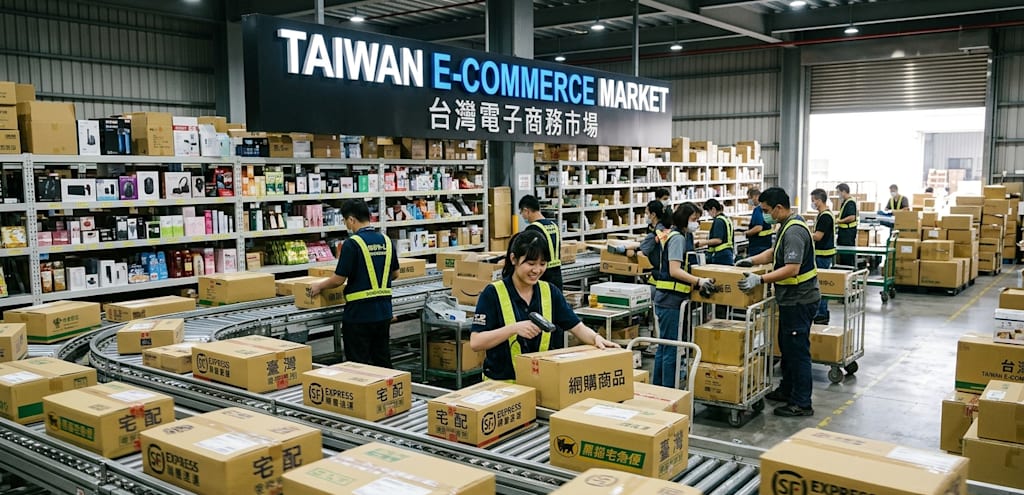
Taiwan has one of the fastest growing e-commerce markets in the Asia-Pacific․ High levels of internet penetration‚ strong technological infrastructure‚ and evolving consumer purchasing trends have contributed to the development of the digital economy․ E-commerce in Taiwan is expected to move beyond the retail sector and evolve into a more including digital economy‚ including payment systems‚ logistics‚ and cross-border e-commerce․
According to IMARC Group‚ the e-commerce market of Taiwan was USD 107․2 billion in 2024‚ and it is projected to grow at a CAGR of 28․04% during 2025-2033‚ reaching USD 1‚269․5 billion in 2033․
Supporting this rapid growth are structural advantages and changes in consumer expectations in this connected world․
Strong digital infrastructure supporting growth․
The rapid growth of Taiwan's e-commerce industry is attributed in part to its highly developed digital ecosystem‚ with one of the highest proportions of internet users and smartphone penetration in the Asia-Pacific․
With over 20 million internet users‚ and mobile penetration over 80%‚ consumers can access e-commerce‚ e-banking‚ digital payments and mobile money services; this has led businesses both large and small to take advantage of e-commerce opportunities․
The rise of secure online payment systems and the growth of Internet-based commerce have led to common adoption across demographics․
Changing Consumer Behavior and Shopping Patterns
Consumer culture in Taiwan has undergone rapid change in recent years․ Consumers expect convenient shopping experiences and personalized services․ Shopping online is no longer regarded as a special event‚ but rather an everyday occurrence․
Surveys reveal a large number of Taiwanese shoppers buy goods online‚ some as often as once a day․
Major e-commerce shopping events including Double 11 (Singles' Day)‚ Double 12 and various seasonal shopping festivals continue to drive a large share of transaction volume and user activity․
The emergence of live commerce‚ in which products are marketed and sold by a live stream host‚ is also changing the way consumers search for and purchase products․
Role of Logistics and Convenience Store Networks
The e-commerce ecosystem in Taiwan is characterized by its system of logistics and delivery network‚ including a common use of convenience stores․
With thousands of convenience stores in urban and rural areas‚ consumers can go to a neighborhood store‚ and pick their order up․ This increases efficiency and offers solutions to last mile issues‚ making e-commerce more accessible to both business and consumer customers․
Chain stores and e-commerce businesses have combined to create a hybrid approach where digital and brick-and-mortar businesses complement one another within the marketplace․
Sustainability and Circular Economy Trends
Sustainability is an increasingly relevant aspect of e-commerce in Taiwan‚ with consumers displaying an awareness of and interest in environmentally friendly products‚ ethical sourcing‚ and reduced impact on the environment․
In response many sites‚ and retailers are adding:
- Sustainable packaging solutions
- Eco-friendly product lines
- Second-hand and resale marketplaces
- Circular economy initiatives
These trends are not only impacting purchases in the short term‚ but are also informing long-term strategies for e-commerce companies․
Government Support and Digital Economy Initiatives
Government efforts have also helped the online shopping industry in Taiwan‚ which has sought to increase the technology infrastructure‚ improve digital literacy‚ and strengthen online transaction safety of the country to create a business-friendly environment․
This has been helped by initiatives to strengthen the fraud prevention infrastructure‚ regulate the digital landscape and encourage innovation to build consumer trust and sustainability․
These actions are particularly important given the growth of this market and the entry of new participants․
Expanding Market Segments and Opportunities
Taiwan's e-commerce market is diverse‚ spanning myriad segments and industries․ The following segments show the greatest opportunity for growth:
- B2C (Business-to-Consumer): Growing rapidly due to increased demand for online shopping
- B2B (Business-to-Business): Remains an important segment of the overall market․
- C2C (Consumer-to-Consumer): Resale and peer-to-peer marketplaces are driving important growth
Product categories including electronics‚ fashion‚ groceries‚ and health products continue to perform‚ as do digital services such as travel booking and financial services․
Another area with great potential growth is cross-border e-commerce‚ with Taiwanese companies increasingly selling goods online to overseas consumers․
Taiwan E-Commerce Market Outlook
Taiwan's e-commerce market is predicted to grow even further through 2033‚ driven by persistent digital penetration‚ innovations in payment and logistics systems and growing demand for personalized and sustainable shopping experiences․
And as the offline retail space is very strong‚ the future of retail in Taiwan will most likely be that hybrid of brick-and-mortar and the digital footprint of e-commerce․
Taiwan's e-commerce ecosystem may evolve to become more integrated‚ data-driven‚ and globally connected to meet the changing needs of the market․
About the Creator
michael matthew
I’m a market researcher passionate about understanding people, markets, and motivations. My work blends data analysis, consumer psychology, and strategic insight to help brands and businesses make informed, human-centered decisions.
Enjoyed the story? Support the Creator.
Subscribe for free to receive all their stories in your feed.
Comments
There are no comments for this story
Be the first to respond and start the conversation.