tech
Curious tech and technology from the realm of science and science fiction.
Galaxy S26 Ultra: Samsung’s Next Flagship Aims to Shift the Smartphone Conversation
What Happened (Facts) Samsung is expected to unveil the Galaxy S26 Ultra alongside the Galaxy S26 and S26+ at a Galaxy Unpacked event scheduled for next week, according to reporting circulating ahead of the launch. The framing around the S26 Ultra is less about chasing the biggest numbers (megapixels, brightness, raw clock speeds) and more about repositioning the phone as a stable, long-life “professional tool” that anchors Samsung’s ecosystem against rivals like Apple’s iPhone 17 Pro and Google’s Pixel 10 Pro.
By Behind the Tech9 months ago in Futurism
Met Police Using Palantir AI to Flag Officer Misconduct
What Happened The Metropolitan Police has confirmed it is using artificial intelligence tools supplied by US data analytics company Palantir to analyse internal staff data in an effort to identify potential misconduct.
By Behind the Tech9 months ago in Futurism
Concern Grows Over “Chatbot Overdependence” in Relationships
What Happened A reader wrote to advice columnist Annalisa Barbieri expressing concern that her boyfriend’s heavy reliance on AI — particularly ChatGPT — may be affecting his ability to think independently.
By Behind the Tech9 months ago in Futurism
Which AI Tools Are Actually Useful in 2026?
At the start of the AI boom, every new tool promised disruption. Slide decks featured bold claims about automation, prediction, and limitless productivity. Founders pitched platforms that would “replace” entire departments. Investors poured billions into startups racing to define the future.
By Samantha Blake9 months ago in Futurism
A Hidden World Beneath the Salt: The Remarkable Discovery of a New Roundworm in Utah’s Great Salt Lake
Utah’s Great Salt Lake is one of the harshest environments on Earth. Its waters are several times saltier than the ocean, creating conditions that would kill most living creatures almost instantly. For years, scientists believed only a handful of hardy species—like brine shrimp and brine flies—could survive in its open waters. But in a groundbreaking find announced in early 2026, researchers uncovered something extraordinary: a tiny roundworm, a species entirely new to science, thriving in this extreme saltwater world.
By Tech Gear Hub9 months ago in Futurism
The 10,000-Year Memory: Why Microsoft’s New Glass Storage Changes Everything
We are currently witnessing an unprecedented paradox: a civilization that produces more data than any before it, yet relies on the most ephemeral storage media in history. Our collective wisdom is currently etched onto magnetic tapes and spinning disks with lifespans measured in mere years, threatening a "digital dark age" where our history simply evaporates. We are essentially building our digital cathedral on shifting sands, constantly fighting the relentless tide of digital entropy. Microsoft Research’s "Project Silica" offers a definitive break from this cycle of obsolescence. By utilizing a palm-sized square of ordinary glass, researchers have pioneered a method to store vast quantities of information with geological-scale permanence. This isn't just an incremental upgrade to the hard drive; it is a fundamental reimagining of how humanity might preserve its legacy across the millennia. Beyond the Epoch: Data Stability on a Geological Scale The most profound achievement of Project Silica is its conquest of time. Through rigorous "accelerated ageing experiments," researchers have demonstrated that data written into this medium remains stable and readable for over 10,000 years. This lifespan shifts our perspective of data from "temporary state" to "permanent record," moving away from the fragile plastics and magnetic films that have defined the last century. This breakthrough builds on decades of optical physics, specifically the exploration of fused quartz glass. By transitioning to a material that is essentially as stable as a gemstone, we move past the era of periodic "data migration"—the costly and risky process of moving files to new hardware every decade. We are looking at a future where a library can remain silent, cold, and entirely stable without the need for constant maintenance. "Tests suggest the data will be readable for more than 10,000 years... This vastly exceeds the lifetime of conventional archival storage media such as magnetic tape or hard drives." The Siliceous Vault: Two Million Books in Your Palm Project Silica achieves a staggering spatial efficiency that borders on the impossible. A single, thin square of glass—no larger than a drink coaster—can house the equivalent of two million books. This density is achieved by manipulating "voxels," tiny three-dimensional volumes less than a millionth of a meter across, allowing for a storage density of 1.59 gigabits per cubic millimeter. The implications for our global infrastructure are transformative. Our current data centers are massive, energy-hungry monoliths that require multi-billion dollar cooling systems to prevent hardware failure. A glass-based archive, by contrast, requires zero energy to maintain once the data is written, potentially replacing sprawling server farms with compact, energy-neutral glass libraries that could fit in a standard room. Sculpting Reality in Quadrillionths of a Second To write data into the glass without triggering a catastrophic fracture, the system employs "ultrashort" femtosecond laser pulses. A femtosecond is one-quadrillionth of a second (10⁻¹⁵ s). To visualize this scale, consider that comparing ten femtoseconds to a single minute is like comparing one minute to the entire age of the universe. This extreme speed is the secret to the technology’s success. The pulse is so brief that it alters the molecular structure of the glass via an intense electric field before heat has the chance to propagate and shatter the surrounding material. This process utilizes the same fundamental physics that earned the 2023 Nobel Prize in Physics for pioneers like Ferenc Krausz, signaling a major transition where theoretical "attosecond" science is finally being harnessed for industrial-grade applications. From Cinematic MacGuffins to 5D Memory Crystals The concept of a "5D memory crystal" has recently made the leap from the laboratory to the silver screen. In Mission Impossible: The Final Reckoning, a similar glass device is depicted as a secure vault for a sinister, god-like AI. It is a rare moment in science communication where the "bleeding-edge" reality of a lab has caught up to the most imaginative tropes of Hollywood. However, the real-world application is far more grounded and arguably more significant. Companies like SPhotonix are already working to commercialize this "5D glass nanostructuring" developed at the University of Southampton. This isn't just a movie prop; it is a nascent industry aimed at ensuring that our most vital cultural and scientific records survive the rise and fall of the very systems that created them. A Total Architecture for Eternal Retrieval Project Silica’s true value lies in the fact that it is no longer just a laboratory curiosity; it is a comprehensive, end-to-end data platform. The researchers have demonstrated a full lifecycle system—from encoding and writing with "off the shelf" industrial lasers to reading the data via microscopes and applying sophisticated error correction. This maturity suggests the technology is ready for integration into our existing archival workflows. The system balances two distinct storage strategies to meet different needs. The first uses "micro-explosions" to create void-like features for maximum density, while the second alters the refractive index for higher writing speeds—reaching approximately 65.9 megabits per second. This flexibility allows the system to be tailored for different archival priorities, whether the goal is absolute capacity or the rapid ingestion of vast historical datasets. A Final Thought on Human Legacy We are standing at the threshold of a new era in human record-keeping. As ultrafast photonics matures and the complexity of high-speed lasers continues to decrease, the cost of permanence will fall. We are moving from a world of "temporary digital storage," where we must choose what to save every few years, to a world of "permanent archival memory." This shift invites a profound philosophical reflection. In an age where we can finally preserve everything, the burden shifts from the how to the what. If our digital footprints are destined to outlast the very buildings we inhabit, what data is truly worth preserving for the next 10,000 years? We are finally building a mirror that will reflect our image to the distant future; the question remains what that reflection will show.
By Tech Gear Hub9 months ago in Futurism
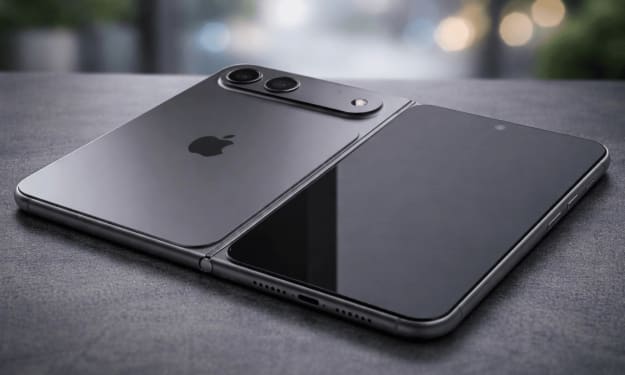
Apple’s 2026 Gamble: Why the Foldable iPhone is Arriving Sooner—and Riskier—Than Expected
For years, the prospect of a foldable iPhone has been the industry’s most persistent "ghost in the machine"—a device perpetually two years away, floating in a limbo of patent filings and supply chain rumors. Market observers long assumed Apple would maintain its characteristic "wait-and-perfect" stance, delaying entry until folding displays reached a level of durability and seamlessness that mirrors a static glass sheet. However, recent data regarding manufacturing schedules suggests an aggressive shift in strategy, indicating that Apple has moved past the stage of cautious experimentation. We are currently witnessing an accelerated supply chain validation that points toward a much tighter release window than most analysts predicted. Rather than a quiet, experimental rollout, the latest production intelligence reveals a coordinated effort to integrate this complex hardware into the heart of Apple’s most profitable hardware cycle. For those who thought the foldable would remain a niche luxury, the 2026 production spreadsheets suggest a far more disruptive reality. The Synchronized Launch Strategy: A Core Volume Driver The most striking revelation from recent production data is the July mass production window for the foldable display. This timeline is not coincidental; it is an aggressive SKU alignment that mirrors the production cycle of the iPhone 18 Pro and Pro Max. By initiating display manufacturing in mid-summer, Apple is positioning the foldable for a high-profile September launch, signaling that this is not a side project but a primary flagship. More importantly, this launch window comes at a time of significant portfolio restructuring. Reports indicate that the base iPhone 18 model will be delayed until the following year, effectively leaving a vacancy in the 2026 lineup. This suggests a massive strategic pivot: Apple likely intends for the foldable to fill the slot of a core volume driver rather than acting as a "luxury extra." By elevating the foldable to this status, Apple is betting the success of its entire fiscal year on a form factor that remains unproven within the iOS ecosystem. A High-Stakes Display Monopoly: The Samsung Necessity Apple’s move toward mass production has necessitated a strategic narrowing of its supply chain, one that carries significant industrial irony. In a departure from its standard "multi-vendor" safety net, Apple is reportedly relying solely on Samsung for these folding displays, even instructing LG Display to "take a step back" from the project. This decision suggests that the technical hurdles of Apple’s "novel hinge mechanism" and custom display components are so high that only Samsung’s mature infrastructure can meet the required yield rates. For a company as risk-averse as Apple, entrusting its most complex hardware launch in a decade to its primary smartphone rival is a move of absolute technical necessity. It highlights a precarious dependency: Apple is sacrificing its usual leverage over suppliers to ensure it can actually manufacture the device. Relying on a single source for a first-generation mechanical pivot increases the stakes exponentially; any yield issues at Samsung could single-handedly derail Apple’s entire 2026 flagship strategy. The Battlefield of Proportions: Chasing the "Wide-Fold" Standard Apple is not entering this market in a vacuum. The industry is already gravitating toward a specific "wide-fold" aspect ratio—a departure from the narrow, "remote control" feel of earlier foldables. Samsung is already deep in development on the Galaxy Z Wide Fold, a device expected to reach consumers well before Apple’s displays even enter the mass production phase in July. This head start means that by the time Apple’s entry arrives, the market will already have a refined understanding of the wide-format utility. As the industry intelligence suggests: "As such, the industry would have already gotten a pretty good feel for how such foldable phones might work, except for anyone who’s played around with the Huawei Pura X." The Huawei Pura X currently serves as the benchmark for this form factor, and Apple will be forced to justify its entry against a landscape of established, iterative competitors who have already cleared the initial "novelty" hurdle. The Argument for "Generation Two": Skepticism by Design Despite the timeliness of the production cycle, the sheer complexity of this machine warrants a healthy dose of analytical skepticism. A folding iPhone is a mechanical minefield, and Apple’s recent track record with first-generation hardware and software transitions—from the FineWoven accessory failure to the structural vulnerabilities seen in high-end iPad Pro models—suggests that early adoption is a high-stakes gamble. History tells us that Apple’s "Generation One" devices often serve as public beta tests for refined "Generation Two" hardware. When you combine a novel hinge mechanism with a history of "glitchy software updates and hardware failures," the risk of a mechanical or systemic breakdown is non-trivial. For the pragmatist, the recommendation is clear: wait for the platform to mature. The 2026 release may be timely, but the physical stress of a folding screen is an entirely different beast than a software bug, and it may take another year for Apple to truly master the physics of the fold. Conclusion: The Future of the Pocket The 2026 production schedule confirms that the foldable iPhone is no longer a speculative project; it is a manufacturing reality. By aligning this device with its Pro lineup and pausing the base iPhone 18, Apple is preparing to force the foldable into the mainstream consciousness. This represents the most significant shift in the smartphone industry since the introduction of the X-series, where the refinement of the iOS ecosystem finally meets the physical flexibility of the screen. As we approach this milestone, the consumer choice becomes more than just a brand preference. It is a question of philosophy: Do you prioritize Samsung’s established hardware iteration and first-to-market wide-format experience, or do you bet on Apple’s high-stakes ecosystem integration and wait for the "perfected" entry, despite the risks of a first-generation launch?
By Tech Gear Hub9 months ago in Futurism
Why Your Dream TV Costs a Fortune: The Surprising Reality of OLED Pricing
It is a ritual performed every November: the hypnotic glow of the showroom floor, the deep, ink-pool blacks of a flagship OLED, and the inevitable wince when you finally glance at the price tag. While standard LCDs are practically falling into shopping carts for under $500, a high-end OLED remains a luxury investment. The math behind this disparity is startling; by 2024, the manufacturing cost of a single 65-inch OLED panel had dropped to roughly $600—a figure that, on its own, exceeds the entire retail price of a 65-inch LCD television.
By Tech Gear Hub9 months ago in Futurism
Why Fake AI Videos of UK “Urban Decline” Are Flooding Social Media
What Happened A wave of AI-generated videos falsely portraying parts of the UK — especially Croydon in south London — as dystopian hubs of crime and social decay is spreading rapidly across TikTok, Instagram Reels and other platforms.
By Behind the Tech9 months ago in Futurism
The Rise of Interactive Live Streaming: How Real-Time Content Is Reshaping Digital Entertainment in 2026. AI-Generated.
The digital entertainment landscape has undergone a remarkable transformation over the past decade, and nowhere is this shift more visible than in the world of live streaming. What began as a niche hobby for gamers and early adopters has evolved into a multi-billion dollar industry that touches nearly every corner of online culture. In 2026, interactive live streaming stands at the forefront of how audiences engage with content, blurring the traditional boundaries between creators and viewers in ways that were unimaginable just a few years ago. The Evolution of Live Streaming Technology The technical infrastructure supporting live streaming has advanced dramatically. Early platforms struggled with latency issues, buffering problems, and limited video quality. Today, advances in content delivery networks, edge computing, and adaptive bitrate streaming have made it possible to deliver high-definition video with sub-second latency to audiences anywhere in the world. This technical progress has been fundamental to enabling the real-time interactivity that defines modern streaming platforms. Cloud-based encoding and transcoding services have also lowered the barrier to entry for aspiring streamers. Where professional-grade broadcasting once required expensive hardware and technical expertise, modern platforms offer browser-based streaming tools that allow anyone with a decent internet connection and a webcam to go live. This democratization of broadcasting technology has been one of the most significant drivers of the industry's explosive growth. The Shift Toward Audience Participation Perhaps the most defining characteristic of contemporary live streaming is the emphasis on audience participation. Unlike traditional media, where content flows in one direction from creator to consumer, live streaming platforms have built sophisticated tools that allow viewers to actively shape the content they are watching. Real-time chat, polling systems, virtual gifting, and collaborative features have transformed passive viewers into active participants. This shift has profound implications for content creation. Streamers must now think of their broadcasts not as performances to be watched, but as experiences to be shared. The most successful creators on modern platforms are those who excel at reading and responding to their audience in real time, creating a sense of community and shared experience that traditional media simply cannot replicate. Some platforms have taken this concept even further, introducing features that allow viewers to influence gameplay decisions, vote on creative directions, or even join the stream directly through video or audio connections. These innovations represent a fundamental reimagining of the relationship between content creators and their audiences. Monetization Models and Creator Economics The economics of live streaming have matured significantly. Early monetization relied primarily on advertising revenue, which often provided insufficient compensation for the time and effort creators invested in their content. Modern platforms offer a diverse array of revenue streams, including subscription models, virtual currency systems, direct tipping mechanisms, and tiered membership programs that provide exclusive content and features to paying supporters. This evolution in monetization has created new career paths for digital creators. Full-time streaming is now a viable profession for thousands of content creators worldwide, and the supporting ecosystem of managers, editors, moderators, and technical specialists continues to grow. The creator economy surrounding live streaming has become a significant employment sector in its own right. Platform diversity has also benefited creators by providing more options for finding the right audience. Different platforms cater to different content niches and demographic groups, from gaming-focused services to music performance platforms to general entertainment hubs. This specialization allows creators to find communities that align with their content style and audience preferences. Challenges and Considerations Despite its impressive growth, the live streaming industry faces several important challenges. Content moderation remains a persistent concern, as the real-time nature of live broadcasts makes it inherently more difficult to prevent the distribution of harmful or inappropriate content. Platforms continue to invest heavily in both automated moderation tools and human review teams, but finding the right balance between safety and creative freedom remains an ongoing challenge. Mental health considerations have also emerged as a significant topic within the streaming community. The pressure to maintain consistent schedules, engage with audiences for extended periods, and deal with the inevitable negativity that accompanies online visibility can take a significant toll on creators. Industry organizations and platform developers are increasingly recognizing the importance of building tools and support systems that help creators maintain healthy work-life boundaries. Bandwidth inequality presents another challenge to the industry's growth. While urban areas in developed nations generally enjoy the high-speed internet connections necessary for both streaming and viewing, many communities around the world still lack the infrastructure needed to fully participate in the live streaming ecosystem. Addressing this digital divide will be crucial for the industry's continued expansion. Looking Ahead: The Future of Live Streaming The trajectory of live streaming technology points toward even more immersive and interactive experiences. Advances in augmented reality and virtual reality are beginning to influence how live content is produced and consumed, offering viewers the possibility of experiencing streams as three-dimensional environments rather than flat video feeds. Spatial audio technology is similarly enhancing the sense of presence that viewers feel when participating in live broadcasts. Artificial intelligence is playing an increasingly important role in the live streaming ecosystem as well. AI-powered tools are helping creators with everything from real-time translation and captioning to audience analytics and content recommendations. These technologies have the potential to make live streaming more accessible and more personalized than ever before. The integration of live streaming with other digital platforms and services is also accelerating. Social media networks, e-commerce platforms, and educational institutions are all incorporating live streaming functionality into their offerings, recognizing the unique engagement potential that real-time video provides. This convergence suggests that live streaming will become an increasingly integral part of the broader digital experience rather than remaining a standalone entertainment category. As we move further into 2026 and beyond, the live streaming industry shows no signs of slowing down. The combination of improving technology, growing creator communities, evolving monetization models, and expanding audience expectations continues to drive innovation and growth. For anyone interested in the future of digital entertainment, understanding the dynamics of interactive live streaming is not just useful but essential.
By Chaturbateme9 months ago in Futurism
Gemini 3.1 Pro: Google Unveils Upgraded Model for Complex Reasoning Tasks
What Happened Google has launched Gemini 3.1 Pro, an upgraded core intelligence model designed for complex reasoning tasks across science, engineering, research and enterprise workflows.
By Behind the Tech9 months ago in Futurism