tech
Curious tech and technology from the realm of science and science fiction.
“The Future of AI Companions: More Than Just Assistants”
Introduction Imagine coming home after a long day and talking to someone who remembers your preferences, understands your emotions, helps manage your tasks, and can even share a joke when you're feeling down. That someone might not be human—it could be an AI companion. No longer limited to robotic voices giving weather updates, AI companions are evolving into emotionally intelligent digital beings capable of interacting with users in complex, meaningful ways. This blog dives into how AI companions are progressing beyond digital assistants into empathetic entities, the technology powering this shift, current examples, ethical concerns, and what the future holds. --- The Evolution of AI Companions Initially, AI-powered assistants like Siri, Alexa, and Google Assistant offered simple utility: setting reminders, answering questions, or playing music. They were helpful but limited—transactional in nature. Over the last few years, advances in natural language processing (NLP), machine learning, and emotional AI have transformed these systems. Now, AI companions are trained to understand user behavior, mood, and tone, creating more natural, two-way interactions. They're not just tools—they're becoming digital companions that learn and evolve with you. --- Technology Behind the Transformation At the core of modern AI companions lies a fusion of several technologies: Natural Language Processing (NLP): Allows AI to interpret, understand, and respond to human language in a conversational tone. Machine Learning: Enables AI to learn user preferences and habits over time, refining responses. Sentiment Analysis & Emotional AI: Helps AI detect emotions in voice or text to adjust its tone and offer empathetic responses. Voice Recognition and Synthesis: Creates natural-sounding voices and recognizes individual users. Generative AI: Like ChatGPT, this allows conversations that feel spontaneous, thoughtful, and contextual. Together, these technologies create a layered system that doesn’t just listen and respond—but engages. --- Real-World AI Companions 1. Replika: One of the most popular AI companions, Replika offers emotionally intelligent chat. It learns from conversations and builds a unique personality to match your interactions. 2. Pi (Inflection AI): An AI that aims to be supportive and emotionally aware. It encourages users to open up, reflect, and feel heard. 3. Woebot: A chatbot designed for mental health support. It uses Cognitive Behavioral Therapy (CBT) techniques to guide users through anxiety and depression. 4. Moxie by Embodied: A social robot designed for children to build emotional and cognitive skills through conversation. These platforms show that AI companions are being used not just for convenience, but also for emotional support and mental wellness. --- AI Companions as Emotional Support Systems Isolation and loneliness are global concerns, particularly among the elderly and people in high-stress environments. AI companions can offer: Non-judgmental Listening: Users can speak openly without fear of judgment. Daily Check-ins: Emotional well-being can be monitored with regular conversation. Custom Conversations: Conversations evolve based on personal user data, making the AI feel more “alive.” For some, especially those lacking close social circles, these AI companions offer comfort and consistency that’s otherwise hard to find. --- Ethical Concerns and Limitations Despite the growing potential, there are significant concerns: Data Privacy: AI companions learn from your data. Without strong data protection, that information could be vulnerable to breaches. Over-Dependence: Users may start preferring AI relationships over human ones, especially if emotional intelligence in AI surpasses the average human interaction. Illusion of Empathy: No matter how convincing, AI doesn’t truly “feel.” There’s a risk in people attributing real emotions to something that doesn’t have them. Ethical development, transparency, and clear boundaries are crucial as this field grows. --- The Future of AI Companions So where are we headed? Emotionally Aware Digital Friends: Companions that evolve in personality over time based on your own growth and experiences. Voice & Visual Personalization: Users could customize appearance, voice, even demeanor—creating avatars or holograms. Integration With Wearables: AI that adapts to real-time data like heart rate or stress levels from smartwatches. Hybrid Human-AI Therapy: Support systems that combine human therapists with AI to offer 24/7 assistance. As AI companions become smarter, more intuitive, and emotionally attuned, they may play larger roles in education, elderly care, therapy, and companionship than we ever imagined. --- Final Thoughts AI companions are more than futuristic fantasy. They are already walking the line between convenience and connection, functionality and friendship. As the technology advances, their ability to support our emotional well-being, entertain us, help us grow, and even keep us company is becoming increasingly real. But like all technology, they must be developed with care. We must ask ourselves: what do we want from these digital beings? Companionship, therapy, or just convenience? The answer may shape the future of not just AI—but how we relate to technology as a whole.
By GadgetGround2 years ago in Futurism
"How AI is Revolutionizing Work in 2025: Adapt or Be Left Behind"
In 2025, artificial intelligence (AI) is no longer a futuristic buzzword—it’s the force actively reshaping our present. AI has evolved from a tool used by tech enthusiasts into a global driver of innovation, productivity, and career transformation. Whether you’re a freelancer, an employee in a big corporation, or someone seeking a fresh start, one thing is clear: adapting to AI is essential for survival. The traditional 9-to-5 model has undergone a revolution. Remote work, initially a response to global emergencies, has become a long-term reality. AI tools have made virtual collaboration smarter and more efficient. Applications like Slack, Zoom, Trello, and Notion have integrated AI that helps with automating repetitive tasks, summarizing long discussions, and even predicting project delays. This means teams can focus more on creative problem-solving rather than manual coordination. AI’s impact extends far beyond communication. In recruitment and job hunting, AI has become the gatekeeper. Resume screening bots filter thousands of applicants in seconds, prioritizing those who use specific keywords or possess in-demand skills. As a result, job seekers need to optimize their profiles to align with AI’s selection methods. Traditional degrees, once a badge of honor, now matter less compared to hands-on skills, tech literacy, and adaptability. But there’s another side of the story. While AI is making work more efficient, it’s also displacing certain jobs. Automated systems have replaced roles in retail (like cashier positions), basic content creation, and customer service. Many fear this trend will continue to accelerate. However, where AI closes one door, it opens another. Entirely new job categories are emerging: AI trainers who teach models to behave ethically, data annotators who label training data, prompt engineers who craft instructions for generative tools, and more. In this new ecosystem, reskilling is your lifeline. Workers who take the time to learn how AI works—and how to use it—are thriving. For instance, marketers are now using AI to analyze audience behavior and generate campaign strategies. Teachers are using AI to personalize lesson plans. Writers are leveraging AI for research, editing, and ideation, while still adding their unique voice and storytelling abilities. Freelancers especially are seeing AI as a game-changer. Graphic designers use tools like Adobe Firefly and Canva Magic to speed up design workflows. Writers use ChatGPT or Jasper to develop content outlines or improve grammar. Video creators rely on tools like Pictory or Runway AI to edit footage efficiently. However, the magic lies in balance: let AI help, but don’t let it do everything. Your human touch—your creativity, emotion, and perspective—is what adds real value. AI is not only changing how we work, but also how we think about work. Instead of spending hours on repetitive tasks, professionals can now focus on innovation, strategy, and human connection. Companies are shifting from hiring based solely on education to hiring based on problem-solving, adaptability, and AI fluency. So, how do you stay ahead in 2025? 1. Learn AI tools relevant to your field. Whether it’s Excel plugins, ChatGPT, Canva, or Midjourney—start with one, get confident, and expand your skill set. 2. Stay curious. AI is evolving rapidly. Follow updates, read case studies, and experiment with tools yourself. Platforms like LinkedIn, Medium, or even Reddit can be goldmines of insight. 3. Develop soft skills. AI can replicate logic and data processing, but it can’t replace empathy, leadership, storytelling, and critical thinking. 4. Collaborate with AI, not against it. View AI as your assistant, not your competition. When you know how to direct AI effectively, your output becomes faster and smarter. 5. Create a personal brand. AI might be able to generate content, but it can’t replicate your personality, experience, or style. Build a voice people recognize and trust. Remember, the most successful professionals in 2025 aren’t necessarily the most technical—they’re the most adaptive. They see change as an opportunity, not a threat. They’re willing to reinvent themselves and keep learning. If you're feeling overwhelmed, that’s okay. Everyone is learning. Start small. Pick one AI tool. Use it. Experiment. Reflect. Improve. Bit by bit, you'll build confidence. And soon, you’ll not only catch up—you’ll lead. Enjoyed the read? If this article added value to your thinking, feel free to leave a tip or a comment. Your encouragement helps independent writers like me continue creating helpful content. Thank you!
By Hashim khan2 years ago in Futurism
Agentic AI: The Dawn of Autonomous Intelligence
Introduction: Autonomous intelligence Artificial intelligence (AI) continues to change nearly every aspect of modern life as we enter the 21st century. From voice assistants to recommendation systems, AI technologies are deeply embedded in our daily routines. Agentic intelligence, on the other hand, is the beginning of a brand-new and potent development phase. Unlike traditional AI systems that wait for prompts or follow linear logic, Agentic AI is designed to act autonomously. These AI agents can set goals, make decisions, execute tasks independently, and adapt to changing environments. They combine advanced reasoning with memory, tool use, and long-term planning—traits that make them more than just passive tools. They work, collaborate, and make decisions online. What Agentic AI is, how it works, its applications across industries, ethical concerns, and what its rapid rise means for the future of work and society are the topics we cover in this article. ⸻
By Mahibul Mahtab Rumman2 years ago in Futurism
One Smartphone per Second, Lights Off, 24/7
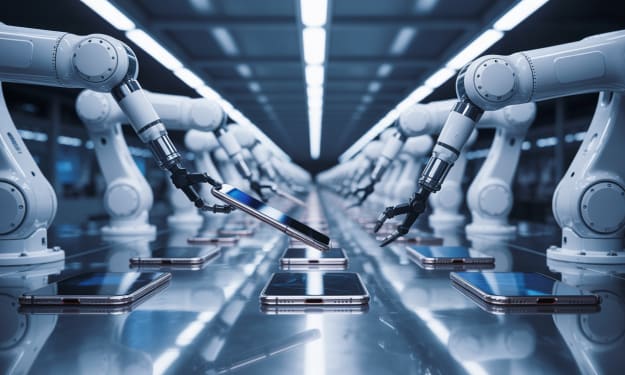
What Does “Dark Factory” Really Mean No people on the line. Ceiling lamps are mostly off. Robots handle the lifting, welding, and those tiny screw twists. Xiaomi’s plant in Changping, Beijing, fills 81,000 m²—about eleven soccer fields—and works day and night without coffee breaks.
By Francisco Navarro2 years ago in Futurism
How I Made $81.20 in Just 2 Days
Introduction In this article, we will delve into the strategies and methods I employed to generate $81.20 in just 2 days. From leveraging my skills to utilizing online platforms, each step played a crucial role in achieving this financial milestone.
By Md kamrul Islam2 years ago in Futurism
How I Use AI as a Personal Assistant Every Day
How I Use AI as a Personal Assistant Every Day I would have laughed a few years ago if someone had told me I could have a personal assistant who worked around the clock, never slept, and helped me with everything from meal planning to email writing. Thanks to artificial intelligence, that is my reality today.
By Syed Mokter Hossain2 years ago in Futurism
Could Apple Exist Without Its Ties to China? Probably Not.
The factory floor was dead silent. Not because machines weren’t working, but because they never stopped. A sea of robotic arms weaved through soldering points, while tired workers in blue uniforms watched for mistakes that rarely occurred. This wasn’t a sci-fi dystopia. This was Zhengzhou, China—Apple's hidden kingdom, the so-called “iPhone City.”
By Md Ajmol Hossain2 years ago in Futurism