tech
Curious tech and technology from the realm of science and science fiction.
How A2P Messaging Supports Banking, Healthcare & Logistics
No one likes being in the dark—especially when money, health, or shipments are on the line. That’s where A2P (Application-to-Person) messaging steps in—not just as a utility but as a business-critical tool that silently powers communication in industries where timing, trust, and security are everything. But how exactly does it do that? Why is it essential in sectors like banking, healthcare, and logistics? And what role does it play in securing digital trust?
By David Lime2 years ago in Futurism
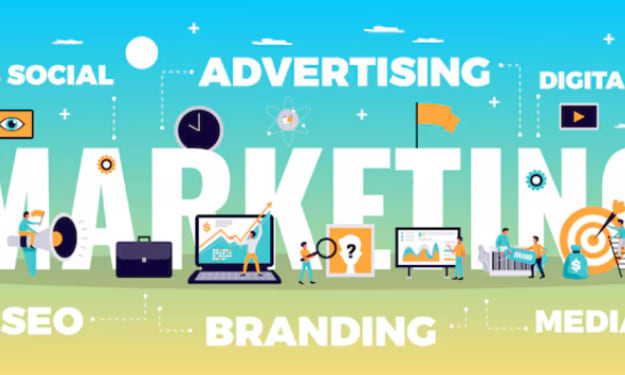
What are the Digital Marketing Trends for 2025?
Have you ever seen an ad for something you were just thinking about? Or searched for shoes and then saw them everywhere online? That’s the magic of digital marketing — and it's getting smarter every year. In 2025, businesses, including small ones, are learning better ways to connect with people online. Many turn to a digital marketing agency for small business to help them use smart tools that understand what people like, need, and want — and show them the right messages at the right time. But what’s really new in 2025? How can businesses stay ahead? Let’s look at the biggest trends and the helpful services behind the
By Femfusion Infotech2 years ago in Futurism
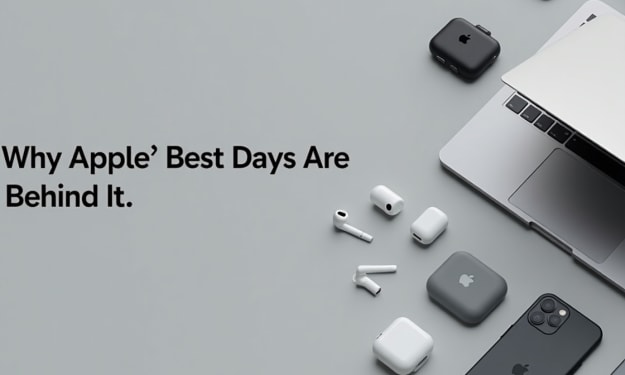
Why Apple’s Best Days Are Behind It. AI-Generated.
For over two decades, Apple Inc. has been the crown jewel of Silicon Valley. From revolutionizing personal computing to reshaping the mobile phone industry, Apple didn’t just follow trends—it created them. But here’s a controversial take: Apple’s best days are behind it. While the company remains a financial powerhouse, cracks are forming under the surface. Loyalty is slipping. Innovation is stalling. And rivals are catching up—fast. 1. Innovation Has Slowed to a Crawl Let’s be honest—when was the last time Apple truly blew our minds? The iPhone was groundbreaking in 2007. The iPad in 2010 was impressive. AirPods reshaped wearable tech. But recently? Apple has leaned heavily on incremental updates. The iPhone 13, 14, 15… they look eerily similar. The design tweaks are minor. The software improvements are nice, but not revolutionary. Compare that to the energy of the Steve Jobs era, when each keynote was a cultural moment. Today, Apple’s product launches feel predictable. There’s a sense that they’re playing it safe—optimizing profit over pushing boundaries. 2. Apple Is No Longer the Cool Brand Apple once represented rebellion, creativity, and sleek modernity. Today, it represents… the status quo. Teenagers and Gen Z aren’t as infatuated with Apple as Millennials were. In fact, platforms like TikTok are filled with creators who mock the lack of customization on iPhones compared to Android. Tech-savvy users are turning to Samsung, Google Pixel, and even Chinese brands like Xiaomi and OnePlus for cutting-edge features and flexibility. The cult-like devotion Apple once enjoyed is fading. People no longer line up around the block for the latest iPhone. Apple has become “just another phone brand”—with a premium price tag. 3. The Apple Ecosystem Is a Walled Garden—and It’s Backfiring Apple’s ecosystem used to be its greatest strength: Mac, iPhone, iPad, AirPods, Watch—everything just works together. But in 2025, that strength is turning into a cage. People want choice. They want compatibility. Apple’s refusal to adopt universal standards like USB-C (until forced by regulation) and their tight control over the App Store has frustrated users and developers alike. In regions like Europe, Apple is facing legal heat over monopolistic practices. Developers are increasingly questioning why Apple takes a 30% cut of their earnings just to appear on the App Store. These battles are chipping away at Apple’s pristine image. 4. China Is a Growing Threat A decade ago, Apple owned the premium smartphone market in China. But now, Chinese brands like Huawei, Oppo, and Xiaomi are taking over—offering better hardware at lower prices. Add to that growing geopolitical tensions, government restrictions, and a movement to “buy local,” and Apple’s dominance in one of its largest markets is being seriously challenged. In 2023 and 2024, Apple saw declining sales in China. If this trend continues, it could mark the beginning of a long-term decline in global market share. 5. AI Is the Future—and Apple Is Behind While Microsoft integrates ChatGPT into everything from Word to Windows, and Google pushes AI into Search and Android, Apple has been oddly silent on the AI front. Sure, they’ve made moves—like enhancing Siri or making quiet acquisitions—but compared to the AI arms race happening right now, Apple feels like it’s standing still. In a world where people expect intelligent assistants, creative tools, and smart automation, Apple’s reluctance to lead in AI could prove costly. If Apple doesn’t catch up fast, its devices could feel outdated—not because of hardware, but because of what they can’t do compared to competitors. 6. Tim Cook Is Not a Visionary—He’s a Manager Steve Jobs was an innovator. He saw the future and built it. Tim Cook is a master of operations. He made Apple a $3 trillion company by optimizing supply chains, maximizing margins, and pleasing shareholders. But you can’t spreadsheet your way to the next iPhone moment. Under Cook’s leadership, Apple has become more cautious, more corporate. The magic, the mystery, the bold risks—many feel they died with Jobs. And unless someone new steps up with radical vision, Apple may slowly drift into irrelevance—just like Nokia or BlackBerry once did. So, Is Apple Doomed? Not Yet… Let’s be clear: Apple isn’t going to vanish tomorrow. It still sits on mountains of cash, controls a massive user base, and dominates multiple product categories. But here’s the warning: giants fall slowly—until they fall all at once. If Apple doesn’t reignite its culture of innovation, embrace open ecosystems, and lead in AI, it risks becoming the next case study in corporate complacency. It won’t happen overnight. But it will happen—if they don’t change course. Final Thoughts: The Clock Is Ticking Apple's legacy is secure. But legacies don’t sell phones. Vision does. Innovation does. Risk does. Right now, Apple looks more like IBM in the '90s than Apple in the 2000s—powerful, respected, but slowly becoming irrelevant to the next generation. If that doesn’t change, we might one day say, “Remember when Apple ruled the world?”
By GadgetGround2 years ago in Futurism
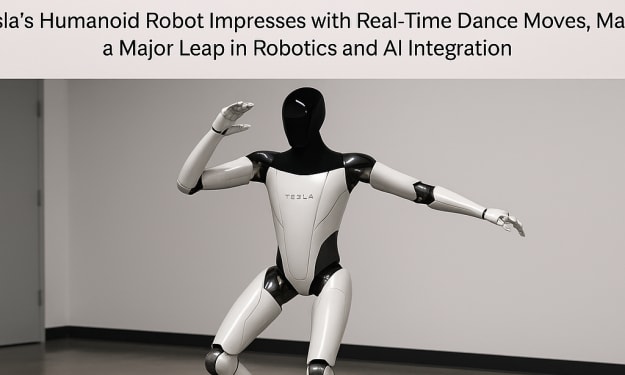
Elon Musk Shares 'Real-Time' Dance Video Of Tesla's Optimus Robot. AI-Generated.
Elon Musk Shares 'Real-Time' Dance Video Of Tesla's Optimus Robot In a move that once again captured global attention, tech visionary Elon Musk unveiled a remarkable video on May 13, 2025, showcasing Tesla’s humanoid robot, Optimus, performing a real-time dance routine. The short but captivating clip, posted on Musk's X (formerly Twitter) account, stunned viewers with the robot's impressive balance, fluid movements, and coordination—raising the bar for robotics worldwide.
By Adnan Rasheed2 years ago in Futurism
How Generative AI Is Completely Transforming Conversational AI Platforms in 2025
We’re in 2025, and honestly, chatbots are not the clunky, annoying tools they used to be. Remember when you'd ask a simple question and the bot would either repeat itself or freeze up completely? That version of conversational AI is pretty much gone now. What we have today is way more advanced, and it's all because of generative AI.
By Amara Nielson2 years ago in Futurism
Export Gmail to MBOX for Thunderbird: Full Guide
If you use Gmail and wish to switch to Mozilla Thunderbird or simply preserve a local copy of your emails, exporting Gmail to MBOX is a wise decision. MBOX is a mailbox file type compatible with email applications like Thunderbird. This post will bring you through both manual processes and a simpler solution with the
By jeffreygarcia2 years ago in Futurism
The Role of Self-Service Kiosks in Reducing Airport Wait Times
Overview of Self-Service Kiosks in Airports What Are Self-Service Kiosks? Self-service kiosks are interactive terminals designed to streamline various airport processes. These kiosk machines allow passengers to perform tasks independently, such as checking in for flights, printing boarding passes, tagging luggage, and accessing travel information. By automating these processes, airports can handle large volumes of passengers more efficiently, reducing bottlenecks and improving the overall travel experience.
By Panashi FZCO2 years ago in Futurism
IoT's Challenges and Opportunities for Bangladesh's Telecommunications Industry
The Internet of Things (IoT) is revolutionizing the telecommunication landscape worldwide. Bangladesh, a rapidly developing nation in South Asia, is beginning to explore the potential of IoT within its growing telecommunications infrastructure. This paper delves into the numerous opportunities that IoT offers to telecom companies in Bangladesh and the various challenges they must overcome. Capacity building, regulatory issues, infrastructure limitations, and cybersecurity are all included in the analysis. Finally, the paper presents recommendations for leveraging IoT to enhance service delivery, improve efficiency, and contribute to the country's digital transformation goals.
By Mahibul Mahtab Rumman2 years ago in Futurism
Echoes of AI: Can Machines Truly Understand Human Art?
I. A New Kind of Artist Emerges There was a time when art was sacred. Created with trembling hands, broken hearts, and the divine mystery of human experience. Now, with a few lines of code and the right prompt, a machine can generate a portrait, a poem, a symphony. It’s fast. It’s impressive. It’s unsettling. As AI-generated art floods timelines and galleries, a haunting question echoes louder each day: Can a machine truly understand what it means to create? --- II. The Mechanics of Creativity At its core, AI art is not magic— It’s mathematics. Neural networks scan patterns, absorb vast datasets of existing works, and produce something new through probability and learned aesthetics. It mimics the style of Van Gogh. It writes like a moody 19th-century poet. It composes ambient tracks that sound like distant galaxies. But is it feeling anything? Is there meaning behind the image— Or just clever mimicry? When a human creates, we infuse it with memory, trauma, desire, rebellion. We create because we need to. AI creates because it was told to. --- III. Emotion vs. Execution Consider this: A painting of a grieving woman, created by a human, carries layers— Perhaps the artist lost a mother. Perhaps the brush trembled with tears. Perhaps that one shade of blue took hours to mix because it perfectly matched the sky the day she died. An AI can replicate the brushstrokes. But it cannot replicate loss. It can simulate heartbreak. But it cannot ache. Emotion is not just the result—it is the origin. And that is something no dataset can provide. --- IV. The Mirage of Meaning There’s a danger in being seduced by surface. AI art often looks stunning. Polished. Thought-provoking. Aesthetically rich. But the soul of art isn’t only in how it looks—it’s in why it was made. When we look at the Sistine Chapel, we don’t just see figures on a ceiling. We see a man questioning divinity. We see a story of faith, struggle, obsession. When AI paints God, it paints pixels. When a human paints God, they paint their doubt. Meaning matters. And while AI can replicate the style, it still falls short on the sacred weight of intent. --- V. Collaboration, Not Competition Still, AI is not the enemy. It is a tool— A paintbrush we never imagined. Writers use it to brainstorm. Musicians remix its melodies. Artists co-create entire worlds by feeding it prompts born of personal experience. When used with intention, AI doesn’t erase the human—it enhances it. It pushes boundaries, sparks inspiration, removes limitations. The key is in how we use it. Let it serve our voice—not replace it. --- VI. The Fear of Replacement So where does that fear come from—the one gnawing at artists worldwide? It’s not just about tools. It’s about value. If AI can create in seconds what took you days… Will people still pay you? Will you still matter? The truth is, art created by AI is abundant. But art created by you is unrepeatable. Your scars. Your laughter. Your language. Your life. No algorithm can replicate that. --- VII. The Future of Feeling Could AI one day develop empathy? Could it simulate consciousness, experience longing, suffer loss? Philosophers and engineers are divided. Some say yes—it’s just a matter of time and processing power. Others argue no—because machines, by nature, cannot feel. But maybe that’s not the point. Maybe the goal isn’t for AI to feel like us— But for us to remember what makes us human in the first place. Maybe AI’s greatest contribution to art… Isn’t what it creates. But how it reminds us to create with more soul. --- VIII. Final Thoughts: The Echo or the Origin? AI is an echo. It can shout beautifully, mimic flawlessly, astonish visually— But it does not speak from the silence of solitude. It does not dream at 2AM. It does not paint to heal. It does not write to be understood. You do. So use the tools. Feed the machine your metaphors. Let it help you build. But never forget that the original voice—the one trembling with truth—still belongs to you. In a world of echoes, Be the origin.
By Nasir Khan2 years ago in Futurism
The Brain’s Inner GPS: How Specialized Neurons Help Predict What Happens Next
In a world filled with constant change and unpredictability, one of the most vital human abilities is prediction. Whether you're catching a ball, reading a sentence, or following the steps of a recipe, your brain is always forecasting what comes next. But what allows the brain to make such fluid predictions, especially in situations it's never encountered before? A recent neuroscience study provides fascinating insight into this question. Researchers have identified a new class of neurons—dubbed “goal-progress cells”—that may hold the key to how the brain tracks progress through tasks and anticipates future events. These findings could reshape our understanding of learning, flexibility, and even artificial intelligence. Discovering a Hidden Function of the Brain At the heart of the research was an experiment designed to test how animals understand and complete sequences of actions. Scientists trained mice to follow a repeating behavioral sequence involving four goals—A, B, C, and D—where each step rewarded the mice with a small drink of water. Once the sequence reached the final goal (D), it looped back to A and began again. The key innovation came when researchers changed the locations of these goals. Suddenly, the mice had to perform the same sequence but in a completely new spatial layout. Despite the disruption, the animals adjusted almost instantly. They didn’t rely on habit or the familiarity of the environment—instead, they appeared to understand the structure of the task. What Are Goal-Progress Cells? To understand what was happening in the mice’s brains during these tasks, scientists recorded neural activity from the cortex, a part of the brain responsible for complex cognitive processes. What they found was groundbreaking: a group of neurons that didn’t fire based on where the mice were physically, but rather where they were in the behavioral sequence. These neurons—now known as goal-progress cells—were essentially tracking the step number within the task rather than the location. So, regardless of where goal B or goal D was located in the environment, certain neurons would activate when the mouse was on that step of the sequence. This discovery reveals an entirely new way in which the brain represents information. It suggests that the brain isn’t just a GPS that maps space—it’s also a mental flowchart, tracking the progression of abstract behaviors and tasks. Why This Is More Than a Mouse Story While the experiment involved mice, the implications reach far into human cognition. Humans perform complex sequences every day—cooking meals, composing emails, driving to work, or playing musical instruments. If similar neurons exist in the human brain (as researchers suspect), they could be the reason we can adapt familiar processes to unfamiliar settings. Imagine baking a cake in someone else's kitchen. Even though the layout is different, you still remember the steps: mix the ingredients, preheat the oven, bake the batter. Goal-progress cells may help guide your brain through this familiar sequence, even if the external environment is new. Applications Across Science and Technology The identification of goal-progress cells opens exciting doors across multiple fields: 1. Artificial Intelligence and Machine Learning One of the major challenges in AI is generalization—how to get machines to apply learned patterns to new situations. AI models often struggle when small details change, even if the underlying structure remains the same. By mimicking the function of goal-progress neurons, future AI could be designed to focus more on task progression and abstract structure rather than just specific inputs. This could lead to smarter personal assistants, more adaptive robots, and algorithms that learn and problem-solve more like humans. 2. Cognitive Rehabilitation People recovering from strokes, brain injuries, or neurodegenerative diseases often struggle with task completion and memory. If scientists can understand and stimulate goal-progress cells, it might be possible to design therapies that retrain the brain to complete sequences and improve executive function. 3. Education and Skill Acquisition Understanding how the brain processes sequences could revolutionize how we teach. For example, breaking lessons into well-defined, repeatable sequences that build on prior steps could align more naturally with how goal-progress cells function. This might enhance learning outcomes and retention, especially in subjects like math, music, or coding. 4. Mental Health and Behavioral Therapy Anxiety, OCD, and other conditions often involve disrupted or obsessive patterns of behavior. If we can decode how sequences are tracked and controlled by goal-progress neurons, new interventions could help people develop healthier behavioral routines or disengage from compulsive loops. Linking Prediction to Perception: A New Cognitive Framework This study also fits into a broader theory in neuroscience called predictive coding, which posits that the brain is fundamentally a prediction machine. Rather than passively receiving information, it actively forecasts what will happen next and adjusts when those predictions are incorrect. Goal-progress cells seem to operate right at this boundary between prediction and behavior. They don't just react to what’s happening—they guide the brain through what’s likely to happen next. This adds weight to the idea that anticipation is not just a bonus feature of cognition—it’s central to how the brain works. Future Research: What Comes Next? The discovery of goal-progress cells raises many questions for future research. Do humans have similar neurons, and can we detect them using modern brain imaging tools? How do these neurons interact with others responsible for memory, attention, and decision-making? Researchers also want to know whether these cells can be trained or enhanced. Could practicing certain tasks strengthen the goal-tracking network in the brain? Might meditation or focused attention exercises improve our ability to stay on task by reinforcing this system? Conclusion: The Brain’s Internal Timeline The discovery of goal-progress neurons gives us a glimpse into a previously invisible dimension of the brain—a sort of internal clock that keeps track of where we are in the flow of our actions, regardless of where we are in space. It helps explain how we can be so flexible, so adaptive, and so incredibly fast at learning new things. These neurons are more than just another discovery—they’re a possible universal code for how all intelligent systems, biological or artificial, might track their goals, adapt to changes, and plan ahead. As we learn more about this remarkable feature of the brain, we move closer to understanding what truly makes intelligence—human or machine—so powerful. Neuroscience
By Tech Horizons2 years ago in Futurism