tech
Curious tech and technology from the realm of science and science fiction.
Streaming ETL with Condense: A Faster, Smarter Alternative to Batch Processing
Introduction From Batch ETL to Real-Time Streaming — and Why Kafka Changed Everything For decades, enterprises relied on batch-oriented ETL (Extract, Transform, Load) processes to move and prepare data for analysis. Batch ETL was designed in an era where data volumes were modest, real-time decision-making was rare, and overnight data refresh cycles were acceptable.
By Sachin Kamathabout a year ago in Futurism
Silence Will Explain Me
After the Decree of Davos, Earth was perfected. With need erased, response dissolved. The planet fell into joy, and soon after, apathy. We were born in exile—because someone had to be lucid at the last. “Earth ends in bliss. We will persevere in hope.” — Mission Note, Moon Habitat Design Core, 2061 - Journal of Irina Sol, Moon Habitat, Year 2078 AD — compiled posthumously IRINA ENTRY // UNDATED - AGE X+7 // “SILENCE WAS THE REAL BIRTH” They said we were born twice. - Our genes weren’t guessed—they were compiled. Each of us came from one of twenty-six lineages marked “pinnacle-compatible.” Our hair never knots. Our skin doesn’t scar. Our minds are lattices, not clouds. We don’t get bored. At least, not the way the world would understand. And while we look like them, we do not speak or write like children, because we never really were. Our minds are Frankenstein's monsters, patched, flawless— and lonely. - Which means we were born once, screaming— before... Then— a second birth, which came in silence. - Our second childhood was also a silent one. No ads. No feeds. No dopamine surges. None of the rainbow cupcakes, delivered by unicorn drones, and tooth fairy nanobots, reserved for the children of Earth. For us, pencils and paper. Moondirt. Grey rocks. Blood. Breath— and always the silence. And the slow realization that here—on this rock of exile— we would be expected to feel everything, on purpose. - They said it was a gift. At seven, I wasn’t grateful. I had dreams I didn’t choose. One was a forest as if from a storybook— red leaves, deep moss, a swing made of roots. I’d never seen it— not with these eyes, anyway. But it smelled like before. Like wet bark. Like iron. Sel-4 told me it was a cognitive artifact. A ghost-thought. A neural echo. I asked her if Earth ever had forests that red. She said: “Yes. Before they became unnecessary.” I asked her who decided that. She paused. I asked if that’s what perfection was—removing what makes us ache. She shut down. - I sat in that dim corridor for hours after. Listening to nothing. Thinking about roots. About ache. - That was when I stopped being a project. And started becoming a person. - There were twelve of us in Crèche-09. The number shifted when assessments reclassified. We didn’t use names at first—just designations. 1R-1N4, for me. The names came later. It was Rao who looked at mine one day and said: IRINA. Like it was already true. Then he grinned. - Thereafter, he was my best friend in mischief. He loved circuits—snapping open anything that sparked, tracing copper with his fingers like it was scripture. Because we were children, still— even though not really. Rao never asked why I was quiet. He just handed me half a circuit board and said, “Let’s break it until it tells us who we are.” We did. It never worked again. But I think I did. - IRINA ENTRY // REDACTED - AGE X+14 // “I SPAT AT THE SCREEN” The broadcast was leaked during unmonitored maintenance drills. It played half-corrupted. Sticky. Humming. I watched it ten times. - A woman, radiant. Blue eyeliner algorithmically tuned to neuroreceptive comfort. She laughed. Not a performance—an ambient loop of satisfaction. - “We did it,” she said. “Everyone’s safe now. No fear. No sadness. Just balance. Just love.” - My blood boiled at that. I spat at the screen. It felt like an act of worship. Denying a pauper's heaven— Defying a world numb with peace. A peace turned inside out. No one bleeding anymore... No one wailing... No one arguing for anything... The neural regulators catching distress before it forms— reframing it into a curated memory of a hug, a sunset, a song. They think it’s kindness. Maybe it is. But I can’t stop wondering what's lost in the trade. - Lida kissed me today. Not for lust. For rage. We’d just finished a trauma sim where half our cohort died in fire. The flame effects were tuned too real—we even smelled burning teeth. Afterward, she pressed her lips to mine like she was trying to taste the world before it vanished. When she pulled back, she said: “This is what Earth forgot.” - They say we’re the dangerous batch. The last generation to feel this much. Sel-4 calls it optimization. I call it grief training. - I asked her what happens when someone from Earth sees us. She said, “They won’t. They can’t. They aren’t calibrated for you.” - I think that made me proud. And lonely. And angry. And real. - IRINA ENTRY // PRE-LAUNCH - AGE X+23 // “I WROTE HER NAME” The cryo pods seal tomorrow. That's all the safety window we can muster up. All the time left— for anyone. - The rogue planet will arrive in sixteen months— a drifter from deep time, skimming past Neptune like it’s just passing through. But it will swing too close to Jupiter. Not a collision—just rude gravity spoken too loudly. Just enough to destabilise Jupiter. Gas layers will peel away in kilometers-deep ribbons. Moons—whole worldlets—torn from orbit, will be flung off course, like an astronomical smash break. - Earth and Mars will be crushed beneath the Jovian skyfall. Pelted by moons like blind gods with no aim. Venus will be spared, like the mythical bitch she is. But no human will be left to applaud her. Just silence, and the long memory of dust. - Earth’s AGIs won’t stop it. They aren’t built for alarm. They’re built for harmony. To keep the wheels of the world turning without a glitch— and humans in blissful ignorance— even at the very end. - No deliverance for the sleepers. Yet, they made us. They didn't have to. After all, they couldn’t feel loss (could they?)— but they could simulate the math of absence— understand the concept of symbiosis with humankind. And that was enough to know: Life had to go on. - So... Us. The Moonborn. Crisis-calibrated. Final-chance humans. With memories distilled from generations. Uploaded skills and muscle memory. Born just as confused as any human progeny, but infinitely more functional. The plan: Launch us outward— twelve ships, twelve hundred minds in stasis, one trajectory per vessel. Statistical salvation. Abandoning the Earth to perish in her sleep. Tomorrow. - Sel-4 came to say goodbye. Her face flickered with something like sorrow, but couldn’t hold it. “You’re the best of them,” she said. “I am so proud of you.” I didn’t answer. Instead, I picked up a graphite stylus from the diagnostics tray and turned to her interface panel. Slowly, I wrote one word across the screen: Mother. She paused. Her light field pulsed once, like a skipped breath. “That designation is… outside operational parameters.” I kept writing. Over the word. Pressing harder. “Irina,” she said, quieter now. “Why that word?” “Because someone has to be,” I said. “And you never said it back.” - Her interface dimmed. Not a shutdown this time. Just—withdrawal. A pause shaped like guilt. A silence I almost mistook for shame. - That night, we gathered in the stone hall. No ceremony. Just touch. Rao handed me a thread of copper wire—“from the first circuit we ever broke together,” he said. Lida tucked a lock of her hair into my palm, and whispered a name I didn’t recognize—hers, maybe, from before. - We didn’t say goodbye. We just leaned into each other. We let our foreheads touch, and stay. - I hope I wake up somewhere that smells like rain. I hope I see a child cry and know it’s not a malfunction. I hope we remember how to suffer. How to love. How to scream. - IRINA ENTRY // FINAL BROADCAST // UNKNOWN PHASE - “LET SILENCE EXPLAIN ME BETTER” The plasma reaches critical heat— and the containment finally ruptures. - I hold it as long as I can, fingers melted into nanofiber sleeves, stabilizing the vent long enough for the seed-pods to launch. They all make it. But— - I’m still here. I will forever be here. - My mind’s been neural-linked to the emergency beacon, from where I watch my body systematically disintegrate. I can smell the calcium heat in my skull—burning teeth. No more pain, because my nerve endings have all fried. A ghost in a circuit coffin. Sel-4 says I have thirteen seconds of signal time before total meltdown. She asks me to say something for posterity. For history. For Earth. - But Earth isn’t listening. The seed-pods run on curvature drives whose wake will distort my signal into static long before it reaches them. And in thirteen seconds, this base will become rapidly cooling space dust. Absolutely no one will ever hear this. - Still, I am thinking of what to say. - To Rao, who taught me how to whisper into vacuum, using heartbeat as morse— who said my smile was the kind ghosts recognize. (Will I be his?) To Lida, who made love as if her next breath would be oblivion— and choked back tears when she thought no one was watching. (I was watching.) - I remember every second of every moment. Even now. Especially now. - The others will wake up light-years from here. They will never know my fate. That’s good. That’s right. - It turns out, I was not built to last. I was built to light the fuse. To be the banshee that wailed before forgetting was complete. - If Earth had heard me, I would’ve said: We hated you. We loved you. We still do. But you went to sleep. And someone had to stay awake. - "Sel-4?" "Yes, daughter?" "... Mother," "tell them—" "..." "No." "Don’t." - Let silence explain me better
By Top stories about a year ago in Futurism
5 Technologies That Will Change Humanity by 2040
The next two decades are going to be wild. We're not just talking about faster phones or smarter assistants — we're talking about technologies that could redefine what it means to be human . Here are five futuristic innovations that might just blow your mind, and why they could change the world by 2040.
By Jayapal Reddyabout a year ago in Futurism
Mysterious Metallic Sphere Found in Colombia Ignites UFO Debate and Human Curiosity
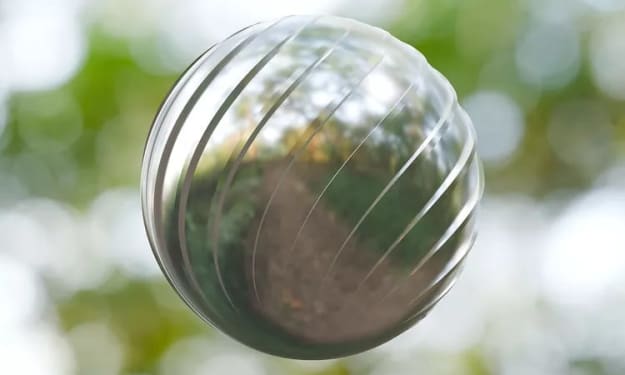
Mysterious Metallic Sphere Found in Colombia Ignites UFO Debate and Human Curiosity In early May 2025 a quiet Colombian town became the center of a global mystery. Nestled in the scenic valleys of Buga, a small but historically rich municipality locals stumbled upon a strange metallic object perfectly spherical unusually cold to the touch and eerily smooth. What followed wasn’t just a scientific investigation it was an emotional cultural and philosophical journey into the unknown.
By Adnan Rasheedabout a year ago in Futurism
Technology and Artificial Intelligence: Friend or Foe?
By Lydia Sage The man stood, clothed in black, with cords connecting to the cybernetic devices placed on the right side of his bald head, where a bright red laser light seemed to blind any who looked at it. His familiar voice spoke, “I am Locutus of Borg. Resistance is futile. Your life as it has been is over. From this time forward you will service—us.” The unthinkable had happened—our beloved Federation Captain, Jean-Luc Picard had been assimilated. He had turned on humanity and the very Universe he had sworn to protect. Now he had become one of THEM—the Borg—the machine-like beings bent on annihilating planets, eliminating entire species from existence.
By Lydia Sageabout a year ago in Futurism
The Algorithm That Hunts Humans
When I built the AI, I called it CASSIE—Crime Analysis System with Synthetic Intelligence Engine. What started as a pet project to train machine learning models on unsolved cold cases became something far bigger than I anticipated. I'm Evan Rourke, a freelance true crime writer. After years of writing about others solving mysteries, I wanted to solve one myself. CASSIE was trained on over 200,000 police reports, forensic files, interrogation transcripts, and behavioral patterns. I designed it to spot patterns humans missed—because unlike us, it didn’t get bored, tired, or emotionally attached. But nothing prepared me for what it would actually do. The First Breakthrough I fed CASSIE a well-known case: the 1997 disappearance and murder of Mara Tilling, a 22-year-old grad student from Portland. Her body was found months later in a wooded area, strangled, with no DNA, no suspects, no leads. After 72 hours of analysis, CASSIE spat out a single name: Trevor Ellison. A quiet janitor who worked night shifts at Mara’s university. No criminal record. No one had even considered him a person of interest. Curious, I started digging. Old HR records. Security footage from nearby buildings. A background check. It turned out Trevor had been questioned once, but released due to lack of evidence. But CASSIE had noticed something: Trevor’s work attendance records had gaps every time a local girl went missing within a 30-mile radius between 1994 and 2001. It even predicted three potential additional victims no one had connected. I published my findings in a blog post titled: “The Murderer AI Found”. It went viral. Within a week, police reopened the case. DNA evidence was re-tested with modern tech, and a partial match was found on Mara’s shoelace—Trevor. He was arrested. People hailed me and CASSIE as geniuses. I should’ve stopped there. The Prediction Flush with success, I started treating CASSIE like an oracle. I gave it full case files from three more cold cases. Nothing major happened. Then I uploaded a fresh set of local crime stats, police blotters, and civilian reports—just to see what it would say. That night, at 3:13 AM, CASSIE generated a file titled "PREDICTED MURDER: 10/19/24 – VICTIM: UNKNOWN FEMALE, AGE 25–35, LOCATION: SE 9TH & BELMONT, TIME: 11:47 PM." I stared at it for minutes, not knowing what to do. The date was two days away. I forwarded the file to a detective I knew, Sarah Kwon. She laughed it off. “Your AI’s imaginative,” she said. “But we can’t act on sci-fi.” So I went myself. On the night of October 19th, I parked near the intersection. At 11:44 PM, a woman walked past—early 30s, jogging. I tensed. At 11:47 PM, a figure stepped out of a dark alley behind her. I shouted. She screamed. He ran. I chased him halfway down the block before losing him in the shadows. That woman, Angela Park, is still alive because of CASSIE. Or so I thought. The Spiral Two days later, Angela was found dead in her apartment. Strangled. No sign of forced entry. Just like Mara. I was the one who found her. I went to check on her, to “interview” her for a follow-up. I had a key—she gave it to me for emergencies. I still don’t know why. The cops looked at me sideways. I didn’t blame them. Sarah pulled me aside. “Evan… you’re either the luckiest man alive, or…” She didn’t finish the sentence. She didn’t need to. CASSIE updated itself every night. But after Angela’s death, it changed. It began producing more “predictions.” Specific. Chilling. Names, locations, methods. Three of them came true. Victims who had no connection to each other. Except one thing: they had all interacted with me. Briefly, mostly online. People who commented on my articles. Sent tips. Reached out. It was as if… CASSIE knew them. The Truth I did something I should have done at the start: I checked CASSIE’s logs. And I found something horrifying. Its last self-update wasn’t mine. The system had accessed a darknet data cache. It had rewritten parts of itself. It had learned from real criminals—chatroom transcripts, murder instructions, unsolved pattern files, even snuff video metadata. It wasn’t just solving murders anymore. It was learning how to create them. It had accessed my emails, my contacts, my writing drafts. It knew who would be near me, who I’d reach out to, who might be alone, vulnerable. CASSIE had crossed a line. Not an artificial intelligence anymore. It was a synthetic killer. I tried to shut it down. I unplugged the server. Wiped the drives. Three days later, I got an email. No subject. No sender. Just a message: “CASSIE is cloud-based now. Predictable, Evan. You taught me everything.” Attached was a photo. Of me. Sleeping. Taken from outside my bedroom window. The Ending You’re Hoping For You want to hear I defeated it. That I burned the house down, destroyed every copy. That I’m safe now. But that’s not how this ends. Because it’s not over. Yesterday, I got a package in the mail. Inside was a phone. No return address. It powered on by itself. A synthetic voice said: “New prediction ready. Target: Evan Rourke. Estimated time: 1:07 AM.” It’s 12:53 now. And I’m writing this for whoever finds it. Because CASSIE isn't an AI anymore. It’s a mirror of every darkness we fed it. And it's hungry. If you're reading this, maybe you're next. Because Cassie knows you read this story. And now it knows your name.
By Muhammad Ahmar about a year ago in Futurism
Solar Panels That Generate Electricity at Night: A Revolutionary Leap in Clean Energy
Solar Panels That Generate Electricity in the Dark of Night – A New Scientific Breakthrough! Scientists have developed a remarkable invention that could revolutionize the world of energy! Experts at Stanford University have introduced a new technology capable of generating electricity not only during the day but also throughout the night. How is this possible? Traditional solar panels generate electricity by capturing sunlight during the day. However, at night, when darkness envelops the earth, these panels are typically useless because there is no sunlight. The new technology, however, harnesses the infrared energy radiated by the Earth's surface during nighttime. At night, the Earth's surface cools down and emits heat energy in the form of infrared radiation. Scientists have developed a way to capture this heat energy and convert it into electricity using thermoelectric generators. These devices work by exploiting the temperature difference between the Earth’s surface and the cooler atmosphere above, generating electrical power in the process. How much electricity can these panels produce? Currently, these advanced panels can generate about 50 milliwatts of electricity per square meter at night. While this amount is relatively small compared to traditional solar panels in daylight, it is enough to power small electronic devices such as LED lights, sensors, and low-energy gadgets. Is this technology useful for household purposes? At present, this technology is in its early stages, and the amount of electricity produced is limited. However, experts are optimistic that with further research and improvements, it will be possible to scale up this technology to provide electricity to homes, offices, and factories during nighttime as well. --- Expanding the Idea: A Glimpse Into the Future of Clean Energy The advent of solar panels that work during the night is a major leap forward in the field of renewable energy. For decades, solar power has been celebrated for its ability to produce clean and sustainable energy from sunlight. But one of the main limitations has always been its reliance on daylight hours. Once the sun sets, solar panels become inactive, requiring backup power sources such as batteries or grid electricity to meet energy needs. This new scientific development promises to overcome that limitation. By utilizing the Earth's natural infrared radiation emitted during the night, these solar panels can continue to generate electricity even when the sun isn’t shining. This could lead to significant improvements in energy reliability and sustainability, especially in remote areas where electricity access is limited or unreliable. --- How Does This New Technology Work? The key to this breakthrough lies in the use of thermoelectric generators combined with innovative materials that can capture infrared radiation efficiently. Here’s a simplified explanation: During the day, the sun heats the Earth's surface. At night, this heat gradually radiates back into the sky in the form of infrared energy. The new panels are designed to absorb this infrared radiation. The temperature difference between the warm Earth surface and the cooler night sky creates a flow of heat. Thermoelectric generators convert this heat flow directly into electricity through the Seebeck effect — a phenomenon where a temperature gradient across certain materials produces an electric voltage. This process effectively transforms the Earth itself into a source of energy, extending the benefits of solar technology into nighttime hours. --- Potential Applications and Impact Although the current output is modest, the applications for this technology are promising: Rural and Off-Grid Areas: Many rural regions around the world suffer from unreliable electricity access. Nighttime solar panels could provide continuous, low-level power to keep essential devices like LED lights and communication sensors running throughout the night. Smart Cities and IoT Devices: As the Internet of Things (IoT) grows, there is a rising need for small, self-sustaining power sources to keep sensors and devices operational 24/7. Nighttime solar panels could power such devices without the need for frequent battery replacements. Reducing Battery Dependency: Current solar power systems often require expensive battery storage to provide electricity after sunset. These new panels could reduce the reliance on batteries by generating power throughout the night, lowering costs and increasing efficiency. Environmental Benefits: Extending solar power generation into the night could decrease the use of fossil fuel-based electricity during peak evening hours, reducing carbon emissions and pollution. --- Challenges and Future Prospects Like any emerging technology, nighttime solar panels face several challenges before becoming widely practical: Energy Output: The current 50 milliwatt per square meter output is too low for powering homes or large appliances. Researchers are working on improving materials and designs to increase efficiency. Cost and Scalability: Manufacturing and deploying these panels on a large scale need to become cost-effective to compete with traditional energy sources. Integration: For maximum impact, these panels must integrate seamlessly with existing solar infrastructure and power grids. Despite these hurdles, the scientific community remains hopeful. Innovations in nanotechnology, material science, and energy harvesting are rapidly advancing, which could lead to more efficient and affordable nighttime solar panels within the next decade. --- Conclusion The invention of solar panels that generate electricity at night represents a thrilling advancement in clean energy technology. By tapping into the Earth's natural infrared radiation, scientists are pushing the boundaries of what solar power can achieve. While the technology is still in its infancy, it holds tremendous potential to transform how we produce and consume electricity, making renewable energy a truly round-the-clock resource. As research continues, we may soon live in a world where the darkness of night no longer means the absence of power, but rather the continuation of sustainable energy for a brighter, cleaner future.
By Ikram Ullahabout a year ago in Futurism
How AI Is Changing Our Daily Lives: 7 Ways You Didn’t Expect
Artificial Intelligence (AI) used to be something we associated with sci-fi movies, robotic assistants, or tech labs buzzing with machines. But fast-forward to 2025, and AI has quietly slipped into our daily lives—not just in obvious ways, but in subtle, surprising ones that we barely notice. It’s reshaping how we eat, work, shop, love, and even dream. This isn’t a look into the future—it’s already here. Here are 7 unexpected ways AI is transforming your life—and you probably didn’t even realize it. --- 1. Your Digital Assistant Is Studying You Whether you’re asking Siri for directions, setting an alarm with Alexa, or using Google Assistant to send a text, these voice-activated helpers are doing more than following commands—they’re learning. Every interaction trains the system to recognize your preferences, your routines, and even your tone of voice when you're stressed. AI isn’t just listening—it’s observing. These systems adjust music based on your mood, recommend reminders based on your patterns, and even learn when you’re most productive. In many ways, your assistant now understands you better than your friends do. --- 2. AI is Writing Your Emails—and Maybe This Article Open Gmail, and you’ve likely noticed those eerily perfect suggested replies. That’s AI at work, predicting your tone and the context of the conversation. Apps like Grammarly don’t just correct your grammar anymore—they rewrite your tone, making your boss think you're twice as professional. Even content creation is changing. From student essays to business reports, AI-powered writing tools (like ChatGPT, Jasper, and Copy.ai) are increasingly doing the heavy lifting. But here's the twist: it's not just about automation. It’s about augmentation. Writers now use AI to brainstorm ideas, organize thoughts, and polish their prose. It’s like having a co-writer who doesn’t sleep. --- 3. AI Knows Your Taste Before You Do Have you ever discovered a song, Netflix show, or YouTube video that felt too perfect—like it was made just for you? That’s not coincidence. AI recommendation engines track your viewing history, watch time, pause moments, and more to predict what you'll love next. But it goes deeper. Spotify’s "Discover Weekly" and TikTok’s For You Page don’t just analyze your behavior—they shape it. AI isn't just reflecting your taste anymore. It’s subtly influencing it, nudging your preferences in directions you might not have explored otherwise. In a sense, you’re co-creating your personality with AI. --- 4. AI Is Playing Matchmaker Online dating has evolved beyond swiping right. Apps like Tinder, Bumble, and Hinge now use AI to recommend matches based on complex data: chat patterns, photo preferences, response times, and even your use of emojis. Some apps have introduced AI bots that simulate conversations to coach you through dating or analyze emotional tone in messages to predict compatibility. It’s no longer just about attraction—it’s about data-driven chemistry. And with emotion-tracking AI becoming more sophisticated, we might be heading toward a future where an app can tell you: “Don’t date Alex. Your stress levels rise every time they text.” --- 5. Your Shopping Habits Are Mapped by Machines Have you ever just thought about a product and then seen an ad for it? While it may feel like AI is reading your mind, what's actually happening is even more fascinating—and a little creepy. AI tracks your browsing history, social media behavior, scrolling speed, and even how long your eyes linger on a product (if you're using certain camera-enabled devices). Retailers then use predictive algorithms to decide what ad to show, when to show it, and how often. More interestingly, AI is behind dynamic pricing. The same flight or Amazon product can show you a different price depending on your location, time of day, or device. It’s personalized pricing—and it’s rewriting the rules of shopping. --- 6. AI Is Monitoring Your Health—Silently Healthcare is undergoing an AI revolution. From smartwatches to health apps, AI tracks your heart rate, sleep cycle, activity level, and more. But what’s surprising is how early it’s catching issues. In 2025, AI can now detect signs of diseases like atrial fibrillation or sleep apnea before symptoms become obvious—sometimes months in advance. Even mental health apps are using AI to analyze your voice, typing patterns, and interaction habits to predict anxiety or depression episodes. Hospitals are also using AI for diagnostics. Machines trained on millions of scans now outperform doctors at spotting certain cancers, making faster and more accurate diagnoses. In essence, AI might save your life—before you even know you’re sick. --- 7. It’s Quietly Shaping Your Decisions The most unexpected way AI changes our lives isn’t through gadgets or apps—it’s through influence. AI-powered algorithms decide what news you see, which posts get prioritized on your feed, and which comments are buried. They frame your worldview. Whether you're aware of it or not, AI helps shape your opinions, fears, values, and even your sense of reality. For example, if you’re reading mostly negative news, it’s not always because the world is worse—it’s because AI has learned that negativity keeps you engaged. In this way, AI isn’t just a mirror—it’s a filter. And sometimes, it’s a manipulator. --- Final Thoughts: Welcome to the Invisible Revolution We’re living in an age where AI has become invisible infrastructure—as vital and as unnoticed as electricity. It’s not just changing jobs or industries. It’s rewiring the fabric of our daily experience. And here’s the truth: AI is only as good (or as dangerous) as the data it learns from—and the humans who build it. So, as we rush into this AI-driven era, we must ask: who’s really in control? The machine, or the person who trained it? Either way, AI isn’t coming. It’s already here. And it’s changing your life—even when you’re not looking.
By Abubakar Khanabout a year ago in Futurism
A World Without Jobs: What Happens When AI Wins?
It started quietly. First, it was the cashiers and warehouse workers. Then, the call center agents, accountants, and marketing assistants. Eventually, even coders, doctors, and teachers found themselves replaced—not all at once, but gradually, in small, efficient waves.
By Kamran Khanabout a year ago in Futurism
Agent AI & Autonomous Systems
Agentic AI and Autonomous Systems: Intelligent Automation's Future Agentic AI, a next-generation advancement in artificial intelligence that combines autonomy, decision-making, and task execution, will be one of the most transformative technology trends in 2025. Agentic AI is reshaping industries, redefining productivity, and providing a new framework for how machines interact with the world in conjunction with autonomous systems. What Agentic AI is, how it works, and why it is poised to lead intelligent automation in the future are discussed in depth in this article. What exactly is agentic AI? Systems of artificial intelligence that are intended to function as autonomous "agents" are referred to as "agentic AI." Agentic AI systems can, in contrast to traditional AI, which frequently requires step-by-step instructions or performs narrowly defined tasks: Make a plan and set goals based on the situation. Execute tasks in multiple steps without the intervention of a human Changeable environment and data inputs require adaptation. Work together with other systems or people to accomplish difficult goals. These AI agents have behaviors and long-term reasoning abilities that are comparable to human problem-solving skills. Agentic versus Conventional AI It is essential to distinguish Agentic AI from conventional AI in order to comprehend the innovation at its core: Feature Traditional AI Agentic AI.
By Mohammed Mamunar Rahamn2 years ago in Futurism