tech
Curious tech and technology from the realm of science and science fiction.
Will Israeli Airstrikes Lead to Regime Collapse in Iran? Experts Say It's Not That Simple
As tensions soar between Israel and Iran, a critical question is being asked around the globe: Are Israel’s recent airstrikes aimed solely at crippling Iran’s nuclear program—or do they mark a larger ambition to topple the Islamic Republic altogether? With Iranian cities under siege, hundreds dead, and global powers watching closely, many experts believe Israel may be testing the boundaries of modern warfare—without a clear path forward. A New Phase of the Israel-Iran Conflict In the past week, the conflict between Israel and Iran entered unprecedented territory. What began as a targeted strike on Iranian missile facilities quickly escalated into a full-scale bombing campaign. According to official Iranian figures, at least 224 people have been killed, with many of the casualties being civilians. Over a thousand more have been injured. These airstrikes have hit not only military targets but also infrastructure central to Iranian civil life, such as a live television studio in central Tehran. Israel’s government has defended its actions as necessary retaliation for Iran’s recent drone and missile assault that injured dozens of Israelis. Prime Minister Benjamin Netanyahu framed the airstrikes as a move to neutralize Iran’s long-range missile threat. However, his latest comments suggest a broader objective: undermining the Iranian regime itself. Regime Collapse Really the Goal? Netanyahu's words—hinting at “eliminating” the Iranian threat, not just containing it—have led analysts to question whether Israel's true aim is regime change. Some see parallels to the 2003 Iraq War, when the United States launched an invasion under the pretext of weapons of mass destruction, only to become entangled in a years-long quagmire. Experts in geopolitics are largely in agreement: air power alone is unlikely to bring down the Islamic Republic. Iran’s political system, while authoritarian, is not centralized in a single figure. Instead, it functions through a layered structure of clerics, Revolutionary Guards, military branches, and intelligence agencies. “This isn’t like cutting off the head of a snake,” said one regional analyst. “It’s more like trying to destroy a spider web. Even if you damage one part, the rest can hold together.” Why the Iranian Regime Is So Resilient Despite widespread dissatisfaction among many Iranians—due to economic hardship, political repression, and generational disconnect—the regime has managed to hold onto power since 1979. Its strength lies in its deeply entrenched institutions and the ability to use nationalism during times of foreign aggression. Paradoxically, Israeli airstrikes might actually strengthen domestic support for the government. In times of national crisis, populations often rally around their leaders. For many Iranians, foreign bombs falling on their cities could overshadow any internal grievances they have with their leaders. Further complicating matters is the Islamic Republic’s long-standing ability to survive international isolation, sanctions, and proxy conflicts. From Lebanon to Syria to Yemen, Iran has built a network of influence that gives it leverage well beyond its borders. Beyond Missiles: Targeting Iran’s Heart What distinguishes the current Israeli offensive is its scope. Unlike previous campaigns that targeted nuclear enrichment facilities or missile depots, this operation appears to reach deeper into Iran’s political and media infrastructure. Israel’s decision to bomb a live broadcast studio sent a clear signal that the airstrikes are not only about disabling weapons but also about disrupting state messaging and morale. Reports indicate that other civilian targets, including communication towers and administrative centers, have also been hit. This raises serious concerns under international humanitarian law. Civilian deaths, especially in large numbers, could expose Israel to accusations of war crimes and increase pressure from the global community, including the United Nations and the International Criminal Court. 🚨 A Humanitarian Crisis Brewing Perhaps the most immediate impact of Israel’s expanded strikes is the unfolding humanitarian crisis. Authorities in Tehran ordered the evacuation of more than 330,000 people from areas near sensitive military zones. Panic quickly spread across the city, with families fleeing in vehicles or on foot, carrying only essentials. Hospitals are reportedly overwhelmed, and local infrastructure—already stressed by years of sanctions—is teetering. If the bombings continue, Iran could face a wave of internal displacement and growing civilian casualties, which could trigger a wider regional and global response. ⚖️ The Legal and Moral Dilemma Under international law, nations have a right to self-defense, but they are also bound by principles that prohibit disproportionate attacks, especially on civilians. Human rights organizations have already begun documenting the damage and calling for accountability. Some legal scholars argue that Israel’s current actions cross the line into what could be considered “acts of aggression,” a term reserved for the gravest breaches of international norms. These legal battles could extend long after the bombs stop falling. 🧩 The Missing Piece: What Happens Next? Even if Israel succeeds in disabling much of Iran’s military infrastructure, the question remains—what next? There is no clear successor to the regime, no organized opposition with the capability to assume power, and no international coalition prepared to stabilize the country. Experts warn that removing a regime without a plan for what comes after often leads to chaos. We’ve seen it in Iraq. We’ve seen it in Libya. And Iran, with its vast territory, population of 88 million, and strong national identity, would be even harder to manage. 📌 Final Thoughts Israel’s airstrikes mark a dangerous and historic escalation in Middle Eastern geopolitics. While officials insist they’re acting in self-defense, the scale and scope of the strikes point to a broader strategy—one that may aim to destabilize, if not topple, Iran’s ruling establishment. But toppling a regime from the air has never been easy, and history shows that the unintended consequences often outweigh the intended goals. Whether or not this will prove true in Iran remains to be seen. One thing is certain: the region—and the world—now stands at a precarious crossroads. IsraelIranConflict
By NextGen Mobile Techabout a year ago in Futurism
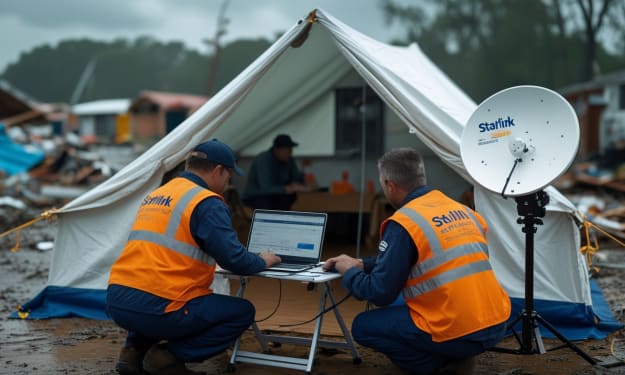
Inside the Starlink Revolution: How Musk Is Rewiring the Planet
Few people in the modern world link as closely with chaos as Elon Musk. From electric cars and private space travel to brain-computer linkages, his interests show his will to overcome restrictions. One of his most important—yet subtly transformative—projects is above us: little satellites sending internet signals from space.
By Shahjahan Kabir Khanabout a year ago in Futurism
Empowering Your Solar Storage: Demystifying Inverter for Smarter Energy Use
Selecting the right inverter is one of the most critical decisions when designing a solar-plus-storage system. Spec sheets are often packed with technical data, but not all specifications are equally important for residential or small commercial applications. This article highlights the most relevant and impactful inverter parameters—filtering out unnecessary complexity—while offering clear explanations of what each feature means in practice. Rather than a simple checklist, the content is presented as a cohesive guide to help readers understand how each component fits into the broader energy system. Real-world examples and references to trusted LiFePO4 battery solutions, demonstrate how the right energy storage pairing can significantly boost system reliability, efficiency, and longevity. The tone is informative and user-friendly, making technical topics more accessible for a wide audience interested in sustainable energy solutions.
By Richye Powerabout a year ago in Futurism
Hire Experts for Gym Fitness App Development: What to Look for in 2025
Hire Experts for Gym Fitness App Development: What to Look for in 2025 Imagine you want to get really good at something, like playing a new sport. You wouldn't just pick up a ball and hope for the best, right? You'd want a coach, someone who knows all the tricks and can show you how to get better. Building a super cool gym fitness app is kind of like that. In 2025, everyone has a phone, and almost everyone wants to be healthier. So, lots of apps are out there. But what makes an app truly awesome, not just another app you download and forget? If you have a great idea for a fitness app, you’re probably wondering: How do I make my app stand out? What kind of smart people do I need to hire to build it just right? This article will help you figure out what to look for when choosing the best fitness app development company to create your amazing fitness app.
By Hazel Johnsonabout a year ago in Futurism
Why Apple Should Be Very Afraid of Elon Musk Right Now
Apple has long dominated the technology scene thanks to its beautiful products, smooth ecosystem, and loyal fan base. But recently, another person has been causing waves in the innovation scene as a game changer rather than as a rival. This person is none other than Elon Musk.
By Shahjahan Kabir Khanabout a year ago in Futurism
Benefits of Using Kafka for Real-Time Streaming Events
Why Kafka Became the Backbone of Real-Time Data In today’s event-driven world, data no longer arrives in scheduled batches. It moves continuously — from app interactions, payment systems, vehicle telemetry, sensors, APIs, user sessions, and infrastructure events. Responding to this data in real-time is now a requirement across various industries, including mobility, finance, healthcare, manufacturing, and media.
By Sachin Kamathabout a year ago in Futurism
The Pi Phone Leak: Is Tesla About to Kill the iPhone Too?
Every time Elon Musk acts, international attention is drawn. Whether it be rocket launches, flamethrower sales, or brain chip implants, this billionaire is renowned for changing companies many thought were resistant to change. According to the most recent reports, Musk's new focus is your phone—particularly Apple's iPhone.
By Shahjahan Kabir Khanabout a year ago in Futurism
TeslaP vs Apple: The Battle for the Future of Tech Has Begun
Rarely do two pioneers whose aims go beyond their starting fields confront each other directly in the cutthroat world of innovation. On one side is TeslaP, Elon Musk's clandestine new company concentrating on selfdriving technology and AI-driven electric vehicles. Facing them is Apple, the big Silicon Valley firm that revolutionized personal technology and is now making ripples in the vehicle sector. Both have influence, both are smart—and both want to rule the future.
By Shahjahan Kabir Khanabout a year ago in Futurism
Inside the World’s First Cyber Brothel: What Happens When Sex Is One-Sided by Design?
The Cyber Brothel Isn’t the Problem — Male Violence Is Germany has made headlines recently with the opening of one of the world’s first cyber brothels — a place where customers can pay to have sex with ultra-realistic robots, some equipped with pre-recorded human voices. It sounds like the kind of headline you’d expect in a dystopian novel or a Black Mirror episode, but it’s real, and it’s already drawing both fascination and deep concern.
By No One’s Daughterabout a year ago in Futurism
Is Google's Flutter the End of Native App Development?. AI-Generated.
No. Flutter app development is not the end of native app development. Recent years have shown us that there has been a significant rise in mobile applications, both in terms of usage and market growth (demand and supply). The number of smartphone users has surpassed 6.3 billion globally, with over 90% of mobile time spent on mobile applications.
By Sarah Kamalabout a year ago in Futurism
"Voices in the Code: The Story of ChatGPT". AI-Generated.
In an era shaped by rapid technological progress, artificial intelligence (AI) has emerged as a defining force. Among its most fascinating developments is ChatGPT—an AI language model that has transformed the way humans interact with machines. Created by OpenAI, ChatGPT has become a symbol of both innovation and debate, reflecting the broader hopes and concerns surrounding the future of intelligent machines.
By "TaleAlchemy"about a year ago in Futurism