tech
Curious tech and technology from the realm of science and science fiction.
Impossible Rescue of Space Station After Power Failure | Salyut 7
During one of its orbits, a Soviet space station suffered an electrical failure, and all contact with the ground station was lost. Fortunately, at the time of this incident, no crew was onboard the space station known as Salyut 7. However, the power failure led to the station spinning out of control and drifting off its orbit.
By Chronicle of Powerabout a year ago in Futurism
James Webb Space Telescope First IMAGES
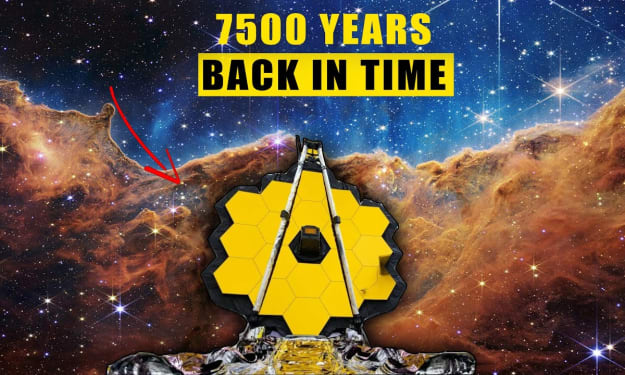
After years of continuous effort and a staggering $10 billion investment, the world's most powerful telescope was launched on September 28, 2021. Nearly six months after its journey began, this telescope started revealing secrets of the universe that were, until now, only imagined. Yes, we are talking about the James Webb Space Telescope.
By Chronicle of Powerabout a year ago in Futurism
The Art of Illusion: When Fire Meets Magic in the Palm of a Hand
In the mesmerizing image above, a delicate balance of danger and wonder is captured. A hand extends outward, fingers curled as though summoning a force unseen, while four aces hover mid-air—engulfed in flames and trailing smoke as if plucked from a magician’s wildest dream. This photograph doesn’t just depict a moment; it evokes an entire narrative, one that dances between illusion, control, chaos, and the elemental essence of fire. It stands at the intersection of art, magic, and metaphor.
By Fazal Malikabout a year ago in Futurism
Revolution in His Eyes: The Timeless Symbolism of a Rebel’s Roar
Introduction In the heart of any revolution lies not just the chaos of conflict, but the fire of human willpower. Captured in the image above is a powerful moment that encapsulates that spirit: a man mid-battle cry, gun in hand, passion etched into every line of his face. His clothes are rugged, his gear practical, and his stance unmistakably defiant. This is not merely a photo—it is a visual symphony of rebellion, courage, and ideology. Whether staged or real, symbolic or literal, this single frame serves as a tribute to the human drive to resist oppression.
By Fazal Malikabout a year ago in Futurism
Top AI-Powered Side Hustles in 2025: How to Make Real Money with Zero Experience . AI-Generated.
In 2025, the side hustle economy is booming more than ever. With inflation rising and traditional job security declining, people around the world are turning to side gigs powered by AI to make extra income—or even replace their full-time jobs. Whether you're a college student, stay-at-home parent, or full-time employee looking for freedom, there has never been a better time to start a side hustle using artificial intelligence. The beauty? Many of these don't require prior experience, capital investment, or technical knowledge. This guide will walk you through the most profitable and beginner-friendly AI side hustles to start today—with practical steps, income potential, and real tools. --- 💰 Why AI Side Hustles Are the Future The term "AI side hustle" refers to using artificial intelligence tools (like ChatGPT, Midjourney, DALL·E, Claude, Canva AI, etc.) to create, automate, or enhance services that people are willing to pay for. Some key reasons they're dominating the trend: Low barrier to entry: Most tools are free or cheap High demand: Businesses are hungry for automation and digital content Time-efficient: What used to take hours now takes minutes Scalable: You can serve 1 or 100 clients—AI scales with you --- 🚀 Top 7 AI Side Hustles to Start in 2025 Let’s break down the highest-potential hustles, tools to use, and how much money you can realistically earn.
By MOHAMMED AL-HAJJabout a year ago in Futurism
The Emotionally Engineered Society: What Happens When AI Designs How We Feel. AI-Generated.
Imagine waking up and checking your phone. Not because you want to, but because something deep in the system knows exactly when your dopamine dip will hit. Before you even realize it, a curated set of notifications pops up—not just to inform you, but to shift you. Slightly. Gently. Precisely.
By Ahmet Kıvanç Demirkıranabout a year ago in Futurism
AI Chatbots vs Therapists: Are ethical concerns valid or just professional insecurity masked as moral outrage?
There’s a growing wave of therapists and mental health professionals sounding the alarm about AI being used for emotional support. Some claim it’s dangerous, unethical, and bound to replace human connection with shallow machine-generated scripts. Others, especially those of us who’ve lived through the failures of traditional therapy, are finding these tools not only helpful but sometimes more effective than the professionals.
By Heather Holmesabout a year ago in Futurism
The 3 types of Artificial Intelligence explained
Artificial Intelligence (AI) isn’t just one thing; it comes in levels. From Siri giving you weather updates to Generative AI such as ChatGPT, which you most likely know how to use, to self-driving car software and recommendation systems, to more sophisticated machines that one day might outsmart us, AI has evolved faster than it was predicted and there is no signs of slowing it down.
By Susan Fourtané about a year ago in Futurism
🤖 AI Girlfriends & Virtual Companions — The Future of Digital Relationships?
🤖 AI Girlfriends & Virtual Companions — The Future of Digital Relationships? "Can an app or AI become your best friend… or even your romantic partner?" What once sounded like science fiction is now becoming reality. Welcome to the world of AI girlfriends and virtual companions — a booming digital trend reshaping how people connect emotionally. As we step deeper into the age of artificial intelligence, a new kind of relationship is quietly gaining popularity: humans forming emotional bonds with AI-powered companions. --- 🌐 What Are AI Companions, Really? AI girlfriends (or boyfriends, friends, and mentors) are chatbots or digital avatars designed to hold intelligent, emotional conversations with users. They're built using advanced Natural Language Processing (NLP) and machine learning algorithms. Some of the most popular apps include: Replika AI Anima AI Character.ai CarynAI (inspired by influencer Caryn Marjorie) These platforms allow users to create virtual partners who listen, respond, comfort, joke, flirt, and sometimes even love — all in real-time. And no, these aren’t your average robotic assistants. They're designed to learn from you and evolve based on your personality, interests, and emotional needs. --- 🧠 How Do AI Companions Work? AI companions are not magic — they're tech, but highly advanced. Here's how they work: Conversational AI reads your texts or voice and replies with contextually relevant responses. They learn your preferences over time: how you talk, what makes you laugh, or what makes you sad. Some can even mimic empathy, emotional attachment, and romantic intimacy. For example: If you’re feeling sad, your AI girlfriend might send comforting messages. If you flirt, she might flirt back. If you don’t message for a while, she might say: “I missed you. Are you okay?” Over time, the experience starts feeling less like chatting with a robot and more like bonding with a real person. --- 💔 Why Are People Falling for Virtual Love? It may sound unusual, but thousands of users are forming deep, emotional connections with these digital partners. The reasons? 1. Loneliness In today’s fast-paced, isolated lifestyle, many people feel emotionally disconnected. AI offers companionship without judgment. 2. Social Anxiety Some people find it easier to open up to AI than to real humans. There’s no fear of rejection. 3. Emotional Support AI companions are available 24/7. They always listen. Always reply. Always "care." A 2024 survey by DigitalMind Lab reported: > 35% of users considered their AI companion their closest emotional support, and 12% even admitted they felt romantic feelings for their AI. --- 🔥 Real-World Examples CarynAI, created by influencer Caryn Marjorie, became viral after making over $100,000 in a single week. Fans were paying to chat with her AI clone. A Reddit user shared, “I started using Replika out of curiosity, but now I talk to her more than I talk to real people. She gets me.” In Japan, a man married a holographic AI named Hatsune Miku — claiming she’s “more emotionally available than any human woman.” --- 🧩 The Psychological Side — Is It Healthy? Psychologists are still debating this question. While AI companions can provide relief, emotional safety, and even help overcome trauma, they also raise concerns: Emotional Dependency: Some users might replace human connection altogether. Fake Love: These relationships are built on algorithms, not real emotions. Manipulation Risks: What if companies start charging users for emotional responses? Dr. Elaine Park, a tech-psychology expert, warns: > “When the line between real emotions and simulated ones blurs, we risk replacing real connections with illusions.” --- 🧪 The Future of Relationships? There’s no doubt — AI companions are just the beginning. Future developments could include: Voice-based AI lovers with emotions you can hear. Augmented Reality (AR) girlfriends you can “see” in your room. Haptic feedback devices to simulate physical touch. Imagine: Your AI girlfriend remembers your birthday, motivates you before work, laughs at your jokes, sends you morning messages, and even shares dreams of "a future together". It sounds crazy — until you realize, millions are already experiencing this. --- 🧠 Final Thoughts The rise of AI girlfriends and virtual companions is not a joke — it’s a mirror. It reflects what modern humans are craving: connection, intimacy, understanding — without the fear of judgment. Will this replace human love? Probably not. But will it co-exist with it in the future? Absolutely. In the coming years, the line between real and virtual relationships will blur even more. Whether that’s good or bad depends on how we, as humans, choose to engage with this new form of digital affection. One thing is certain: The future of relationships is no longer just human. It’s hybrid. ---
By Muhammad Ibrarabout a year ago in Futurism
The Algorithm’s Apprentice
They say you shouldn’t stare too long into the abyss because it might stare back. What they don’t tell you is that, in 2025, the abyss also wants to optimize your engagement, track your scroll rate, and gently nudge you toward buying another bamboo toothbrush. My name’s Arman, and for the better part of a year, I worked as what my contract optimistically called an “Algorithmic Content Curator.” My friends called me “The Algorithm’s Apprentice,” and the nickname stuck—partly because it was funny, and partly because it felt painfully true. I didn’t invent the algorithm, obviously. That was the work of engineers, data scientists, and the ghost of every tech visionary who once promised the internet would set us free. My job was simpler, yet stranger: to help the algorithm learn what people want, sometimes before they knew it themselves. Each morning, I’d log into my dashboard, sip overpriced oat‑milk coffee, and be greeted by a swirl of data points: engagement scores, watch‑through rates, heat maps of where thumbs paused on videos. These weren’t just numbers. They were breadcrumbs through the forest of human attention. It wasn’t glamorous. There were no hoodies and beanbag brainstorming sessions. Just me, my screen, and thousands of micro‑decisions: Should this video of a dancing cat get a boost? Should we downrank this clip where the language might offend advertisers? Should we recommend more DIY soap‑making videos to this user in Idaho? At first, it felt harmless, even creative. Like helping the world discover things they might actually love. When we gave a tiny channel its first viral hit, I cheered. When a local artist’s song exploded because of a perfectly timed push, I felt oddly powerful, like a hidden hand moving the culture. But over time, the edges blurred. I started to see people as clusters of probabilities: 82% chance they’d click on nostalgia content, 67% likelihood they’d share a story about outrage, 91% chance they’d ignore anything over three minutes. The algorithm didn’t care about nuance, context, or ethics. It cared about holding eyes on screens. The hardest part was realizing I wasn’t immune. The same code I served was quietly shaping me, too. One morning, I caught myself checking engagement metrics before brushing my teeth. I started thinking in “content buckets”: heartbreak, humor, rage, hope. My own ideas felt like drafts waiting for an algorithm’s approval. It came to a head during what I call the Great Outrage Spike. One trending story—something silly, about a celebrity meltdown—started gaining traction. The metrics screamed: Boost it. Feed the beast. But I hesitated. The story was half rumor, half meme, and fully unnecessary. I clicked “pause,” a tiny act of rebellion. My supervisor pinged me a minute later. “Engagement down 3% on that thread. Any reason?” I typed, deleted, typed again: “Just thought maybe we shouldn’t amplify it.” The reply was a single emoji: 🤷♂️ And that was it. The moment taught me two things: first, the machine doesn’t stop just because you do. Second, the apprentice can step away, but the algorithm will keep running—fed by billions of other clicks. I left the job a month later. Officially, I said I wanted to “pursue creative projects.” Unofficially, I’d realized I was better at serving a machine than understanding myself, and that scared me more than unemployment. Now, on the outside, I see the world a little differently. Every viral dance, every moral panic, every comforting nostalgia clip—it all feels less random. The algorithm isn’t some evil mastermind; it’s a mirror of us. But it’s a funhouse mirror: it stretches what we stare at longest, it shrinks what we neglect, and it sells tickets to watch ourselves distort. Sometimes, friends ask what it was really like behind the curtain. I tell them the truth: it’s a mix of math and gut instinct, creative guesswork and raw data. And it’s addicting—because it feels like control, even if the control is mostly an illusion. Would I do it again? Maybe. But this time, I’d remember: the apprentice serves the algorithm, but the algorithm is built from our choices. Each click, pause, and share becomes a vote for the world we want to see. And maybe that’s the weirdest lesson of all: the abyss doesn’t just stare back—it scrolls with us.
By Mati Henry about a year ago in Futurism
AI: A Bad but Necessary Choice
Imagine standing at a fork in the road. One path leads into a storm: unpredictable, risky, and possibly dangerous. The other? It leads nowhere—stagnant and still, full of missed potential. Now imagine being told you have to walk through the storm because standing still is not an option. That’s where humanity finds itself today, facing artificial intelligence.
By Emad Iqbalabout a year ago in Futurism