tech
Curious tech and technology from the realm of science and science fiction.
Apple iPad Pro (2025) with M5 Chip: The Fastest and Smartest iPad Ever
Apple just redefined what a tablet can do — again. Apple has officially unveiled the 2025 iPad Pro, introducing a major leap in performance, efficiency, and AI capability. With the all-new M5 chip, blazing-fast **Wi-Fi 7, and up to 3.5x faster AI performance This iPad Pro is designed for creators, professionals, and tech enthusiasts who demand desktop-level power in a portable form. Let’s dive into everything new — from the M5 chip to faster charging and next-generation wireless connectivity. 🚀 Powering the Future: The Apple M5 Chip At the heart of the new iPad Pro is Apple’s custom-designed M5 chip, featuring a 10-core CPU (four performance cores and six efficiency cores). This architecture brings incredible processing efficiency while maintaining power balance — perfect for both everyday multitasking and demanding workflows like 3D modeling, video editing, and AI-driven art creation. Apple claims the M5 delivers up to 3.5x faster AI performance than the previous M4-powered iPad Pro, thanks to its next-generation Neural Accelerator integrated into each GPU core. Paired with a new 16-core Neural Engine, it’s built for the Apple Intelligence ecosystem — powering smart writing tools, intelligent photo editing, and real-time language translation with remarkable smoothness. 👉 Related article: [Apple Watch Ultra vs Series 10: Which One Should You Buy in 2025?]
By NextGen Mobile Techabout a year ago in Futurism
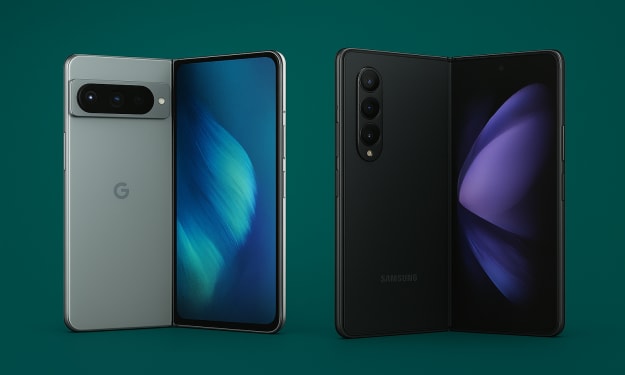
Google Pixel 10 Pro Fold vs Samsung Galaxy Z Fold7: The Ultimate 2025 Foldable Phone Showdown
The foldable smartphone market has reached a new level in 2025. With the Google Pixel 10 Pro Fold and Samsung Galaxy Z Fold7, users are witnessing a clash between two AI-powered giants. Both phones promise cutting-edge performance, advanced camera systems, and seamless multitasking experiences — but they cater to slightly different audiences. If you're wondering which foldable is worth your investment this year, this in-depth comparison breaks down design, performance, AI features, battery, and value, helping you decide the true winner of 2025’s foldable war. 1. Design & Build Quality Both Google and Samsung have refined their foldable designs for durability and everyday usability. Google Pixel 10 Pro Fold brings a premium Moonstone or Jade finish, protected by Corning Gorilla Glass Victus 2 and an IP68 water resistance rating. Its gearless hinge design is engineered for nearly a decade of folds — that’s over 10 years of use without durability worries. Samsung Galaxy Z Fold7, on the other hand, impresses with its Armor Aluminum frame and Gorilla Glass Ceramic 2 display. Despite its larger 8-inch internal screen, it’s surprisingly lighter and slimmer than its predecessor. Samsung’s craftsmanship makes it feel almost like a regular smartphone when folded. 📊 Design Comparison Table | Feature | Google Pixel 10 Pro Fold | Samsung Galaxy Z Fold7 | | ---------------- | --------------------------------- | ----------------------------- | Build Material | Titanium & Gorilla Glass Victus 2 | Armor Aluminum & Gorilla Glass Ceramic 2 | | Water Resistance | IP68 | IP68 | | Weight | Slightly heavier | Lighter and slimmer | | Fold Durability | 10-year hinge rating | Reinforced fold design | | Finish Options | Moonstone, Jade | Silver Shadow, Blue Shadow, Jet Black | Verdict: Pixel 10 Pro Fold focuses on premium strength and a smooth hinge mechanism, while Galaxy Z Fold7 delivers better portability with refined proportions. 2. Display & Viewing Experience Foldables live or die by their displays — and both brands know it. The Pixel 10 Pro Fold features an 8-inch Super Actua Flex display with 120Hz refresh rate, offering Google’s brightest foldable panel yet. It supports Split Screen multitasking, allowing users to drag and drop between apps effortlessly. Galaxy Z Fold7 matches with an 8-inch 120Hz display, but introduces smarter multi-window management — letting you open up to three apps at once without lag. It’s a productivity dream machine for creators and professionals. Verdict: Samsung wins here by a narrow margin thanks to its multitasking interface, but Google’s vivid brightness and smoother hinge experience make it a close competition. 3. Performance & Processing Power Under the hood, both phones pack serious muscle. Google Pixel 10 Pro Fold runs on the Tensor G5 chip, offering a major AI upgrade with Gemini integration. It excels in real-time image processing, multitasking, and smart assistant features. Samsung Galaxy Z Fold7 is powered by Snapdragon 8 Elite, tuned for Galaxy devices. It delivers faster GPU performance, ideal for gaming and 4K video editing. | Performance Comparison | Pixel 10 Pro Fold | Galaxy Z Fold7 | | ---------------------- | ------------------------- | -----------------------| | Processor | Google Tensor G5 | Snapdragon 8 Elite | | RAM | 16GB | 12GB | | AI Integration | Gemini AI | Samsung AI + Google Gemini collaboration | | Multitasking | Split screen + AI tasking | Triple window multitasking | | Gaming Performance | Excellent | Outstanding Verdict: Samsung takes the performance crown with raw power, while Google dominates the AI and software intelligence category. 4. Camera Capabilities Both phones are photography beasts in their own right. Pixel 10 Pro Fold packs a triple-lens system with Super Res Zoom up to 20x, a 5x telephoto lens, and Google’s world-class computational photography. Its ability to preview and edit photos in real time makes it a mobile creator’s dream. Galaxy Z Fold7 fights back with a massive 200MP Pro-Visual Engine camera, making it Samsung’s best foldable shooter yet. The detail retention, color science, and Pro mode tools make it ideal for content creators. Verdict: Pixel delivers smarter AI-driven image results, while Samsung offers unbeatable raw detail and color accuracy. 5. Battery & Charging Battery life has been a consistent challenge for foldables — but 2025 brings big improvements. The Pixel 10 Pro Fold offers 24+ hours of battery life, powered by Qi2 Pixelsnap magnetic charging, and optimized AI battery management. Galaxy Z Fold7 also boasts an all-day battery, supported by faster charging speeds and Snapdragon’s efficiency cores. Verdict: A tie — both last a full day easily, but Samsung edges out with slightly faster charge times. 6. AI & Software Experience This is where both phones shine. Pixel 10 Pro Fold integrates Gemini Live, allowing natural voice conversations, visual recognition, and cross-app assistance.
By NextGen Mobile Techabout a year ago in Futurism
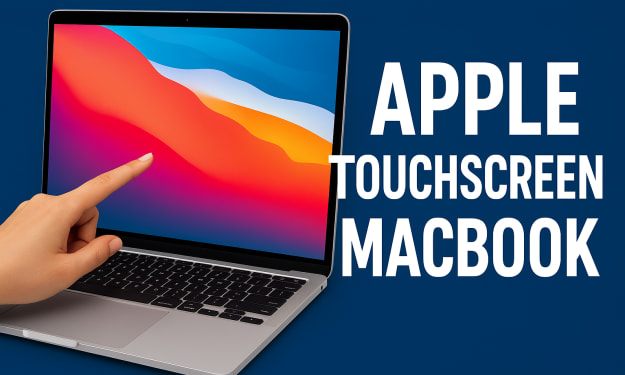
Apple Touchscreen MacBook: Everything We Know About Apple’s Bold Move Into Touch Computing
Apple is finally bringing touch to the Mac. The long-awaited Apple touchscreen MacBook Pro is rumored for 2026, featuring OLED displays, M6 chips, and a sleek redesign that could redefine the future of laptops. Apple Is Finally Breaking Its Own Rules For years, Apple fans have dreamed of the day they could tap, swipe, and pinch directly on a Mac screen — just like they do on an iPad. It’s finally happening. According to recent Bloomberg reports, Apple is preparing to launch its first-ever Apple touchscreen MacBook, likely arriving in late 2026 or early 2027. This move marks a major shift in Apple’s philosophy. The company that once said touchscreens don’t belong on laptops is now getting ready to introduce one of the most anticipated products in its lineup — and the tech world is buzzing. So, why the change of heart? And what can we expect from this groundbreaking MacBook? Let’s dive into everything we know so far. A Decade in the Making: Why Apple Changed Its Mind Back in 2010, Steve Jobs famously said, “Touch surfaces don’t want to be vertical.” He argued that using a touchscreen laptop would be uncomfortable for long periods and that it didn’t make sense ergonomically. Apple doubled down on that stance for years, directing users who wanted touch experiences toward the iPad. But times have changed. Competing manufacturers like Dell, Microsoft, HP, and Lenovo have long offered touch-enabled laptops. Meanwhile, the line between tablets and computers has blurred. Apple’s own iPads now run on the same M-series chips as Macs and even share a similar interface. With the Apple touchscreen MacBook, Apple seems ready to finally bridge that gap — offering users the best of both worlds: the power of macOS and the convenience of touch. Inside the Design: Sleeker, Lighter, and More Advanced Reports indicate that Apple’s upcoming touchscreen MacBook Pro — code-named K114 and K116 — will feature a completely refreshed design. Expect thinner bezels, lighter materials, and a new hole-punch camera instead of the current notch. The display will use OLED technology, marking the first time this premium panel type appears on a Mac. OLED screens deliver richer colors, deeper blacks, and improved energy efficiency compared to traditional LCDs. That means visuals will look even more stunning, whether you’re editing photos, watching movies, or designing graphics. Apple is also engineering a reinforced hinge mechanism to handle the physical interaction of touch input. This will prevent the screen from wobbling or bouncing when users tap or swipe — a common issue on Windows laptops. Simply put, the Apple touchscreen MacBook will combine beauty, functionality, and durability in a way that feels uniquely Apple. Performance Powerhouse: The M6 Chip Era Under the hood, the new MacBook Pro will be powered by Apple’s next-generation M6 chips. Each generation of Apple Silicon has delivered major leaps in speed and efficiency, and the M6 is expected to continue that trend. These chips will likely include faster CPU and GPU cores, longer battery life, and better AI performance — all crucial for professionals who rely on demanding apps like Final Cut Pro, Xcode, or Adobe Creative Cloud. Apple is also expected to include advanced thermal management, ensuring the laptop stays cool even during heavy workloads. Combine that with the power of macOS and touch input, and the result could be the most capable and intuitive laptop Apple has ever made. The End of the Notch and the Rise of Dynamic Design One of the most noticeable design updates will be the removal of the notch at the top of the MacBook display. Instead, Apple plans to use a hole-punch camera design, similar to the Dynamic Island on iPhone models. This not only gives the screen a cleaner, more immersive look but also opens the door for future features like Face ID. Although Apple isn’t expected to include Face ID in the first touchscreen MacBook, reports suggest the company is working on it for future models. Touch, Trackpad, and Keyboard: The Perfect Blend One of the smartest decisions Apple has made is keeping the traditional keyboard and trackpad. This means users who prefer classic controls won’t have to rely on touch — but those who do can enjoy the added flexibility. Think of it as a hybrid design philosophy. You can use the trackpad for precision, the keyboard for speed, and the touchscreen for creative, intuitive gestures. Apple already tested part of this concept with the iPad Magic Keyboard, which turned the tablet into a mini laptop. The company learned from that success — and it’s bringing that hybrid experience to the Mac lineup. Pricing: A Premium Touch As with most Apple products, innovation won’t come cheap. Current non-touch MacBook Pros start at $1,999 for the 14-inch and $2,499 for the 16-inch version. Analysts expect the Apple touchscreen MacBook to cost a few hundred dollars more due to the OLED display and upgraded components. For professionals, content creators, and tech enthusiasts, though, the extra cost could be well worth it. After all, this device isn’t just another laptop — it’s a sign of where Mac computing is headed. Apple’s Strategy: Start High, Then Scale Down Apple has a pattern: introduce cutting-edge features in its premium models, then trickle them down to more affordable products later. Just as the MacBook Pro pioneered Apple Silicon before it reached the MacBook Air, the touchscreen MacBook Pro will likely serve as a testing ground. If it succeeds, we could see touch capabilities coming to the MacBook Air and even the iMac in future generations. For now, Apple is said to be watching market reactions carefully. That’s classic Apple — deliberate, strategic, and always focused on perfect execution rather than rushing to follow trends. From Skepticism to Strategy: A Historic Shift It’s worth remembering just how far Apple has come. When Tim Cook once joked that combining a laptop and tablet would be like “mixing a toaster and a fridge,” few imagined Apple would ever make a touchscreen Mac. But the world has evolved. Touchscreens are now standard on Windows laptops, and users have grown accustomed to fluid, touch-based navigation. Apple’s ecosystem has also matured — macOS and iPadOS now share apps, design language, and even accessories. In other words, the Apple touchscreen MacBook isn’t a gimmick; it’s a natural next step in Apple’s long-term plan to unify its devices under one seamless experience. Why the Touchscreen MacBook Matters Beyond the excitement of new hardware, this device could redefine how we use Macs altogether. Touch opens the door to new creative workflows — from sketching directly on the screen to manipulating 3D models with your hands. It also gives developers new possibilities for designing touch-optimized macOS apps, potentially reshaping the software ecosystem. And let’s not forget the marketing side: Apple’s entry into the touchscreen laptop category will immediately raise the bar for design, performance, and user experience across the entire industry. Looking Ahead: What Comes Next Apple isn’t stopping at touch. Reports suggest the company is experimenting with Face ID for Macs, new Mac Studio and Mac mini models, and external monitors that could complement the new generation of touch-enabled devices. If all goes according to plan, 2026 could mark a major turning point in Apple’s hardware strategy — one that blurs the boundaries between Mac, iPad, and even iPhone. Final Thoughts: The Future Is Touch The upcoming Apple touchscreen MacBook represents more than just a new product. It’s a symbol of evolution — proof that even the world’s most design-obsessed tech company can change its mind when the time is right. With its stunning OLED display, M6 chip power, and hybrid touch experience, this device could reshape the laptop market just as the original MacBook Air did years ago. For users, it means more choice. For Apple, it’s another bold step toward a unified, touch-first future. And for the rest of the industry? It’s a wake-up call: the era of the touchscreen Mac has finally arrived. Apple touchscreen MacBook
By NextGen Mobile Techabout a year ago in Futurism
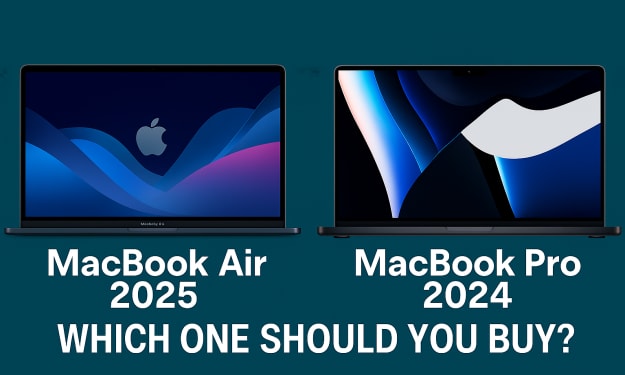
MacBook Pro M4 vs MacBook Air M4 (2025): Which Apple Laptop Should You Buy?
Discover the ultimate 2025 comparison between the MacBook Pro M4 and MacBook Air M4. Explore key specs, performance, battery life, pros and cons, and find out which Apple laptop is the best choice for students, creators, and professionals this year. Apple’s 2025 laptop lineup has set the bar high — again. The MacBook Pro M4 Pro and the MacBook Air M4 are both powered by Apple’s latest silicon and built around Apple Intelligence, the company’s new on-device AI system that enhances productivity, creativity, and everyday tasks. But which one is better for you — the powerful Pro or the ultra-efficient Air? Let’s dive deep into a full comparison to help you make the smartest buying decision in 2025. MacBook Pro M4: The Powerhouse for Creators and Professionals The 2024 MacBook Pro (14-inch) featuring the M4 Pro chip is designed for creators, developers, and professionals who need uncompromised performance. With a 12-core CPU and 16-core GPU, it delivers desktop-class power in a portable form. The Liquid Retina XDR display hits up to 1600 nits of brightness, making HDR video editing and photo work look absolutely stunning. Apple’s M4 architecture also enhances energy efficiency, so you can edit 4K videos, render 3D models, or run multiple apps simultaneously — all without plugging in. Key Highlights 14.2-inch Liquid Retina XDR display M4 Pro or M4 Max chip options Up to 24GB Unified Memory and 512GB SSD All-day battery life macOS Sequoia with Apple Intelligence integration Pros ✅ Incredible performance for creative and professional workloads ✅ XDR display is perfect for editing and color-accurate work ✅ Excellent build quality and cooling system ✅ Wide port selection including HDMI and SDXC slot Cons ❌ Higher starting price ($1,749+) ❌ Slightly heavier than MacBook Air ❌ Overkill for casual users MacBook Air M4: The Perfect Everyday Laptop The MacBook Air 15-inch (2025) is Apple’s most balanced laptop yet — now running on the M4 chip. It’s designed for students, remote workers, and anyone who wants premium performance without the Pro price tag. The M4 chip provides faster app switching, smoother multitasking, and even light video editing without breaking a sweat. Add to that a 15.3-inch Liquid Retina display, 18-hour battery life, and super-slim design, and you’ve got the best value MacBook ever made. Key Highlights 15.3-inch Liquid Retina display (500 nits) M4 chip with 8-core CPU, 10-core GPU 24GB Unified Memory, 512GB SSD 12MP Center Stage camera + six-speaker audio macOS Sequoia with Apple Intelligence Pros ✅ Exceptional performance for the price ✅ Incredibly lightweight and silent ✅ Longest battery life ever on a MacBook ✅ Gorgeous design and multiple color options Cons ❌ Limited port selection ❌ Not ideal for heavy 3D or video production ❌ Display not as bright as the Pro MacBook Pro M4 vs MacBook Air M4: Side-by-Side Comparison Processor (Chip): MacBook Pro M4 Pro → 12-core CPU, 16-core GPU MacBook Air M4 → 8-core CPU, 10-core GPU Display: MacBook Pro → 14.2-inch Liquid Retina XDR (up to 1600 nits brightness) MacBook Air → 15.3-inch Liquid Retina (500 nits brightness) Performance: MacBook Pro → Designed for professional workloads and AI-driven tasks MacBook Air → Great for daily productivity and light creative work
By NextGen Mobile Techabout a year ago in Futurism
Intelligent Digital Marketing for Branding Development
With the current digital-first economy, astute digital marketing is no longer a choice — it's the catalyst for business acceleration, customer interaction, and sustainable brand thriving. With businesses competing more and more in the global marketplace, the use of advanced tactics from a professional digital marketing agency has become necessary for brand recognition and authenticity.
By William R. Eldridgeabout a year ago in Futurism
The Rise of AI Future Jobs: How to Prepare for the New World of Work
Artificial intelligence isn't coming - it's already here, quietly reshaping the workforce. Across every industry, algorithms are learning, automating, and optimizing. But far from stealing all our jobs, AI is creating new ones, demanding new skills, and redefining what "work" really means.
By ZoneTechAiabout a year ago in Futurism
Full-Stack App Development in Australia: Complete Guide
Full-stack app development is one of the essential methods that Australian businesses have been using to create scalable, efficient, and innovative digital solutions. As industries increasingly rely on digital platforms, the demand for developers who can handle both front-end and back-end development has surged. This comprehensive guide, informed by the expertise of a leading mobile app development company in Australia, provides a complete roadmap for businesses, exploring the development process, cost considerations, technologies, benefits, and strategic steps to ensure successful implementation in Australia’s competitive tech environment, allowing companies to optimize workflows, ensure seamless integration, and reduce development costs. The strategic importance of unifying the client-side and server-side logic under a single development paradigm cannot be overstated in a market that prioritizes speed and architectural integrity.
By Rajinder Kumarabout a year ago in Futurism
AI Code Assistant for Beginners: Start Coding Smarter
If you've ever stared at your screen wondering why your code won't compile, or spent hours debugging a single function, you've probably wished for a mentor who could sit beside you 24/7. In 2025, that wish is a reality - it's called an AI code assistant.
By ZoneTechAiabout a year ago in Futurism